Dr Jonathan Katz
CIDP, IVIG , Nerve Biopsy
😏cidpusa.org
Presented
Jonathan S.Katz, MD
Department of Neurology

Stanford University
Chronic Immune Neuropathies: IVIG as treatment and diagnostic test
Here is a review of what Dr. Katz had to say. He told the neurologist attending this meeting that we should stop worrying about the cost of the treatments; there is always the H.M.O. to take care of this issue. So let the HMO worry who can get IVIg .
Following tests for neuropathy are not needed, (antibody screens, neuropathy panels) the cost of these screens varies from 1500 to 2000 dollars and then one does not know what to do with the result. Sedimentation rate should be done along with a B12 level as you can diagnose vasculitis or vitamin deficiency based upon the results.
No nerve biopsy should be attempted; this will leave the patient with a life long sensory deficit (Do Not Cause Any Harm) Hippocraties. Biopsy is useless in patients with CIDP as they have skip lesions, which cannot be seen on a routine biopsy. Some patients have motor involvement and the sural biopsy will not show this. Because sural nerve is a pure sensory nerve. The diagnois should be based upon clinical examination.
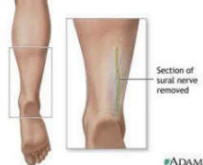
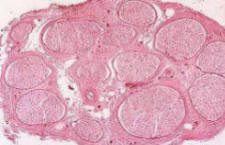
Above : Sural Nerve Biopsy
Finally do not follow any guidelines to make a diagnosis. As only 20-30% of the patients will fit the AAN guideline. Patients will come in with different presentations.
EMG/NCV can be normal if only small fibers are involved, or show axonal or demyelinating pattern. Thus you cannot depend upon the EMG/NCV to diagnose CIDP.
So the best test to prove that patient has a immune neuropathy is to treat them with IVIG.
Those that report improvement should be considered as suffering from immune neuropathies.
Usually you will not see a improvement in their examination after they have been treated with a course of IVIg. If the patient states that they have been helped then its best to document this.
Steroids will not improve axonal conditions like M.M.N. They may help CIDP patients but will take 2-3 months to see a response.
Dr Katz has published several papers on CIDP and he wrote the Medicare guidelines for CIDP in California.
Read about axonal EMG findings in CIDP
continue to Dr Katz Multifical Motor neuropathy
😏