Home
      Diagnosis
      Treatment
      Pathology
      Variants
      CIDP info
      GBS
      IVIG
      Diet
      About Us
      Contact
      Email Web Weaver
      Autoimmune diseases
      News
      Links
       E-Book

B-12 deficiency

Autoimmune autism

Mercury linked autism

Immunity in autism

PCR Testing for Mycoplasma and Chlamydia in CFS/MCS

Erectile Dysfunction, High Blood Pressure Linked

Quranic Shifa

Backpain

Fibromyalgia

Personality

Electrical Stimulation Therapy

Addison

Estrogen

DNA

Magnets and ageing

Heart solution

Immunodeficiency

Immunoglobulins

Vaccination

Sexual  disorders Clinic

Parkinson Clinic

Epilepsy Clinic

Pain Clinic

Bone disorders clinic

Joint disorder clinic

Skin repair clinic

Gene Manipulation

Neurology Clinic

TMJ CLINIC

Safe Hair Color

  Stem cells

  SLE & GENES

 Toxic Baby Car Seats

 Toxic Pesticide

 Under active thyroid

 Reading disorders

 Oral Polio Vaccine

 Reading disorders

 Best New Diet

 DHEA Fountain of Youth

 Magnets to tone face

 Younger

 Melbourne

 Avoid an episiotomy

 Celiac Disease

 Spice Names

 transplant treatment

 DiabeticTreatment

 Bay Leaves

 More Spices

 7 Habits of Covy

MagneticFieldMap

 NanoMedicine

 managed Care

 MS GENES

 Polymyalgia

 Achalasia

 u stay young

 Auto

   Autoimmune info

  Autoimmune-4

  Autoimmune-5

  Autoimmune anemia

  Autoimmune inflammation

  Autoimmune Ear

  Autoimmune Thyroid

  Autoimmune muscle

  Autoimmune diseases

  Autoimmunity

  Autoimmunity-2

  Autonomic

     Quranic Shifa

   Mercury in makeup

     Toxic Lipstick

Gene Manipulation

Neurology Clinic

TMJ CLINIC

Safe Hair Color

  Stem cells

  SLE & GENES

 Toxic Baby Car Seats

 Toxic Pesticide

 Under active thyroid

 Reading disorders

School Lahore

pre school Lahore

curriculum


                                  Depression Treatment

    Please read our E-Book for complete treatment of autoimmune E-Book.  


Non-drug Treatment Effective For Major Depression, Study Suggests

ScienceDaily (Nov. 26, 2007) — For the first time in a large-scale study, repetitive transcranial magnetic stimulation has been shown to be an effective, non-drug treatment for major depression. Current antidepressant therapies are not beneficial for at least a third of depressed individuals, leaving many with a lack of adequate treatment options. 

Co-author Dr. Philip Janicak, professor of Psychiatry at Rush University Medical Center, says the treatment may be an option for patients with major depression who have not responded to conventional antidepressant medications.

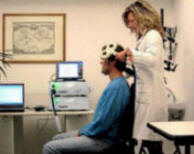
Repetitive Transcranial magnetic stimulation (RTMS), a non-invasive technique that excites neurons in the brain by magnetic pulses introduced through the scalp, has previously been identified as a potential new treatment for depression but prior, smaller studies have shown conflicting results.

The authors present the results from the first large scale, multi-center, double-blind, sham-controlled study of TMS as a treatment for people with depression who had not responded to prior antidepressants and who were not taking antidepressant medications during the study. After four to six weeks of active or sham TMS, response and remission rates with active TMS were approximately twice those of sham.

This study was also associated with a low dropout rate, due to generally mild side effects, indicating that the treatment was well-tolerated by patients.

Dr. John P. O'Reardon, the corresponding author on this project and associate professor of Psychiatry at the University of Pennsylvania, explains, "These results indicate that TMS provides a novel and attractive treatment option for patients with major depression who have not responded to conventional antidepressant medications.”

Dr. John H. Krystal, editor of Biological Psychiatry, highlights the significance of this article’s findings. “This study provides new support for the efficacy of TMS as a ‘stand alone’ treatment for depression. This finding could be particularly important for patients who do not tolerate antidepressant medications, for whom they are not safe, or who have not benefited from other alternative treatments.”

O’Reardon adds, “As indicated by recent large scale, government-sponsored, studies of existing treatment options for major depression conducted by the National Institute of Health (the STAR-D reports), there is a great need to develop new effective treatments for patients, especially those not benefiting from first line interventions. The results of this study indicate that TMS offers new hope to patients in this regard.”

The article is “Efficacy and Safety of Transcranial Magnetic Stimulation in the Acute Treatment of Major Depression: A Multisite Randomized Controlled Trial” by John P. O'Reardon, H. Brent Solvason, Philip G. Janicak, Shirlene Sampson, Keith E. Isenberg, Ziad Nahas, William M. McDonald, David Avery, Paul B. Fitzgerald, Colleen Loo, Mark A. Demitrack, Mark S. George and Harold A. Sackeim.

The article appears in Biological Psychiatry, Volume 62, Issue 11 (December 1, 2007), published by Elsevier.

Behcet's disease

What is Behcet's disease?

Behcet's  is a autoimmune disease is a rare disease characterised by painful mouth ulcers, genital ulcers, eye problems and skin lesions. The disease is named after the Turkish dermatologist Hulusi Behcet who first described the syndrome in 1924.


What causes Behcet's disease?

The cause of Behcet's disease is an autoimmune disorder. This is where an individual's immune system starts reacting against his or her own tissues. The reason it is possible bacterial or viral infection may have a role in its development.


Who is at risk of Behcet's disease?

Behcet's disease is most common and more serious in people with Silk Road bloodlines. Silk Road countries include those in the Mediterranean basin, Middle East and Far East; the incidence is around 1 in 10,000 people. However, Behcet's disease is seen worldwide even in those with other ethnic heritage; in the US the incidence is reported to be 1 in 20,000.

In people with Silk Road ancestry, Behcet's disease is more common in men than in women. However, the trend is reversed with more women than men being affected in people of other ethnic origins. The disease can develop at any age but is most common as people reach 20-30 years.


What are the signs and symptoms of Behcet's disease?

Mouth ulcers are the most common and earliest sign of Behcet's disease. However, before these appear a patient may for a number of years experience a variety of recurrent signs and symptoms that include:

  • Sore throats and tonsillitis
  • Muscular and joint pain
  • Malaise, generalised weakness
  • Anorexia, weight loss
  • Headache
  • Fluctuations in body temperature

Painful mouth ulcers are usually the first outward sign of Behcet's disease and occur in about 70% of patients. Ulcers can occur anywhere in the mouth including on the tongue and inside the lips and cheeks. They usually last for 1-2 weeks but can remain for as long as 3 weeks.

Other common signs and symptoms indicative of Behcet's disease include:

  • Genital ulcers – these ulcers occur less often than mouth ulcers. They are painful and often heal with scarring. They are not genital herpes, which is caused by the herpes virus.
  • Eye involvement – uveitis, which is a reddening and swelling of the eye tissue, may occur. The retina may sometimes become involved and if not treated can lead to blindness.
  • Skin lesions – painful nodules from erythema nodosum are common. Patients may also have acne-like sores that occur on the arms, legs and trunk.

Less common symptoms include, gastrointestinal problems (e.g. abdominal pain, diarrhoea, vomiting), joint pain and swelling, nervous system problems and blood vessel and circulation problems.


What is the treatment for Behcet's disease?

Currently there is no cure for Behcet's disease. The main goal is to treat and manage the symptoms so that complications do not develop. Because Behcet's disease affects so many different parts of the body, a team of doctors from various specialties will treat most people.

Some medications that may help in controlling symptoms include:

Topical therapy

  • Tetracycline solution
  • Topical corticosteroids
  • Local anaesthetics

Systemic therapy

  • Oral corticosteroids
  • Nonsteroidal anti-inflammatory drugs (e.g. aspirin, ibuprofen)
  • Immunosuppressants (e.g. azathioprine, chlorambucil)
  • Experimental and research drugs (e.g. cyclophosphamide, thalidomide)
  • Antibiotics are helpfull
  • Need help please contact us


 Oral Polio Vaccine                   Bulemia TMS Thearapy

 Reading disorders                    Depression TMS

 Best New Diet                   Amalgam filling & diseases

 DHEA Fountain of Youth                           Silver Filling

 Magnets to tone face

 Younger                        cancer treatment almonds

 Melbourne                             Hoaxley

 Avoid an episiotomy

 Celiac Disease  Cancer & Chapparal

 Spice Names                  Walnuts benefits cancer

 transplant treatment

 DiabeticTreatment

 Bay Leaves

 More Spices

 7 Habits of Covy


  Kidney stone removal   without surgery


Eliminate risk of heart disease & stroke 

Memory clinic

Depression & anxiety

Private treatment of addiction  & Drug Rehab

Sexual  disorders Clinic

Parkinson Clinic

Epilepsy Clinic

Pain Clinic

Bone disorders clinic

Joint disorder clinic

Skin repair clinic

Gene Manipulation

Neurology Clinic

TMJ CLINIC
 

 antibiotics

 Want more sex

 Vitiligo 1

  Vitiligo 2

Parkinson


Eliminate risk of heart disease & stroke 

Memory clinic

Depression & anxiety

Private treatment of addiction  & Drug Rehab

Sexual  disorders Clinic

Parkinson Clinic

Epilepsy Clinic

Pain Clinic

Bone disorders clinic

Joint disorder clinic

Skin repair clinic

Gene Manipulation

Neurology Clinic

TMJ CLINIC

We offer a lecture on personality development and self improvement.

Is your teenage child out of your control we do behavior modification treatment with positive results and a 90% turnaround.

Our Nanoparticle treatment units are for sale. Get your treatment at home.

Sex in autoimmune disease

Reduce weight

Drug reaction prevention

Prevent Osteoporosis

Some rheumatic disorders

 
 Skin repair Clinic
 Neck Pain
 Rabinder N Tagore
 Breast Lymph Drainage
 Osteoporosis
 Electronic Treatment
 Breast Size & Disease
 Female Sex Disease
 PARKINSON
 Memory problems
 Breast Lymph Drainage
 Kidney stone Buster
 Bras & breast cancer
 Lahore Clinic
 Lahore skin Clinic
 Pandas


Personality

Alopecia treatment

Bald Facts

Alopecia

Areata Alopecia

Hair chemicals

Hair Growth

Hair of dog technique

Hair rejuvination

Alopecia general

Nail Fungus

SESAME SEED OIL

Facial  cleaner

Immunoglobulin A nephropathy & Fish Oils

IgA Nephropathy

PCR Testing for Mycoplasma and Chlamydia in CFS/MCS

Erectile Dysfunction, High Blood Pressure Linked

Quranic Shifa

Backpain

Fibromyalgia

Personality

Electrical Stimulation Therapy

Addison

Estrogen

DNA

Magnets and ageing

Heart solution

Immunodeficiency

Immunoglobulins

Vaccination

Sexual  disorders Clinic

Parkinson Clinic

Epilepsy Clinic

Pain Clinic

Bone disorders clinic

Joint disorder clinic

Skin repair clinic