Magnetic Deficiency Syndrome
By CIDPUSA.ORG,
Thursday, 26 June 2008, 06:02
Sjogrens Sicca syndrome
By Lee, Jeffery
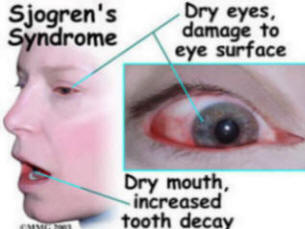
CLINICAL REVIEW Section 1 Epidemiology and aetiology
Sjogren's syndrome (SS) is a relatively under diagnosed cause for dry eyes (xerophthalmia) and mouth (xerostomia), and the diagnosis is often delayed for months to years.
The presence of xerostomia and xerophthalmia is also called sicca syndrome. It is considered one of the commonest autoimmune connective tissue disorders, with a prevalence of 0.5-3 per cent in the adult population and is similar in most racial groups worldwide.1
Like most autoimmune conditions, it tends to affect mainly women, with a female-to-male ratio of 9:1. Although it can affect all age groups, its peak age of onset is in the fourth and fifth decades.
Pathogenesis
The syndrome is a multisystem autoimmune disorder affecting primarily the exocrine glands in the body. The lesion in this disorder starts with lymphocytic infiltration of the salivary glands leading to inflammatory symptoms including swelling and pain. Later, the glandular tissues atrophy and progressively disappears leading to reduced secretions.
The disease process is not limited to salivary glands and may affect virtually all organs, including lungs, nervous, system and kidneys.
Although there is evidence for genetic (HLA-DR3)2 and environmental (viral infections) associations,3 their exact contribution to the disease process is still unknown.
Classification
Approximately half of all cases of the syndrome are primary cases while the remainder (secondary SS) are associated with autoimmune conditions, including systemic lupus erythematosus (SLE), rheumatoid arthritis (RA), and thyroiditis.
Both primary and secondary SS are similar in symptoms and signs, although primary SS tends to have more prominent sicca symptoms while secondary SS is less associated with anti-Ro and anti-La autoantibodies.
Salivary gland swelling
The disease process is not limited to salivary glands alone and may affect virtually all organs, including lungs, nervous system and kidneys
Clinical presentation
As the disease affects exocrine glands primarily, the earliest symptoms are of reduced tear and saliva production. Patients often present complaining of a burning, sandy sensation under the eyelids along with itching and redness, difficulty in swallowing dry foods or speaking continuously, a burning sensation in the mouth or an increase in dental caries.
In 60 per cent of primary SS, there may be salivary gland enlargement. This may be unilateral initially but becomes bilateral. In addition, other exocrine glands in the body may also be involved, leading to hoarseness, dry skin and loss of vaginal secretions.
SS is a systemic disease and patients with primary SS often report general constitutional symptoms such as fatigue, low-grade fever and myalgias.
Half of patients also report arthritis, which may be deforming due to periarticular tissue damage with no signs of erosions on x- rays (Jaccoud's arthropathy) asopposedtothe erosive disease seen in RA.
Skin signs include Raynaud's phenomenon and purpura secondary to dermal vasculitis.
Primary SS may also present with major organ involvement. Nervous system involvement may manifest as a mononeuritis multiplex as a consequence of small vessel vasculitis.
Liver abnormalities including hepatomegaly and elevated alkaline phosphatase may be found in primary SS, often associated with anti- mitochondrial antibodies. Renal involvement is found in 5 per cent of SS, often as glomerulonephritis, and SS may also be associated with a sterile interstitial cystitis, leading to nocturia and pain.
SS may affect the entire respiratory airway leading to a dry cough, airway obstruction and rarely interstitial lung disease.
Investigations
The sicca syndrome needs to be confirmed by simple objective clinical tests that assess gland secretion. A Schirmer's tear test can be easily performed in clinic (see box left).
Unstimulated whole saliva sialometry, used to assess saliva production (see box right), can also be carried out in a clinical setting.
With the results of the two clinical tests, the main investigations to consider include biopsy of a minor salivary gland (usually of the lower lip) and the presence of autoantibodies.
Anti-Ro and anti-La antibodies are found in 60 per cent and 40 per cent of primary SS respectively. Rheumatoid factor is also found in 60 per cent of primary SS with no underlying diagnosis of RA.
General blood results may include elevated inflammatory markers, leukopaenia and hypergammaglobulinaemia on serum electrophoresis in 80 per cent of cases.
The probability of SS is high with a history of sicca syndrome for at least three months confirmed with either Schirmer's test or sialometry along with anti-Ro and/or anti-La positivity. If the suspicion of SS is high despite negative results, a salivary gland biopsy will be required.
Other investigations including sialography to assess the salivary gland ductsystem, rose bengal staining of the cornea and scintigraphy for salivary gland function may provide additional information.
SCHIRMER'S TEAR TEST
1. Bend the Schirmer's test strip at the indentation and place the shorter end under the lower eyelid.
2. Leave test strip for five minutes.
3. Measure how much of the test strip is wet from the indentation.
4. A healthy person wets >/=15mm after 5 minutes. A positive result for xerophthalmia occurs when
Periartlcular tissue damage may cause arthritis symptoms in SS patients
UNSTIMULATED WHOLE SAUVA SIALOMETRY
1. Use a container/beaker used for measuring volume.
2. Over 15 minutes, collect all saliva produced by spitting into the container. Instruct patient not to swallow during this time.
3. A positive result for xerostomia occurs when
IVIG ,Rituxan , Humaira , Vitamin B-12 helps reverse the whole disease if treated early
Xerophthalmia
Dry eyes should be lubricated regularly with artificial tears. There are various preparations of eye lubricants but the more viscous drops should be used before bedtime as they are longer lasting but can cause blurringofvision.
It is important to avoid factors that may exacerbate dry eyes, including windy environments, cigarette smoking and drugs such as anticholinergics.
In severe disease, where lubricants are ineffective, surgical treatments including punctual cauterisation or lateral tarsorrhaphy may be used.
Xerostomia
Sugar-free lemon drops or flavoured lozenges are often used as first-line treatment to stimulate the production of saliva for xerostomia. These stimulants need to be sugar-free, because the risk of dental caries is high inSSandoralhygieneshouldbe emphasised to patients. Some patients may prefer the use of artificial saliva as an alternative, particularly at bedtime.
In severe cases, pilocarpine may be helpful in stimulating salivary secretion but sideeffects such as flushing may limit its use.4
Hydroxychloroquine is effective for most general constitutional symptoms of SS but particularly arthralgias and myalgias.5
Severe organ involvement including interstitial lung disease, nervous system involvement and vasculitis will require systemic corticosteroids and other immunosuppressive agents, including cyclophosphamide and azathioprine. These agents are usually initiated and monitored by a specialist secondary care unit.
Pregnancy
Pregnant women with SS who are positive for anti-Ro and/ or anti- La antibodies require an early appointment with a secondary obstetric service. These antibodies are associated with the development of permanent congenital heart block (CHB) as well as a transient neonatal lupus rash.6
The risk of CHB requires regular fetal echocardiograms. Any signs of heart block will require immunosuppressive treatments.
Rose bengal: a pink dye used In the eye to show damage to the cornea
Section 4 Prognosis and complications
Primary SS in most cases has a long benign course. Some large, long-term follow-up studies have found no increased mortality among patients with primary SS compared to the background population.
However, there are factors that may increase the morbidity and mortality rate in a subgroup of SS patients (see box below right).
Lymphoma
Patients with primary SS have a 44 times higher risk of developing lymphoma than the general population.7
These lymphomas tend to be of B-cell origin, which may produce rheumatoid factor. They are usually extranodal and in over half of cases, are found in salivary glands.
The physician should always be alert to patients who complain of persistent, painful parotid gland enlargement, which may be bilateral. In this situation, a referral for an urgent biopsy may be required.
Signs and symptoms
Other signs associated with lymphoma include splenomegaly and lymphadenopathy. Physicians should also be alert to a history of persistent fever, unexplained weight loss and night sweats. The severity of the malignancy varies widely, but some of the lymphomas may be of low histological grade and may go into remission spontaneously or with immunosuppressive treatments given for systemic SS alone.
Rheumatic disease
The mortality and morbidity figures for secondary SS are strongly influenced by the associated autoimmune rheumatic disease. In SS associated with RA, the development of SS usually occurs many years after the diagnosis of RA and is usually mild. The symptoms are primarily from the sicca syndrome and systemic features of SS are rare.8
The clinical picture is much more complicated when SS is associated with connective tissue diseases such as SLE, since these disorders have similar disease features to SS.
Referral
All cases of suspected SS should be referred to secondary specialist care initially.
Primary SS will require investigations for potential systemic or major organ involvement while secondary SS will require management of the associated autoimmune disorder.
Patients with primary SS have a 44 times higher risk of developing lymphoma than the general population
Sjogren's syndrome: dry tongue due to the wasting of salivary glands
Risk factors for severe disease:
* Glomerulonephritis. Purpuric rash. Cryoglobulinaemia. Low complement levels.
Risk factors for lymphoma: Persistent painful salivary gland enlargement. Splenomegaly and lymphadenopathy. Persistently active SS-anaemia, lymphopaenia, low grade fever.
please continue to next page for magnetic field deficiency symptoms