Search Cidpusa web
Immunoglobulin Is Effective Therapy for Acute Idiopathic Thrombocytopenic Purpura
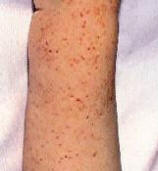
Read about the miracle cure of ITP under cidpusa guidance
Question
- In otherwise healthy children with acute onset idiopathic thrombocytopenic purpura (ITP), does treatment with IVIG versus no treatment result in more rapid resolution?
Clinical Bottom Lines
- High doses of IVIG and prednisone can produce a rapid increase in platelet counts in children with acute ITP and platelet counts under 20,000 (those at high risk for intracranial hemorrhage).
- The rate of platelet count response was significantly faster in those given treatment, and most rapid for those given immunoglobulin.
- Two patients (NNT=2) would have to be treated with IVIG compared to no treatment in order to have one whose platelet count rose above 50,000 in less than 3 days. Three patients (NNT=3) would have to be treated with IVIG compared to prednisone for the same outcome.
Summary of Key Evidence
- A randomized trial of 53 patients compared intravenous immune globulin G (IVIG), oral prednisone, and placebo in the treatment of acute ITP.1
- Nineteen patients received IVIG at 1 gm/kg daily for two days, 18 received prednisone at a dose of 4 mg/kg (tapered over 21 days), and 16 received no therapy. Baseline clinical characteristics were similar for all three groups. The administration of drugs was not blinded.
- Prior to randomization, subjects were stratified by severity of hemostatic defect. Inclusion criteria included: age over 6 months and under 18 years; platelet count less than 20,000; a bone marrow aspirate consistent with ITP; and no evidence of chronic ITP.
- Primary outcomes for the study were: number of days with a platelet count under 20,000 and the number of days required to reach a platelet count over 50,000. Secondary outcomes were the occurrence of any adverse effect of therapy.
- Median duration of severe thrombocytopenia after treatment was 1 day for IVIG (p<0.001) and 2 days for prednisone (p<0.01) compared to 4 days for no therapy. Results between the two treatment groups were not significantly different.
- The median time to reach a platelet count above 50,000 was 2 days for those in the IVIG group (statistically different than both prednisone and no therapy)
- Seventy-five percent of those treated with IVIG had some combination of nausea, vomiting, headache, and fever. The most common adverse reaction to prednisone was weight gain.
- The main reason for treating children with acute ITP is the prevention of intracranial hemorrhage (ICH), a complication that occurs in 1% of affected children. Randomized studies would require prohibitively large numbers of patients in order to use this as an outcome of interest.
- Given that acute ITP in childhood is usually self-limited disease, the inclusion of a no-therapy group in this study is helpful (and rather unique among other published studies). Both therapies performed better than no therapy.
- Cost and availability of IVIG are important considerations.
Citation
- Blanchette VS, Luke B, Andrew M, et al. A prospective, randomized trial of high-dose intravenous immune globulin G therapy, oral prednisone therapy, and no therapy in childhood acute immune thrombocytopenic purpura. J Pediatr 1993; 123:989-95.
Hypothyroid Infections help children
😏