Copyright 2000 by Jack Challem, The Nutrition Reporter™
All rights reserved. This article originally appeared in Let's Live magazine.
Imagine a nutrient more important to health than magnesium, zinc, iron, copper, sodium, iodine-and, for that matter, many vitamins. Assume that it has incredibly diverse roles, boosting resistance to disease, helping regulate blood sugar, preventing aches and pains, and even holding your skin and organs together.
It's a nutrient so essential for life that you would die without it. But get this: it has been all but ignored by dietitians, physicians, and researchers.
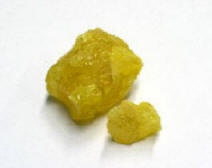
The nutrient is sulfur, a yellow mineral referred to as brimstone in the Bible and used medicinally for thousands of years.
Flip through most nutrition textbooks, and you'll discover that sulfur is hardly ever mentioned, despite it being the third most abundant mineral (after calcium and phosphorus) in the body, accounting for 1 percent of your weight.
"Yes, sulfur is essential," says Ekhard E. Ziegler, M.D., of the University of Iowa School of Medicine, Iowa City, and coeditor of the authoritative Present Knowledge in Nutrition (ILSI Press, 1996). "But no, it's not essential beyond it being in methionine and cysteine. You get enough sulfur from amino acids."
Mel Werbach, M.D., author of the Textbook of Nutritional Medicine (Third Line Press, 1999), sees sulfur as a blind spot in nutrition and medicine. "The value of sulfur supplementation has been poorly investigated," he observes, "even though sulfur baths and injections are old-fashioned arthritis treatments which are still popular in many countries."
Found in Every Living Cell
The dearth of research on nutritional sulfur is puzzling. Because it is an element, the body cannot make it and, instead, must obtain sulfur from food.
"Here is an essential nutrient that no one sees as being that," says Ronald M. Lawrence, M.D., Ph.D., coauthor of The Miracle of MSM: The Natural Solution for Pain (G.P. Putnam's Sons, 1999). "We don't learn anything about sulfur in medical school. Sulfur has been the most understudied and overlooked nutrient."
Sulfur is found in every living cell. It's part of the molecules that form the amino acids (protein building blocks) methionine, cysteine, and taurine, which are essential for health. It's a constituent of vitamin B1 and biotin, the antioxidant glutathione, the anticoagulant heparin, and coenzyme A, which drives energy production in cells. Sulfur is an integral part of the biological cement that forms skin, hair, nails, and the cartilage that shapes your nose and pads your joints.
Yet, says Lawrence, there is no officially recognized "sulfur-deficiency syndrome." That's a problem other nutrients, such as vitamin E and selenium, had to suffer with for years-before they were recognized as essential for health, he adds.
Long Used as a Medicine
The medicinal use of sulfur goes back thousands of years to the Trojan Wars, when wounded solders healed in the sulfur Baths of Agamemnon. Sulfur baths are still popular for treating joint and other diseases around the world. Similarly, sulfur-rich garlic has been used for several millennia to prevent and treat diseases. It contains powerful antibacterial substances, which may explain the garlic's extensive use as a folk medicine.
Sulfur is also a common ingredient in homeopathic remedies, developed in the 19th century and still popular today as over-the-counter remedies. In the 1920s, "colloidal sulfur" was used to treat arthritics. Now, researchers understand that sulfur forms part of the matrix of bone joints in the form of chondroitin sulfate and glucosamine sulfate.
Before the advent of antibiotics in the 1940s, sulfur-containing drugs-sulfa drugs-were commonly used to treat infectious diseases. Sulfur has powerful antibacterial properties. Many of sulfa drugs are still prescribed by physicians, and sulfur is a component of penicillin-class antibiotics and many other medicines.