CIDPUSA.org Autoimmune diseases
PRA
Panel Reactive Antibody test (PRA) in renal transplantatiPanel Reactive Antibody test (PRA) in renal transplantation
Panel Reactive Antibody (PRA) -- Measures Immune system activity. Higher PRA means more antibodies are being made. The less activity here, the better chance the body will not reject the transplanted kidney. Immune system activity test. The calmer your immune system is, the easier it will be to get a kidney. A higher immune system activity means your body fights foreign objects (like a transplanted kidney) more vigorously. Blood transfusions, pregnancy, previous transplant(s) or a current infection can cause your immune system to be more aggressive.
What's IS PRA? the question you ask when doing Kidney Transplant
PRA's means "panel reactive antibodies." A blood test that measures the level of antibodies in the blood. The more antibodies that are seen, the more difficult it will be to find a compatible donor. A normal person's PRA can be anywhere from 0% to 99%.The PRA should be low the lower it is the better the chances of getting a transplant accepted by your body. If the PRA is high in the 90 then you make a poor candidate for a transplant as the antibodies will reject the new kidney.
You can develop high PRA's from a blood transfusion, or an earlier transplant or from being pregnant.
There are ways of lowering PRA's through a procedure called Plasmapheresis a blood-cleansing process that can eliminate the dangerous antibodies from the blood. Plasmapheresis is used only in cases in which the patient has a live donor.
Statistics
Number of kidney transplants performed in the United StatNumber of kidney transplants performed in the United States.
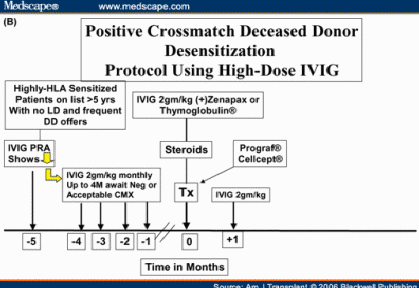
Plasmapheresis can also been used to allow blood-type incompatible donor/recipients to proceed with the transplant. Other then plasmapheresis IVIg can be used to lower PRA. A much simpler way to lower PRA is improve your diet to a healthy non inflammatory diet described in the diet page.CMV and Mycoplasma and treating the infection will lower PRA.
If you've been told by a transplant center that you are too highly sensitized, (another term used to describe high PRA's,) to receive a transplant ask about
IVIG, Plasmapheresis, antiviral (aclovair) ,
doxycycline, TENS unit. Immune Globulin or IVIg is the best helper in
quickly lowering PRA before and after the transplant. Talk to your family doctor to do these tests.
Please check the health of your Gums and teeth and if they do not look good risce whith hydrogen peroxide 3% twice daily and brush with H202 AND YOU WILL NOT ONLY LOOK HEALTHY with beautiful teeth your PRA will be lower. Herbals for Kidney below
Kelp is one of the best known herbal diuretics. This herb is quite high in natural potassium, iodine, iron, and various vitamins and minerals your body needs.Parsley is another herb which is a natural diurectic, yet it too is quite high in potassium and many other vitamins and minerals.
Links:CIDPUSA.ORG
B-12 deficiencyPsoraisis
Rheumatoid arthritis
Ankylosing spondolitis
Mixed Connective tissue disease
Joint Clinic
Soccer player arthritis
MYOFACIAL Pain
FMS & Chronic fatigue
Mysterious symptoms
Autonomic Small Fiber
ALS patients improves
911 CIDP story
Cranial nerve CIDP
Chemicals
Cystic Fibrosis
Curry Powder
Dermatomyositis
Morgellons
Mammogram
Heart disease & stroke
Knee Injury
Skin Glow Guide
Scleroderma
Surgery CIDP
Tetanus Vaccine Story
miracle on Highways
Small Fiber neuropathy
neurological effects of CIDP
Nerve Fiber types
CIDP-EMG
Multi Focal Motor neuropathy
Lewis Summer
Tips for CIDP
Plasmapheresis
CIDP-INFO
CIDP-Rituxan
CIDP-GBS-Handbook
CIDP-family issue
CIDP-Cyclosporin
Polyneuropathy
CIDP-GBS children
Peripheral Neuropathy
ALS & CIDP
alcoholic poly neuropathy
IVIg, Home to IVIg