Home
      Diagnosis
      Treatment
      Pathology
      Variants
      CIDP info
      GBS
      IVIG
      Diet
      About Us
       E-Book
      Email Web Weaver
      Autoimmune diseases
      News
      Links
 
 
  Skin repair Clinic
  Neck Pain
  Rabinder N Tagore
  Breast Lymph Drainage
  Osteoporosis
  Electronic Treatment
  Breast Size & Disease
  Female Sex Disease
  PARKINSON
  Memory problems
 Breast Lymph Drainage
 Kidney stone Buster
 Bras & breast cancer
  Lahore Clinic
 Lahore skin Clinic
 Pandas


  Clinics of Excellence

 Female sexual problems

Breast size and disease

Breast Lymph drainage

Bras causing breast cancer

Breast Size and disease

Eliminate risk of heart disease & stroke 

Memory clinic

Depression & anxiety

Private treatment of addiction  & Drug Rehab

Sexual  disorders Clinic

Parkinson Clinic

Epilepsy Clinic

Pain Clinic

Bone disorders clinic

Joint disorder clinic

Skin repair clinic

Gene Manipulation

Neurology Clinic

TMJ CLINIC

We offer a lecture on personality development and self improvement.


Is your teenage child out of your control we do behavior modification treatment with positive results and a 90% turnaround.

Our Nanoparticle treatment units are for sale. Get your treatment at home.

Sex in autoimmune disease

Reduce weight

Drug reaction prevention

Prevent Osteoporosis

Some rheumatic disorders


Backpain

Fibromyalgia

Personality

Electrical Stimulation Therapy

Addison

Estrogen

DNA

Magnets and ageing

Backpain

Fibromyalgia

Personality

Electrical Stimulation Therapy

Addison

Estrogen

DNA

Magnets and ageing

Quranic Shifa

Vitamin D Deficency

Cupping

Microwaves

Radiowaves

Infrared

Visible Light

UltraViolet

Gamma

Osteoporosis

Iodine Deficiency

X-Rays

Heart solution

Immunodeficiency

Immunoglobulins


                          What is Mixed Connective Tissue Disease (MCTD)  - management at nanotechnology Center Lahore Pain

     
                        Autoimmune Disease has become the number one disease process

Please read our E-Book the flame within to stop heart disease, stroke and alzheimers.

By Dr. M. Walravens, rrheumatologist, O.L. Vrouw-Clinic, Aalst
 
What is Mixed Connective Tissue Disease (MCTD)?
Most important symptoms
Who can get MCTD and is it hereditary?
Evolution
Diagnosis
Treatment
MCTD and pregnancy
Overlap-syndromes
Undefined Connective Tissue Disease (UCTD


What is Mixed Connective Tissue Disease (MCTD)?
A few decades ago, scientists discovered that patients with a connective tissue disease had symptoms of both lupus, scleroderma, myositis, etc. These diseases are called 'overlap-syndromes'. In 1969 Sharp and his co-workers found out that there is one specific type of 'overlap-syndrome' with symptoms of lupus, scleroderma, myositis and rheumatoid arthritis, together with a large quantity of antibodies against one specific antigen, namely U1RNP. They believed it to be a distinct disease entity and called it MCTD. Meanwhile, it is known that Sjogren's Syndrome is very common in MCTD.
It is still a matter of debate whether or not this disorder is diverse from the other overlap-syndromes. In general, however, this disorder is considered a distinct clinical entity.

Most important symptoms
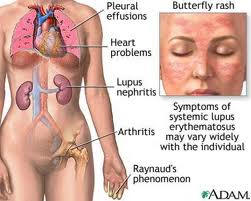
Raynauds phenomenon
Is basically always present in the early phase of the disease, mostly without other symptoms at the level of the fingers, unless scleroderma is also present at the onset of the disease.
Swollen fingers
Mostly all the fingers are swollen in the overall length and become sausage-like. Sometimes this is only temporary, but occasionally it evolves into sclerodactyly (thin fingers with hard skin and limited mobility).
Arthritis
In the early phase there is painful swelling of the joints of the hands and feet like in rheumatoid arthritis. Damage to the cartilage or bone, however, is rare. As such, malformations do not occur or only seldom and the function of the joints remains intact. This kind of arthritis is comparable to the arthritis seen in lupus.
Muscle inflammation
In 10 to 20% of the cases, patients develop a real form of myositis, muscle inflammation (see polymyositis). Two out of three patients suffer from significant muscle pain (no weakening or paralysis), without demonstrable abnormalities in the laboratory test, electromyography or biopsy. Patients complain mostly of pain at the level of the large muscle groups of the shoulder girdle and the upper arms.
Lungs
The lungs may show the same abnormalities and problems as in scleroderma. Reduced lung volume is common, sometimes reduced absorption of oxygen and rarely overpressure in the lung vessels with fatal outcome occurs.
Oesophagus
The same complaints as in scleroderma may occur.
Heart
Inflammation of the heart sac or pericardium (pericarditis) may be acute. Unlike in polymyositis, inflammation of the heart muscle (myocarditis), which may cause heart failure or arrhythmia, occurs rarely. These complications are very serious and may be life threatening.
Neurological damage
Meningitis, psychological abnormalities due to brain damage, damage to the spinal marrow or facial nerves have been described. These symptoms occur often in Sjogrens Syndrome, which often occurs in MCTD.
Renal involvement
Renal involvement is very rare and can be similar to the damage caused in scleroderma (especially damage to the renal blood vessels) as well as to the damage caused in lupus lupus (damage to the renal filtering units).
Skin and mucous membranes
The skin may show symptoms of scleroderma as well as of lupus. The mucous membranes (mouth, vagina) and the eyes may be dry due to the Sjogrens Syndrome .
Who can get MCTD and is it hereditary?
MCTD is a rare disease. In most cases the age of onset lies between 20 and 50 and 8 to 9 out of 10 patients are female. MCTD is not hereditary. There can be a difference in the diseases genetic susceptibility: the same susceptibility often seen in lupus, rheumatoid arthritis or Sjogrens Syndrome, can occur in combination.
External factors may also play a role. Some cases of MCTD have been described after the patients had worked professionally with PVC (polyvinylchloride).

Evolution
Since MCTD overlaps (mixes) different connective tissue disorders, there are many different types, and consequently, many prognoses. Complaints and symptoms depend on the organs involved, the degree of inflammation and the general degree of disease activity. In general the prognosis is favourable if the disease is adequately treated. Life expectancy is comparable to the life expectancy in lupus, i.e. favourable with a few exceptions.
Diagnosis
The diagnosis is based on complaints, symptoms and organ involvement and on the presence of anti-U1RNP antibodies in high titre (concentration). It is the only connective tissue disease for which one specific type of antibody is necessary to make a diagnosis (at least in most centres). If the doctor suspects the diagnosis of MCTD, some additional tests like lung function tests, heart check-up, examination of the kidneys and blood pressure need to be carried out. In case of muscle complaints or nerve pains an electromyography is necessary. The results of these examinations may also contribute to a diagnosis.
Treatment
Although treatments with a low dose of corticosteroids have been successful, there is no standard procedure for MCTD. The treatment is based on the type and degree of organ involvement, and can be a treatment for lupus or for scleroderma. The treatment has to be individualised for each patient.
MCTD and pregnancy
Surveys on the subject are quite different. The influence of pregnancy on MCTD or vice versa can be compared to pregnancy in lupus.
Overlapping syndromes
Besides MCTD there exist also other overlap syndromes which are less clearly definable or which do not have anti-U1RNP antibodies. As in MCTD, treatment is based on the type and degree of organ involvement and it is individualised for each patient. The evolution and prognosis are also comparable to MCTD, except that there may be more individual dissimilarities among patients.
Undefined Connective Tissue Disease (UCTD)
In the early phase of a connective tissue disease and especially at the onset of an overlap syndrome or MCTD, the symptoms can be very limited and unusual. Although the onset of a connective tissue disease can be certain in such cases, it is impossible to define the type of disease with certainty. That is why the term UCTD (= undefined connective tissue disease) is used. Mostly Raynauds phenomenon, joint pains, sometimes arthritis and muscle pains are present. The evolution is very diverse: some patients remain in this phase while others evolve quickly into a real form of lupus or another type of connective tissue disease. Again, treatment has to be individualised according to each patient.


                     Click here to see all the diseases we treat and complete info on our facility.      

                This will offer Treatment for Autoimmune disorders.

                                                         Low Cost

                         Treatments to turn off  inflammation at the source.

Detailed information on autoimmune disorders, autoimmune diseases, diagnosis , treatment and prevention

Autoimmune diseases home, treatment and prevention guidelines

Lahore Sex clinic

Prevention and treatment of Alopecia

Immunoglobulin's for immune deficiency

Everything about IVIg, treatment, side effects

Fibromyalgia, diagnosis , symptoms , treatment

gG subclass deficiency 

Immunglobulins

 Immunoglobulins -2

IgG

IgA 

 Knee Injury

 Chemicals

 Cystic Fibrosis

 Insulin

 Blood Letting

 Alopecia 1

Curry Powder

Tremor

 Scleroderma

Multiple Sclerosis treatment

Morgellons story

MS treatment

ALS

AMYTOPHIC LATERAL SCLEROSIS

 Mammogram

Libedo diet

 Magnets and ageing

   Aortic aneurysms

   Kidney therapy

   Sex in autoimmune disease

Alopecia treatment

Alopecia COMPLTE GUIDELINES

Bald Facts

Alopecia

Areata Alopecia

Hair chemicals

      Central Location for easy access for patients in Europe, Africa, Middle East , Asia  and  Australia.   
 
American Board Certified Physicians
 
 
            www.cidpusa.org  www.cidpusa.org/P/ivig.htm  http://www.cidpusa.org/disease.html http://www.cidpusa.org/Lahore.html