Created: Monday, November 12, 2007
Brazilian berry destroys cancer cells in lab.
A Brazilian berry popular in health food contains antioxidants that destroyed cultured human cancer cells.Published in the Journal of Agricultural and Food Chemistry, the Published in the Journal of Agricultural and Food Chemistry, the study showed extracts from acai (ah-SAH’-ee) berries triggered a self-destruct response in up to 86 percent of leukemia cells tested, said Stephen Talcott, an assistant professor with UF’s Institute of Food and Agricultural Sciences.
“Acai berries are already considered one of the richest fruit sources of antioxidants,” Talcott said. “This study was an important step toward learning what people may gain from using beverages,
dietary supplements or other products made with the berries.”
“This was only a cell-culture model and we don’t want to give anyone false hope,” Talcott said. “We are encouraged by the findings, however. Compounds that show good activity against cancer cells in a model system are most likely to have beneficial effects in our bodies.”
Other fruits, including grapes, guavas and mangoes, contain antioxidants shown to kill cancer cells in similar studies, he said.
Experts are uncertain how much effect antioxidants have on cancer cells in the human body, because factors such as nutrient absorption, metabolism and the influence of other biochemical processes may influence the antioxidants’ chemical activity.
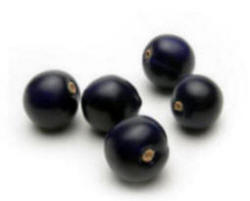
Acai berries are produced by a palm tree known scientifically as Euterpe oleracea, common in floodplain areas of the Amazon River, Talcott said. When ripe, the berries are dark purple and about the size of a blueberry. They contain a thin layer of edible pulp surrounding a large seed.
Historically, Brazilians have used acai berries to treat digestive disorders and skin conditions, he said. Current marketing efforts by retail merchants and Internet businesses suggest acai products can
help consumers lose weight, lower cholesterol and gain energy.
In the current UF study, six different chemical extracts were made from acai fruit pulp, and each extract was prepared in seven concentrations.
Four of the extracts were shown to kill significant numbers of leukemia cells when applied for 24 hours. Depending on the extract and concentration, anywhere from about 35 percent to 86 percent of the cells died.
But familiar produce items have plenty of health-giving qualities, he said.
“Increased consumption of fruits and vegetables is associated with
decreased risk for many diseases, including heart disease and cancer,” said Bomser, who researches the effects of diet on chronic diseases. “Getting at least five servings a day of these items is
still a good recommendation for promoting optimal health.”
Journal reference: Journal of Applied Toxicology (vol 24, p5)
Bras & Breast Cancer
Breast Cancer Chemic
Mammogram cancer
Breast Massage
Breast Implants
Breast Exam
Breast Feeding
Bra Chemicals
Breast Cancer Herbs
Bible Diet
Breast nutrients
Cancer Book
Cancer Therapy
Cancer cure
Vitamins and cancer
Cancer Prevention
Brocolli CANCER
Cancer and Bacteria
Bitter Gouard and ITP