Crohn's diseases
CIDPUSA Foundation
alternatives treatment of autoimmune disease e-book
Cystic fibrosis is a inherited disease which affects the lungs and pancreas, but can and other organs. Symptoms begin in childhood and include cough, wheeze, repeated chest infections, malabsorption of food, and general ill health. Treatments include antibiotics, physiotherapy, mucus thinning drugs, pancreatic enzyme replacements and other therapies. .Immune cells once thought to be innocent bystanders in cystic fibrosis may hold the key to stopping patients' fatal lung disease. New findings from the Stanford University School of Medicine and Lucile Packard Children's Hospital show that white blood cells called neutrophils respond strongly to conflicting signals from cystic fibrosis patients' lungs, setting up a molecular fracas that may explain the patients' severe lung damage.
What is cystic fibrosis?
Cystic fibrosis is a condition which mainly affects the lungs and pancreas, but can affect other parts of the body including the liver, nose and sinuses, reproductive organs and sweat glands.
Normally, cells in these parts of the body make mucus and other watery juices and secretions. In people with cystic fibrosis, these cells do not function correctly and make mucus and secretions which are thicker than normal. This can cause various symptoms and problems (which are described below.)
What causes cystic fibrosis and how common is it?
Cystic fibrosis is a genetic disorder. If you have cystic fibrosis, a particular pair of genes (on chromosome 7) do not work properly. This pair of genes help to control the way the cells handle sodium and chloride ions ('salt'). There are many different abnormalities (mutations) of the 'cystic fibrosis gene', but, basically, they all stop the cell from handling sodium and chloride properly.
As a result, cells in affected organs have a fault in the way sodium and chloride travel in and out of the cells. Basically, too much sodium travels into the cells. Water follows the sodium which leaves too little water outside the cells. This causes the mucus or watery secretions outside the cells to be too thick (for example, in the airways of the lungs).
About 1 in 2500 babies in the UK are born with cystic fibrosis. Cystic fibrosis is an autosomal recessive disorder. This means that in order to develop cystic fibrosis you need to inherit two cystic fibrosis genes, one from your mother and one from your father. If you inherit only one cystic fibrosis gene, you are called a carrier.
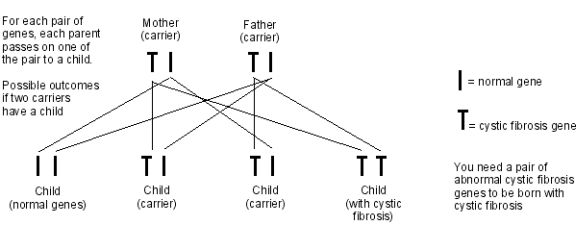
About 1 in 25 people in the UK of caucasian decent (white european) are carriers of the cystic fibrosis gene. It is much less common in Afro-Caribbean and Asian people. Carriers do not have the disease as they have one normal gene which can control the salt transport in their cells. But carriers can pass the cystic fibrosis gene on to their children.
When two people who carry the cystic fibrosis gene have a child, there is a:
- 1 in 4 chance that the child will have cystic fibrosis (by inheriting the cystic fibrosis gene from both parents).
- 2 in 4 chance that the child will not have cystic fibrosis, but will be a carrier (by inheriting a cystic fibrosis gene from one parent but the normal gene form the other parent).
- 1 in 4 chance that the child will not have cystic fibrosis, and will not be a carrier (by inheriting the normal gene from both parents).
What are the symptoms of cystic fibrosis?
Symptoms usually first develop within the first year of life, but may not appear until later childhood. The severity of symptoms can vary.
Lung symptom
The lungs make thicker sputum (mucus) than normal. This can trap bacteria in the small airways and lead to infection. So, symptoms which typically develop include:
- Persistent cough which typically produces a lot of sputum.
- Wheezing.
- Shortness of breath and breathing difficulties.
- Recurring chest infections. These can be severe such as pneumonia. Repeated infections can damage the lung and lead to poor lung function.
Please continue to nest page for full treatment of Cystic Fibrosis