God is our Guide                 Number 1 site for helping reverse diseases on Planet Earth
cidpUSA Foundation

 cidpusa.org   


      Home
      Diagnosis
      Treatment
      Pathology
      Variants
      CIDP info
      Fibromyalgia
      IVIG
      Diet anti-inflammatory
      Burning  Feet Home
      Services Page
      Chronic Fatigue
      Autoimmune diseases
      Prognosis
      Bible healing
      Celiac disease
Bible page

Autoimmune self attack

What is autoimmune

Autoimmune types

Autoimmune Guide

 Autoimmune-Epidemic

 Autoimmune & women

Autoimmunity secrets

Autoimmune inflammation

Auto-diseases plan

Autoimmune Risk

Autoimmune Rx

Autoimmune anemia

Autoimmune Ear

Autoimmune Thyroid

Autoimmune Fiber

Autoimmune Muscle

Autoimmunity summary

Autonomic Small Fiber

Myasthenia Holistic

Polymyositis

Dematomyositis

Poly Dermato

Myositis

Myasthenia alternative

Myofacial pain

Myopathy

Fibromyalgia

Inner Ear Disease AIED

 
  Natural Makeup
  Neck Pain
  Ocular Female diseases
  Chronic fatigue syndrome
  Osteoporosis
  Women Heart Attacks
  Breast Size & Disease
  Female Sex Disease
  PARKINSON
  Memory problems
  Breast Lymph Drainage
  Kidney stone Buster
 Bras cause breast cancer
  Skin repair Clinic
 Pandas
  Hepatitis


Risk of heart disease & stroke 

Depression and breast cancer

Kidney stone removal 

Alopecia general

Personality

Eye Clinic

Skin hair nail spa

Memory clinic

Depression & anxiety

Addiction  & Drug Rehab

Sexual  disorders Clinic

Parkinson Clinic

Epilepsy Clinic

Pain Clinic

Bone disorders clinic

Joint disorder clinic

Skin repair clinic

Gene Manipulation

Neurology Clinic

TMJ Clinic

Sex in autoimmune disease

Reduce  your weight

Antibiotics

 Want more sex

 Vitiligo 1 Vitiligo 2

heart disease & stroke 

Memory clinic

Sex in autoimmune disease

Reduce weight

Drug reaction prevention

Prevent Osteoporosis

Some rheumatic disorders

Alopecia treatment

Alopecia

Areata Alopecia

Nail Fungus

SESAME SEED OIL

Facial  cleaner

oil pulling

 Reading disorders

 Best New Diet

 DHEA Fountain of Youth

DHEA levels and cognitive functions

Parkinson

Diabetise-2

neurological effects of CIDP

Body goes against the grain

Celiac disease Info

More on Celiac disease

Anemia and celiac disease

Fatty acids in autoimmune diseases

News

Multifocal neuropathy

Dermrmatomyositis

 
 Link to Articles

 www.cidpusa.org/P/ivig.htm

Stop vasculitis


Electrical Stimulation Therapy

Addison

Estrogen

DNA

Magnets and

educe weight  Drug reaction prevention  Prevent Osteoporosis  Some rheumatic disorders

Cocunut oil      Pregnant Vaccine    Women Toxic makeup     ORGANIC CERTIFIED  Broccoli & Prostate Genes   Green TEA AND HEART DISEASE  Testicle Masage  Walnut oil


 Information on dangers in sea and diving

  Complete  guide on alternatives treatment of autoimmune disease please read our e-book 


DIVING MEDICINE

Diving Medicine is a growing medical speciality that focuses on the study, diagnosis and treatment of illnesses related to changes in pressure and the undersea environment. This area is rapidly expanding its knowledge base as the popularity of diving and undersea exploration continues to explode. A primary focus of diving medicine is to assess individual "Diving Fitness". As more and more people take to the water, there is an increased need to safely prepare or assess ability to dive among patients with various disease states. Particularly, dive physicians must understand how various ENT, Eye, Heart, Pulmonary, Gastrointestinal, Bone and Joint, Hematologic, Endocrine and Metabolic disease states affect the ability to dive. In addition, dive physicians can offer recommendations for people about flying and altitude, physchology and drugs, dental work, women specific concerns, hazardous marine life, long term effects of diving and specific treatment modalities if an accident occurs.

The primary accidents occuring in diving typically deal with effect pressure has on the various gases in your body. Most dive physicians treat patients for problems with equalizing pressure in their ears, sinus difficulties and of course barotrauma due to rapid ascension - "the bends". While these areas of dive medicine are perhaps most critical to understand in terms of patient care and treatment. I have chosen to speak on the more exotic, but rare, injuries from interactions with marine life.


OVERVIEW OF MARINE HAZARDS

There are a number of hazardous creatures in the sea. Many can cause serious harm to unaware or inattentive divers. Some may even cause death, although this often depends on the amount of venom used, individual reactions, nature of injury and location of accidents (deep water victims often drown). There are four major types of injury patterns from marine life. This presentation will Some basic first aid tips are given, although by far the best policy is not to meddle with these creatures.


CONTACT IRRITANTS


Sea Anenomes and Sea Cucumbers

Stinging AnemoneWhile most sea anemones are relatively harmless to humans a few do contain strong toxic substances producing quite severe effects. One of these is the stinging anemone (Actinodendron plumosum), a blue-grey to light brown animal which can look somewhat like a fir tree.

Found under boulders and coral, red bristle worms have numerous fine needle-like bristles which break off when they have become embedded in the skin, causing severe irritation.

Sea CucumberAlthough sea cucumbers are one of the safest animals on the reef to touch, the numerous white Cuvierian tubules, which some eject when irritated, contain a toxin which can cause blindness if it comes into contact with the eyes. This toxin may also be present on the skin so you should wash your hands after handling these creatures.


Stinging CoralSTINGING CORALS

Although known widely as stinging or fire corals, these organisms are, in fact, colonial animals (Millepora sp) more closely related to hydroids. Having a hard coral-like skeleton, they vary in form from large upright sheets and blades to branching, finger-like 'antlers' with a yellow-green to brown colour. Effects and treatment are similar to hydroid stings.


Crown-of-Thorns StarfishCROWN-OF-THORNS STARFISH

The sharp spines of this creature are covered with a thin venomous skin which, if introduced into any wound can cause nausea, vomiting and swelling. Spines may also break off and remain embedded.


HydroidHYDROIDS

Looking like feathery plants, and sometimes referred to as fireweed, hydroids are actually colonies of animals equipped with strong stinging cells (nematocysts) used to capture prey and for defence. Some species can give quite severe stings causing inflammation, swelling and pain lasting up to a week. Effects may sometimes be more severe.

Divers are particularly prone to brushing against hydroids. Two species to avoid are this white, fine feathery one and the denser yellow/brown type. They can be found in fairly shallow reef areas and on structures such as wharfs.

BOXES OF DEATH - BOX JELLYFISH

Box JellyfishRecognized as one of the greatest marine hazards, box jellyfish (Chironex fleckeri) kill more people than sharks, crocodiles and stonefish combined.

Each year, in late summer, the adult box jellyfish spawn at river mouths before dying. The fertilised eggs become tiny polyps which attach themselves to rocks in estuaries. In spring these polyps develop into little swimming jellyfish which migrate down rivers, especially with rains, to feed on shrimp. Unfortunately, they frequent beaches which humans also find attractive. The animal does not actively hunt, relying on food to bump into its tentacles. A struggling shrimp might tear a delicate jellyfish, so it needs to be killed instantly, on contact, with a very strong poison.

Tentacles, up to 60 in number and reaching 5m in length, are arranged in four groups at the corners of a box-shaped bell which can be as large as a basketball. The tentacles are armed with up to 5 000 million stinging cells known as nematocysts. These are triggered into action when stimulated by certain chemicals found on the surface of fish, shellfish and humans. Contact with just 3m of tentacles can kill an adult.

Recent studies have shown that the box jellyfish is able to see through four eyes, one at the centre of each side of the bell. How it processes this information without a brain is still a mystery but the animal is able to avoid even quite small objects. They probably try to avoid humans in the water, if given the chance; stings usually occur when people blunder into them. (They are almost invisible in the water.) It is certainly in the interest of the jellyfish to avoid turtles which eat them, apparently unaffected by the stings.

Another box jellyfish, Chiropsalmus quadrigatus, is generally less common than Chironex fleckeri, although it may outnumber them on Cairns to Port Douglas beaches. It is smaller, with slimmer tentacles, but the two are difficult to tell apart. There are about 20 species, worldwide, in the Cubozoa, or box jellyfish, family, Chironex fleckeri is the most lethal member.


IRUKANDJIS

Although it is more numerous in summer months, the irukandji (Corukia barnesi) can be found all year round and inhabits all waters. A member of the box family, it has one tentacle at each corner of its bell. It is tiny - only 2cm across the bell - but nonetheless packs a massive punch. Both bell and tentacles have stinging cells.

The actual sting is minor, but 20-30 minutes later the victim begins to experience agony which lasts for hours. Although not blamed for deaths its tendency to cause raised blood pressure can be dangerous for vulnerable victims. Ignoring the initial sting may also lead to some people suffering severe symptoms in deep water or while driving.


Sea UrchinSEA URCHINS

It is just common sense to avoid the sharp black spines of the black sea urchin. They can penetrate deeply into the flesh and break off causing long-lasting inflammation if not removed – often surgically. There is doubt as to whether venom is also involved.

A less common but much more dangerous urchin is the flower urchin. Instead of long spines it appears to be covered with numerous flowers which are in fact little venomous pincers (pedicillariae) capable of causing paralysis and even death. It has killed several people in Japan.


INGESTED TOXINS


Shell Fish


This derives from dinoflagellates contaminating shellfish (clams, scallops, oysters, etc.). The toxin, saxotoxin, is water soluble, heat and base stabile, and is therefore not affected by steaming or cooking. It inhibits sodium channels of excitable membranes, blocking propagation of nerve and muscle action potentials.

Symptoms: These usually occur within 30 minutes, and include parasthesias of the lips, tongue, gums and face. This process proceeds to the trunk and may progress to paralysis and respiratory arrest. The gastrointestinal form may appear hours or days after ingestion with nausea, vomiting, diarrhea and abdominal pain.

Treatment: No specific treatment. Stop eating if oral sensations are perceived. Empty stomach if systemic symptoms are noted, using emetic or lavage. Give respiratory support and monitoring if needed.


Scombroid


Occurs in tuna, mackerel, skipjack and other members of the family scombridae. Fish left at room temperature undergo bacterial breakdown of tissue histidine to histamine and saurine. Spoiled fish have a sharp, peppery taste.

Symptoms: Occur in the first hour, and a histamine-like intoxication is seen. There is headache, flushing, dizziness, palpitations and tachycardia. One may see hypotension, bronchospasm, urticaria and anaphylaxis. GI symptoms include nausea, vomiting, diarrhea, abdominal pain, thirst and dysphagia.

Treatment: Gastric lavage, respiratory and circulatory support. Antihistamines appear to be helpful.


Puffer FishTetradoxin


Toad, or pufferfish, common in tidal creeks and coastal waters are well-known for their amusing habit of inflating their bodies with water or air to balloon-like proportions when provoked. Along with their relatives the porcupine fish, cowfish, boxfish, tobies and sunfish, their bodies contain the same toxin as the saliva of the blue-ringed octopus with the same, potentially fatal effects. Easily caught on fishing lines, they must never be eaten.

Derived from algae covered with bacteria Alteromonas sp.Being ingested by pufferfish The toxin concentrates in the liver and gonads. The toxin inhibits sodium transport, affects neuronal transmission in the CNS and periphery and also affects cardiac nerve conduction and contraction.

Symptoms: Entirely dose dependent-can have oral paresthesias, muscular fasciculations then a flaccid type of paralysis occurs. (curare-like).

Treatment: Gastric lavage and respiratory support, usually for 24 hours or more. Consider sedation because cognitive function intact. There will be spontaneous remission if the patient is otherwise supported.


Ciguatera


A form of food poisoning which occurs occasionally in certain coral reef fish. It originates in a tiny organism (dinoflagellate) attached to algae growing usually on dead coral. It is eaten by plant-eating fish and then accumulates in large predatory fish such as mackerel, coral trout and cod. The tasteless and odourless toxin is not destroyed by cooking or freezing.

All reef fish over 10kg should be treated with caution. Eat only a little and if symptoms develop discard the fish. Avoid internal organs of any reef fish. Symptoms, which begin 2-12 hours after fish are eaten, are varied and can include breathing difficulty requiring artificial respiration. If symptoms develop, induce vomiting.


INJECTED TOXINS


Conus geographusCONE SHELLS


Happily for humans, the animals which inhabit the beautiful cone shells are nocturnal. Hunters by nature, many carry a toxic concoction which is capable of killing humans; in fact, the venom from one geographer cone (Conus geographus) is capable (in theory of course,) of killing 700 people.

There are about 80 species of cone shells in Australia, mostly in tropical waters. Some feed on worms, some on molluscs (including other cone shells) and some on fish. It is the last two types which are most dangerous to humans. To stop a fish in its tracks a snail needs a formidably fast-acting venom.

It is thought that the cone detects its prey from chemicals in the water drawn through its siphon. Some visual sense may also be involved. The cone then extends its proboscis, a hollow feeding tube, on the end of which is a hollow, barbed tooth. Attached to a poison sac, this tooth is driven harpoon-style into the hapless victim, poison being injected through the tooth. The force of the harpoon has been known to penetrate a periwinkle shell. Each tooth is used only once. A supply of spares is kept in an internal tooth sac and moved into position as required. Held by the barbed tooth, the victim is quickly immobilised by the poison and then drawn into the expanded proboscis to be digested. A mollusc victim may be sucked from its shell (certain toxins may loosen its muscular attachment to the shell, making the task easier).

The best way to avoid stings is not to touch live cone shells. The extendable harpoon-wielding proboscis is capable of reaching most parts of the shell so it is not safe to grip the wide end. Thick shoes should be worn for reef walking and cones should never be put in pockets or sleeves. Sting symptoms progress from numbness to breathing failure.


Blue-ringed OctopusBLUE-RINGED OCTOPUS


This potential killer is small, the northern (larger) species reaching only 20cm across spread tentacles. It is normally yellowish brown but when disturbed its blue rings become bright and obvious. It is not aggressive by nature but will bite when provoked.

The venom is contained in the saliva, which comes from two glands each as big as the animal's brain. It has two components. One is probably most effective on crabs (its main prey) but relatively harmless to humans while the other, the same as that present in toad/puffer fish, probably serves as a defence against predatory fish. Humans, when bitten, usually do not feel the bite but soon notice a numbness around the mouth followed quickly by paralysis. Death can result from respiratory failure.

Blue-ringed OctopusThis octopus lives in shallow water, typically in sheltered rock pools and crevices, cans and bottles. Never put your hands where you cannot see them. The venom is not injected but enters the wound in saliva. Washing the bite may therefore remove venom from the surface.


StingraySTINGRAYS


Stingrays will defend themselves by lashing out with whip-like tails equipped with one or two spines. Because they are barbed they can cause serious gashes and in about two-thirds of species they are also venomous. The spines are capable of penetrating wetsuits and shoe leather and have been known to kill people unlucky enough to have been stabbed in the chest.

Those at risk are people wading, who often get injured on the leg, careless fishers and divers who may get lashed by a startled stingray as they swim above it. Prevention involves shuffling feet when wading. Wash wounds thoroughly with sea water and remove spines carefully.
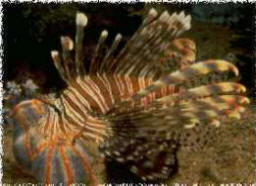

LionfishVENOMOUS FISH


A number of other fish are equipped with similar venomous spines, although they are more mobile than stonefish and will prefer to get out of the way. These include members of the scorpionfish family, such as this popular aquarium fish known by many names such as lionfish, butterfly cod and firefish. (The freshwater bullrout is also in this family.)


CatfishCatfish, when interfered with, produce three barbed spines which stick out at right angles from the back and side fins. (It is not the whisker-like sense organs around their mouths which cause the damage.)

Stings from all these fish are painful and can lead to collapse and even death in exceptional circumstances. The venom in the spines remains active for days, so discarded spines and even refrigerated specimens should be treated with caution.


StonefishSTONEFISH


The stonefish's lifestyle makes this, the most venomous fish in the world, particularly dangerous to unwary humans. Lying on the seabed, looking exactly like an encrusted rock, it waits for small fish and shrimps to swim by and then, with lightning speed, opens its mouth and sucks them in. The whole ambush has been timed at just 0.015 seconds.

Vulnerable to bottom-feeding sharks and rays, it has developed a defence - a row of unlucky 13 venomous spines along its back. It is, in fact, the victim who injures him/herself. Each stonefish spine is encased in a sheath containing bulging venom glands. Downward pressure on the spine causes the sheath to be pushed back, the venom from the pressurised glands shooting forcefully up grooves on the surface of the spine into the deepest part of the wound. (It takes a few weeks for the glands to regenerate and recharge.)

Victims become frantic with pain which lasts for hours. Temporary paralysis, shock and even death may result. Stonefish may be found from exposed sand and mud in tidal inlets to depths of 40m. Prevention involves wearing thick-soled shoes and treading gently - spines may penetrate soles if a stonefish is jumped on. Also, take care when turning over 'rocks'.


Sea SnakeSEA SNAKES


Sea snake venom is more toxic than that of land snakes, however these animals pose little risk. Most are shy and stay away from people, biting only when provoked, if at all. Even then they tend not to use their venom.

It is reserved for quickly immobilising prey, not for defence. In fact, about 65% of bites are 'blanks'. Nevertheless, the potential danger of a sea snake should not be underestimated and they should be treated with respect.

Sea snakes are air breathers probably descended from a family of Australian land snakes. They inhabit the tropical waters of the Indo-Pacific and are highly venomous. Thirty-two species have been identified in the waters about the Barrier Reef in Australia. They seem to congregate in certain areas in the region about the swain Reefs and the Keppel Islands, where the olive sea snake (Aipysurus laevis) is a familiar sight.

Sea snakes have specialized flattened tails for swimming and have valves over their nostrils which are closed underwater. They differ from eels in that they don't have gill slits and have scales. Due to their need to breathe air, they are usually found in shallow water where they swim about the bottom feeding on fish, fish eggs and eels.

The yellow-bellied sea snake ( Pelamis platurus ) is planktonic, and is seen on occasions floating in massive groups. Fish that come up to shelter under these slicks provide food for the snakes. Occasionally these yellow-bellies get washed up on beaches after storms and pose a hazard to children.

Aggressive only during the mating season in the winter, the sea snake is very curious, and they become fascinated by elongated objects such as high pressure hoses. Advice here is to inflate your BC so as to lift away from the bottom and the snake. Provoked snakes can become very aggressive and persistent --requiring repeated kicks from the fins to ward them off.

Persistent myths about sea snakes include the mistaken idea that they can't bite very effectively. The truth is that their short fangs (2.5-4.5mm) are adequate to penetrate the skin, and they can open their small mouths wide enough to bite a table top. It is said that even a small snake can bite a man's thigh. Sea snakes can swallow a fish that is more than twice the diameter of their neck.

Most sea snake bites occur on trawlers, when the snakes are sometimes hauled in with the catch. Only a small proportion of bites are fatal to man, as the snake can control the amount of envenomation, a fact probably accounting for the large number of folk cures said to be 95% effective.

Intense pain is not obvious at the site of the sea snake bite; 30 minutes after the bite there is stiffness, muscle aches and spasm of the jaw followed by moderate to severe pain in the affected limb. There follows progressive CNS symptoms of blurred vision, drowsiness and finally respiratory paralysis. A specific antivenin is available; if not obtainable-the Australian tiger snake antivenin or even polyvalent snake antivenin can be used.


Please read the autoimmune E-Book for permanent treatment guidelines.


info from Utah diving medicine


Please go to the next page Human Brain neurotransmitter page

Nanotech Nanoprotocol
 

Milk Thistle  Microwave Limbic Meningitis Magneticmap Malaria Nephropathy links, links, links


   World Wide Consultation by Internet

By pass heart surgery

Young Women Dying Of Heart Disease

Calcium supplements cause stroke in women

Treatment of Myasthenia

Trends in medicine 

Tremor

Top Foods

Ulcerative colitis 

Ultrasound

Fatty acids in autoimmune diseases

Small fiber neuropathy 

Depression and breast cancer

Dermatomyositis

Fighting with spouse gets good results!

Vitamin D  deficiency causes high BP

 Mobile phone Use Increases Tumour Risk

New Psoriasis Rx       LasiK Dangers

No cold meds to kids, says FDA

Vitamin D extends life   Breast Size & disease

 Reverse Chronic Fatigue syndrome & Fibromyalgia, 


BPA in infant bottles a concern

Want more sex

 Boy or Girl   Autism & Mercury

 Before getting child vaccination read this

 Parents rejecting dangerous vaccine 

Botox causes deaths also in children

Autoimmune reaction kills teenager

Parkinson Prevention    Aids Vaccine alert

Folate Deficiency Triples Risk of Dementia

DHEA levels and cognitive functions

SESAME SEED OIL

Facial  cleaner

Immunoglobulins -2

Immunoglobulins

Immunodeficiency

IgG

IgA 

Immune dysfunction

IgG subclass deficiency 

Immunodeficiency

       makeup     

 Immune deficiency

IgA nepropathy

911 CIDP story

Tetanus Vaccine Story

Stem Cell Story

Surgery CIDP

Cranial nerve CIDP

Farmer CIDP

Story 7

Story 8

Story 9

Recurrent attack CIDP

Charcot

Story 12

Story 13

Story 14

Car accident & CIDP

Story 16

Story 17

Arthritis & CIDP

Flu Shot Story

MS & CIDP story

Story21new

Renal transplant PRA

Neck Pain Tips

 Quran page


www.cidpusa.org  www.cidpusa.org/P/ivig.htm  http://www.cidpusa.org/disease.html