Home
      Diagnosis
      Treatment
      Pathology
      Variants
      CIDP info
      GBS
        IVIG
        Diet
        About Us
        Contact us
        Email Web Weaver
      Autoimmune diseases
        News
        Links


                            makeup
Clinics of Excellence
 Skin repair Clinic
 Neck Pain
 Rabinder N Tagore
 Breast Lymph Drainage
 Osteoporosis
 Electronic Treatment
 Breast Size & Disease
 Female Sex Disease
 PARKINSON
 Memory problems
 Breast Lymph Drainage
 Kidney stone Buster
 Bras & breast cancer
 Lahore Clinic
 Lahore skin Clinic
 Pandas


   Clinics of Excellence

  Female sexual problems

  Breast size and disease

  Breast Lymph drainage

  Bras & breast cancer

  Breast Size and disease
 

    Clinics of Excellence

Oral Kidneystone removal  


Eliminate risk of heart disease & stroke 

Memory clinic

Depression & anxiety

Private treatment of addiction  & Drug Rehab

Sexual  disorders Clinic

Parkinson Clinic

Epilepsy Clinic

Pain Clinic

Bone disorders clinic

Joint disorder clinic

Skin repair clinic

Gene Manipulation

Neurology Clinic

TMJ CLINIC

We offer a lecture on personality development and self improvement.


Is your teenage child out of your control we do behavior modification treatment with positive results and a 90% turnaround.

Our Nanoparticle treatment units are for sale. Get your treatment at home.

Sex in autoimmune disease

Reduce weight

Drug reaction prevention

Prevent Osteoporosis

Some rheumatic disorders


                                                    AIDS  & CIDP

     
 Aids causes lots of autoimmune diseases more info in our e-book with treatment guidelines.  
 

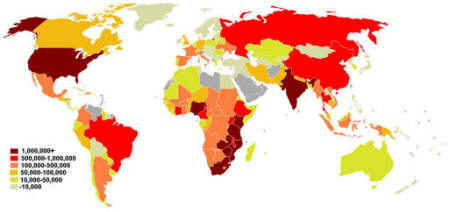
   Look at the Global Map and see that the Muslim Countries have the lowest incidence of Aids. This is so because of male circumcision.

 At CIDPUSA we have received calls for help from around the world for patients who had AIDS these people also had CIDP. They were suffering on a daily basis, today by following the advice in the E-Book not only are they better they are enjoying life. There is treatment for every diseases!
There are 3 simple ways to end Aids. Please ask for the Aids treatment .


West J Med. 1994 May;160(5):447-52.  

Comment in:
Neuromuscular complications of human immunodeficiency virus infection and antiretroviral therapy.

Miller RG.

Department of Neurology, California Pacific Medical Center, San Francisco.

At least 4 distinct peripheral neuropathy syndromes occur in patients infected with the human immunodeficiency virus. The most common, painful sensory neuropathy, may be related to the viral infection or may be medication induced and is treated symptomatically. The other 3, chronic inflammatory demyelinating polyradiculoneuropathy, mononeuropathy multiplex (some patients), and the progressive polyradiculopathies related to the acquired immunodeficiency syndrome, may all respond to appropriate therapy. Both inflammatory myopathy and zidovudine myopathy also abate with early diagnosis and treatment.


PMID: 8048229 [PubMed - indexed for MEDLINE]

 
West J Med. 1994 May;160(5):447-52.  

Comment in:
Neuromuscular complications of human immunodeficiency virus infection and antiretroviral therapy.

Miller RG.

Department of Neurology, California Pacific Medical Center, San Francisco.

At least 4 distinct peripheral neuropathy syndromes occur in patients infected with the human immunodeficiency virus. The most common, painful sensory neuropathy, may be related to the viral infection or may be medication induced and is treated symptomatically. The other 3, chronic inflammatory demyelinating polyradiculoneuropathy, mononeuropathy multiplex (some patients), and the progressive polyradiculopathies related to the acquired immunodeficiency syndrome, may all respond to appropriate therapy. Both inflammatory myopathy and zidovudine myopathy also abate with early diagnosis and treatment.

PMID: 8048229 [PubMed - indexed for MEDLINE]
 
Ann Neurol. 1988;23 Suppl:S38-48.  

Neuromuscular diseases associated with human immunodeficiency virus infection.

Dalakas MC, Pezeshkpour GH.

National Institute of Neurological and Communicative Disorders and Stroke, Bethesda, MD 20892.

The types of neuromuscular diseases associated with human immunodeficiency virus (HIV) infection are described. Our classification includes: (1) six subtypes of peripheral neuropathies--namely, acute Guillain-Barre syndrome, chronic inflammatory demyelinating polyneuropathy, mononeuritis multiplex, an axonal, predominantly sensory, painful polyneuropathy, a sensory ataxic neuropathy due to ganglioneuronitis, and an inflammatory polyradiculoneuropathy presenting as cauda equina syndrome; (2) inflammatory myopathies (e.g., polymyositis); and (3) other less common neuromuscular manifestations, such as type II muscle fiber atrophy and nemaline myopathy. Although the exact incidence of clinical and subclinical neuromuscular diseases in HIV-positive and acquired immunodeficiency syndrome (AIDS) patients is unknown, estimates vary from 15 to almost 50% of such individuals. The type of neuropathy or myopathy related to the specific stage of HIV infection, the pathogenetic mechanisms involved, and effective therapies are discussed. A neuromuscular disease not only occurs in patients with AIDS and AIDS-related complex, but it can coincide with HIV seroconversion or it can be the only clinical indication of a chronic silent HIV infection. Chronic asymptomatic HIV infection should be considered in the differential diagnosis of certain acquired inflammatory polyneuropathies or myopathies. Precautions needed when doing electromyographic studies are discussed.

PMID: 2831801 [PubMed - indexed for MEDLINE]


Drugs. 2000 Jun;59(6):1251-60.  

HIV-associated peripheral neuropathy: epidemiology, pathophysiology and treatment.

Wulff EA, Wang AK, Simpson DM.

Department of Neurology, The Mount Sinai Medical Center, New York, New York 10029, USA.

Peripheral neuropathy is the most frequent neurological complication associated with human immunodeficiency virus type 1 (HIV) infection and advanced acquired immunodeficiency syndrome (AIDS). There are at least 6 patterns of HIV-associated peripheral neuropathy, although these diagnoses are often overlooked or misdiagnosed. Distal symmetrical polyneuropathy (DSP) is the most common form of peripheral neuropathy in HIV infection. DSP occurs mainly in patients with advanced immunosuppression and may also be secondary to the neurotoxicity of several antiretroviral agents. Treatment of painful DSP is primarily symptomatic, while pathogenesis-based therapies are under investigation. Reduction or discontinuation of neurotoxic agents should be considered if possible. Inflammatory demyelinating polyneuropathy (IDP) can present in an acute or chronic form. The acute form may occur at the time of primary HIV infection or seroconversion. Cerebrospinal fluid lymphocytic pleocytosis (10 to 50 cells/mm3) is helpful in the diagnosis of HIV-associated IDP. Treatment consists of immunomodulatory therapy. Progressive polyradiculopathy (PP) most commonly occurs in advanced immunosuppression and usually is caused by cytomegalovirus (CMV) infection. Rapidly progressive flaccid paraparesis, radiating pain and paresthesias, areflexia and sphincter dysfunction are the cardinal clinical features. Rapid diagnosis and treatment with anti-CMV therapy are necessary to prevent irreversible neurological deficits resulting from nerve root necrosis. Mononeuropathy multiplex (MM) that occurs in early HIV infection is characterised by self-limited sensory and motor deficits in the distribution of individual peripheral nerves. In advanced HIV infection, multiple nerves in two or more extremities or cranial nerves are affected. Treatment includes immunomodulation or anti-CMV therapy. Autonomic neuropathy may be caused by central or peripheral nervous system abnormalities. Treatment is supportive with correction of metabolic or toxic causes. Diffuse infiltrative lymphocytosis syndrome (DILS) presents as a Sjogren's-like disorder with CD8 T cell infiltration of multiple organs. Antiretroviral therapy and steroids may be effective treatments.


PMID: 10882161 [PubMed - indexed for MEDLINE] www.cidpusa.org  www.cidpusa.org/P/ivig.htm  http://www.cidpusa.org/disease.html http://www.cidpusa.org/Lahore.html  http://www.cidpusa.org/FMS%20CFS.html http://www.cidpusa.org/fibromyalgia.html http://www.cidpusa.org/FMS%20CFS.html