Search Cidpusa web
DERMATOMYOSITIS
What are polymyositis and dermatomyositis?
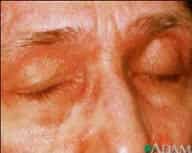
- Polymyositis (pronounced pah-lee-my-o-site-iss) is a disease that causes muscles to be weak.After a person has had polymyositis for a long time his or her muscles can get smaller.
- Polymyositis can affect the muscles in any part of the body. It can also affect the lungs and the heart.
- It is called dermatomyositis (pronounced der-ma-toe-my-o-site-iss) when the skin is also affected. It can cause skin rashes all over the body.
- Both polymyositis and dermatomyositis are chronic autoimmune diseases. This means that they can last a very long time and they come in attacks like waves in the sea..
- With both forms of the disease, there may be times when the symptoms are stronger (active periods) and then periods when the symptoms lessen (remissions).
How common are polymyositis and dermatomyositis?
- They affect 15,000 (1 in 2,000) .
- Women are affected by polymyositis and dermatomyositis twice as often as men.
- These diseases occur most often in children between the ages of 5 and 15 and in adults between the ages of 50 and 70.
Polymyositis and dermatomyositis can occur at any age but are most common in children and adults over age 50. More adults than children get these diseases.
One to five new cases per 100,000 are seen each year. Women are affected by polymyositis and dermatomyositis twice as often as men.
What are the warning signs of polymyositis and dermatomyositis?;
- The main warning sign is muscle weakness. Usually the first muscles affected are in the hips and thighs, though any other muscle in the body can be affected.
- It may be hard to climb stairs, get dressed or get out of bed.
- Pain in the joints between bones. However, the joints are usually not warm or swollen, as with some other forms of arthritis.
- Deep red (almost purple) rash, usually on the face, scalp, neck and chest. However, the rash can appear on any part of the body.
- Coughing and shortness of breath.
· It may also be hard to swallow.
Muscle weakness and pain
Usually, the main symptom of polymyositis is muscle weakness. At the onset of the disease it generally affects the thighs and hips. If you have polymyositis,
you may have difficulty climbing stairs, getting off buses with high steps or rising from low surfaces. The distance you are able to walk may eventually be limited
because your muscles get too tired.
If your shoulders are involved, you may have trouble getting dressed, combing your hair or lifting heavy objects. If polymyositis affects your neck, chest and abdomen
muscles it may be hard to lift your head from a pillow or get out of bed. Polymyositis can also cause you to have trouble swallowing or talking, though these are less
common results of the disease.
At the start of the disease your muscles may feel sore and tender. Many people do not experience muscle pain; it occurs particularly in people with rapidly progressing disease.
The muscle pain and tenderness usually goes away with treatment. After having the disease for a long period of time you may lose muscle bulk overall and the affected muscles
may appear thin and 'wasted.'
A new study done with mice has discovered that supplements of lipoic acid can inhibit formation of arterial lesions, lower triglycerides, and reduce blood vessel inflammation and weight gain 0151 all key issues for addressing cardiovascular disease.
Although the results cannot be directly extrapolated beyond the laboratory, researchers report that "they strongly suggest that lipoic acid supplementation may be useful as an inexpensive but effective intervention strategy . . . reducing known risk factors for the development of atherosclerosis and other inflammatory vascular diseases in humans."
The findings were made by scientists from the Linus Pauling Institute and College of Veterinary Medicine at Oregon State University, and the Department of Medicine at the University of Washington. They were just published in Circulation, a journal of the American Heart Association.
Heart disease is the leading cause of death in the United States.
The study found that lipoic acid supplements reduced atherosclerotic lesion formation in two types of mice that are widely used to study cardiovascular disease, by 55 percent and 40 percent, respectively. The supplements were also associated with almost 40 percent less body weight gain, and lower levels of triglycerides in very low-density lipoproteins.
As a result, the authors concluded that "lipoic acid may be a useful adjunct in the prevention and treatment of atherosclerotic vascular diseases."
"We are excited about these results, particularly since the supplements of lipoic acid appear to provide several different mechanisms to improve cardiovascular health," said Balz Frei, professor and director of the Linus Pauling Institute. "They are helping in a fundamental way to reset and normalize metabolic processes, in ways that could help address one of the most significant health problems in the Western world.
"These findings also reinforce the need for more comprehensive human studies," Frei said. "That will be the next step in our research, in double-blind, randomized, clinical studies during the next five years with Oregon Health and Science University."
Alpha lipoic acid is a naturally occurring nutrient found at low levels in green leafy vegetables, potatoes and meats, especially organ meats such as kidney, heart or liver. The amounts used in this research would not be obtainable by any normal diet, researchers said, and for human consumption might equate to supplements of about 2,000 milligrams per day. Even at low, normal, dietary levels, the compound can play a key role in energy metabolism.
Also of considerable interest, Frei said, is the apparent role of lipoic acid supplementation in reducing weight gain. It appears to have this effect both through appetite suppression, an enhanced metabolic rate, and — at least in laboratory animals — has been shown to stimulate higher levels of physical activity, which again would increase caloric expenditure and further reduce weight.
Weight gain and obesity is a major risk factor for atherosclerosis and heart disease, and lower weight and abdominal fat may be one of the mechanisms by which lipoic acid has beneficial effects, Frei said. The study concluded that "lipoic acid supplementation may be a promising approach to prevent weight gain and to lower cardiovascular disease risk in humans."
You will need to detoxify body and chealate the toxic Fluoride out can be done by fasting, using
cilantro in your diet twice daily and bathing with Boric acid.