MYASTHENIA GRAVIS
A Holistic Therapy
By Walter Last
Severe muscle weakness becomes
increasingly more common in recent times. The classical disease
with severe muscle weakness is myasthenia gravis or M.G. It is
most common in young women, although it may develop at any age
and in both sexes. Males are more affected in their later
decades of life.
Certain muscles become chronically weak
and easily fatigued. Most affected are the muscles of the head
and neck, later progressively also the muscles of the chest and
limbs. The first sign of myasthenia gravis is usually a drooping
eyelid (ptosis). Frequently double vision (diplopia) develops as
the disease progresses, also difficulty chewing or swallowing or
even breathing. The speech may be slurred and the vision
blurred. Usually the condition becomes worse as the day
progresses.
In medical treatment a group of drugs,
called anticholinesterases, is used, such as neostigmine or
pyridostigmine. These delay the normal inactivation of the
neurotransmitter acetylcholine, which results in a temporary
improvement in muscle functions. Frequently the thymus gland is
greatly enlarged and may be surgically removed. This can result
in some medium-term improvement in one-third of cases.
There are frequent side effects from drug
therapy, such as abdominal cramps, diarrhoea, nausea, vomiting,
excessive mucus formation, bronchial spasms, twitching of face
muscles, spasms and freezing of muscles, tremors, incoordination
and paralysis. It is easy to overdose with a resulting
'cholinergic' crisis often resulting in death.
Removal of the thymus results in
disturbances of the calcium and manganese metabolism, it greatly
weakens the immune system and perpetuates the muscle weakness
which then does not respond any more to biological therapy.
CAUSES OF MYASTHENIA GRAVIS
Myasthenia gravis has been shown to be an
autoimmune disease. This means that the immune system attacks
some of its own body proteins. Specifically, the transmission of
signals from the nerve endings to the muscle receptors is partly
blocked by antibodies. The messenger chemical or
neurotransmitter released as signal from nerve endings to
muscles is acetylcholine. Acetylcholine molecules travel the
short distance in the gap between nerve ending and muscle
to find a receptor on the motor end plate. When a sufficient
number of acetylcholine molecules are attached
to muscle receptors, there is an electric discharge of the
normal membrane potential and the muscle fibre can contract.
In myasthenia gravis many or most of the
receptors are already occupied by antibodies, therefore, not
enough acetylcholine molecules find
receptors to trigger this discharge and subsequent muscle
contraction. Normally, the acetylcholine is split by an enzyme
and, with this, removed
from the receptor in a fraction of a second. Using drugs, which
hinder this enzyme, acetylcholine molecules have more time to
find receptors
with an increased chance to lead to a discharge.
However, if too much of this enzyme
antagonist is present, the cells remain discharged for too long
and the muscles become more or less
paralysed. This is a 'cholinergic crisis' in which heart and
breathing may stop. A modern complication is the additional
antagonistic action of
fluoride on this enzyme. Fluoridated water may trigger a crisis
or contribute to the long-term deterioration. This also applies
to commercial
liquids, such as soft drinks, soymilk or reconstitutet 100%
fruit juices in countries where water fluoridation is practised.
It has been stated that myasthenia gravis
has manifested after exposure to crop sprays with chemicals
which have an antagonistic effect on acetylcholinesterase.
To test the theory that antibodies clog up
muscle receptors serum from a myasthenia gravis patient was
injected into mice, which promptly
developed M .G. symptoms. The same electrical symptoms as in
myasthenia gravis could also be produced in healthy human muscle
when
exposed to the serum of a myasthenia gravis patient.
This is as far as the conventional medical
understanding of myasthenia gravis goes. The cause of the main
event, the blocking of the muscle
receptors by antibodies, is not known. There is also at present
no attempt to overcome this disorder with nutritional therapy.
Nutritional Factors
A wide variety of vitamins and minerals
are involved in muscle activity, partly in energy production and
partly in the synthesis of proteins and neurotransmitters. The
main B-vitamins are essential for energy production in the
muscles and some improvement in myasthenia gravis has been
reported with B-complex supplementation so that, for instance,
less of the enzyme-blocking drug was required.
In experiments with separately
administered vitamins B1, B2, B6, C, E, pantothenic acid and
choline (as from lecithin) were reported to be
beneficial in myasthenia gravis. Conversely, myasthenia gravis
like symptoms could be produced in monkeys and humans by making
them
deficient in the vitamins B1, B6 and pantothenic acid.
During World War 2 myasthenia gravis
developed in prisoners of war in Singapore, which was
attributed to malnutrition. A high-vitamin
nutritious diet with plenty of yeast and liver soon restored
these patients to normal. In Europe were reports of almost an
epidemic of myasthenia gravis following the war. Also other
myasthenia gravis cases have been reported with more or less
permanent remissions as long as a highly nutritious
diet was used.
In addition to the general effect on
energy production and protein synthesis, several vitamins have
been shown to have a specific relationship
with myasthenia gravis
Vitamin B1, working together with
manganese, is the key vitamin for the synthesis of acetylcholine
in the nerve endings. A lack of this vitamin, therefore, can
cause a reduced signal from nerves to muscles and, with this,
muscle weakness and other neurological complications. Vitamin B1
also helps acetylcholine to bind to receptors. It also has a
significant role in nerve excitation and enhances the effects of
acetylcholine. Furthermore,
with low vitamin B1 levels lactic acid accumulates in the
muscles and causes fatigue, deficiency can also lead to nerve
degeneration.
Vitamin B2 is important for tissue
respiration, for the storage of glycogen in muscles and liver as
well as for the metabolism of glycine, an amino acid linked with
myasthenia gravis. A deficiency lowers the resistance to stress.
Vitamin B6 is essential for the synthesis of neurotransmitters
and
receptors.
Pantothenic acid supplies the acetyl part
in the synthesis of acetylcholine. It opposes the effects of
substances that are known to block receptors. Pantothenic acid
is the anti-stress vitamin, most important for healthy adrenal
glands, which are especially weak with myasthenia gravis
Vitamin C is another anti-stress vitamin.
It is essential for collagen synthesis. Collagen is the
connective tissue between muscle cells, cementing
them together. Vitamin C is involved with the use of glycogen in
muscles, with muscle contractions and exercise tolerance. It
affects muscle metabolism and the functioning of muscle
membranes. Together with folic acid it is involved with the
synthesis of neurotransmitters and steroid hormones. It has a
mild anticholinesterase activity and this enhances the action of
the reduced amount of acetylcholine that finds a receptor.
A study on 2000 smokers revealed that their vitamin C blood
levels were 40% lower than those of non-smokers. Myasthenia
gravis patients
reported increased muscle weakness after smoking.
Vitamin B12 and folic acid are required
for the synthesis of choline before forming acetylcholine.
Vitamin A is needed for the immune system, to produce steroid
hormones and to protect the thymus and adrenal glands from the
effects of stress. Vitamin A deficient rats developed weakness
of the head and leg muscles. The importance of the
stress-protective vitamins can be seen in the observation that
myasthenia gravis frequently
develops during or after a period of intense stress.
Vitamin E is important to protect cell
membranes from damage through oxidation and peroxidation, while
a deficiency causes changes in muscle protein with swelling and
fragmentation of individual muscle fibres, leading to muscle
weakness, dystrophy and paralysis. It is directly involved
with the energy metabolism of muscles, deficiency causes
increased amounts of muscle protein to break down and be
expelled with the urine as it happens in myasthenia gravis
Vitamin E deficient chicks have been shown
to develop serious abnormalities of the central nervous system.
In other animals large amounts of '
old-age' pigment (lipofuscin) accumulates in the nerve cells.
The development and function of all endocrine glands depends on
it. The pituitary
gland has an exceptionally high content of vitamin E, 15 times
higher than in other parts of the body, while in the adrenal
glands it is almost 6
times higher.
Babies have a high requirement for vitamin
K, otherwise the development of glands, nervous system and
muscle structures will be weak or faulty. Breast milk has about
10 - 20 times more vitamin E than cows' milk and colostrum even
much higher levels. It is similar with vitamin C and
various other essential nutrients.
The importance of vitamin E in myasthenia
gravis can be seen in a case report were the initial use of
other vitamins improved the condition somewhat, but only after
the addition of vitamin E did all symptoms of the disease
disappear.
In a study using rabbits with
experimentally induced myasthenia gravis more animals survived
with high-dose vitamins B1, C and E than in the unsupplemented
group. These same vitamins in mega-doses (very high amounts)
were successfully used for myasthenia gravis patients as stated
in several published reports. However, I found that on a
high-quality diet only a moderate amount of vitamin-mineral
supplements was required for permanent remission. A patient who
recovered on a raw food diet with only minimal supplementation
initially persisted with double vision but overcame this with a
hot castor oil pack over the forehead and eyes.
While magnesium is an essential mineral
and activates many enzymes, a large dose of a magnesium
supplement acts as a muscle relaxant and
causes myasthenia gravis patients to deteriorate. Another
problem is caused by the enzyme-poison fluoride. A
well-controlled patient was
reported to wake up with extreme weakness one morning. It was
later learned that the water supply had been fluoridated for the
first time
during the preceding day.
Another patient, after being symptom-free
for years, developed extreme weakness on two separate occasions
during a glucose tolerance test.
The same happened after a breakfast with much sugar.
Three patients in intensive care failed to
respond to any myasthenia gravis drug treatment. However, they
improved greatly on nutritional therapy. Whenever placebos were
given instead of vitamins their conditions deteriorated again.
Manganese and the Thymus Gland
Manganese and the thymus gland are the
keys to the development and treatment of myasthenia gravis.
Numerous enzymes are activated by manganese and it is essential
for the production of energy from glucose. It is equally
important for the growth of bones, the development of the
skeleton and the formation of cartilage. It is essential for the
development and functioning of nerves and muscles, specifically
it is involved with muscular contraction. When muscles are
damaged, manganese leaches into the bloodstream and causes its
level to rise.
Manganese deficiency causes defective
growth, muscular weakness, lack of coordination and balance,
reproductive abnormalities and disorders of the central nervous
system. Manganese is required for a healthy immune system and it
is also involved in the synthesis of acetylcholine.
While the thymus gland is best known for
its importance in the development and functioning of the immune
system, it has also other, less known functions which to some
degree are similar to those of manganese.
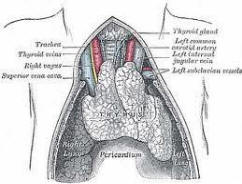
The thymus is an endocrine gland situated
behind the upper part of the breastbone. It increases in size
until puberty and then gradually shrinks again. Severe stress,
including infection, causes the thymus to shrink excessively and
prematurely, especially if there are deficiencies of the
anti-stress vitamins. The experimental removal of the thymus in
animals resulted in a 60% reduction in the contractibility of
muscles, while the capacity to work was reduced by 42%.
In MG, the thymus is generally abnormal,
usually much enlarged (hyperplasia) and not infrequently
containing tumors (thymomas). Administration of high doses of
manganese reportedly causes the thymus to shrink to its normal
size in a very short time and thymomas and symptoms of MG to
disappear.
This manganese therapy for MG was
discovered and tested in the 1940's and 50's in the U.S. by E.
K. Josephson (A-albionic Research 1961).
The report of his first MG case with this
new method is quite instructive. A 43-year-old female developed
the symptoms of MG in 1932. She had intermittent X-ray
treatments for thymoma over many years. Drug treatment was
started later but gave only a slight transient improvement and
after some months she failed to respond completely. Nutritional
therapy was started in 1937 with high doses of vitamins A, B,
and C, along with a high salt intake because of severe adrenal
weakness, and glycine, an amino acid important for the muscles.
Within three weeks the patient was much improved. The later
substitution of part of the salt with potassium chloride caused
acute glaucoma and had to be stopped.
After a year the therapy started to become
ineffective and the condition deteriorated again. Now vitamin E
was added in the form of wheat germ oil. The condition rapidly
improved and symptoms of MG disappeared except for occasional
mild relapses. However, after two years MG reappeared without
relief from the treatment.
In 1942 manganese sulfate was added to the
therapy. Within one week her muscle strength was better than at
any time during previous treatments and all symptoms of MG
disappeared. The thymus tumor that had previously been
unsuccessfully treated with X-rays disappeared as well. Until
her death ten years later from a heart attack she had no more
symptoms of MG.
In another case, a young woman developed
rapidly progressing MG after her thyroid had been removed
because of hyperthyroidism. Within 2 days of starting manganese
therapy she showed marked improvement. However, in this case it
took two to three years until she was completely well. In the
following years she had two relapses, which cleared up each time
within a few weeks with manganese therapy. This included
shrinking of the enlarged thymus during the initial therapy and
the last relapse.
Another interesting case was an elderly
male who first developed signs of systemic lupus erythematosus
and after several years also signs of Parkinson's disease. Many
years later MG appeared. Nutritional therapy including manganese
soon removed the symptoms of all three diseases.
In his summary, Josephson states that
generally, myasthenia cleared up within days to weeks rather
than months. At the same time, hyperplasia of the thymus and
thymomas ‘virtually melted away’.
Josephson’s book is still in print by
A-albionic Research under the title: Thymus, Manganese and
Myasthenia Gravis, see
www.msen.com or
www.addall.com. However, it is written as a scientific
monograph and difficult for most readers to understand.
Amazingly, there is no indication that this method has been
tested in a clinical trial, despite Josephson having presented
it before the American Association for Advancement of Science at
the Harvard School of Public Health in 1946.
Josephson also reports the complete
failure of nutritional and manganese therapy in a myasthenia
gravis patient who had his thymus removed. He continued to
deteriorate and died 9 years after the onset of the disease.
Removal of the thymus gland is widely
practiced as long-term therapy for MG. Most patients improve for
a period and some may continue improving, while others soon
deteriorate again. I believe that the great variability of
thymectomy outcomes is due to so-called accessory thymuses or
pockets of thymus tissue that may be present in the neck area.
These will often be sufficient to maintain a reasonable
manganese metabolism and, with this, enable an eventual
recovery. On the other hand, if all thymus tissue has been
removed, then a full recovery may not be possible. However, I am
cautiously optimistic that even then a holistic approach can
still lead to considerable improvement and to some regrowth of
any remaining traces of thymus tissue.
Also the removal of the thyroid makes a
cure more difficult as one of Josephson’s case histories shows.
In addition to enlargement and tumors of the thymus, MG patients
frequently have problems with other endocrine glands, such as
the thyroid, pituitary and adrenal glands. There is a close
relationship between the thymus and the thyroid in that
hyperthyroidism generally leads to myasthenia or muscular
debility as well as to hyperplasia of the thymus. As the disease
progresses, most or all of the endocrine glands, organs, and
metabolic functions tend to deteriorate. This, then, requires in
addition to manganese therapy individualized support with a wide
range of nutrients and remedies as well as a diet of highest
quality.
Another set of problems may arise if the
disease is due to chemical poisoning. This happened to Simon
Kelly as reported on his website
www.myasthenia.co.uk. He had developed MG once before,
apparently due to extensively working with oil paints in a
confined space. Six years later he had another stressful period
during which he painted his house and burned off old paint. Not
only did he develop MG a second time, but his blood became very
alkaline and his red blood cells ‘looked like sea urchins’,
shriveled up, black, and full of spikes. He also believes that a
high consumption of soymilk contributed to his condition by
causing intestinal inflammation and diarrhea.
After an odyssey of orthodox and
alternative treatments, he had his first real improvement during
a short period on manganese supplements, and then continued to
improve further with Buteyko-type breathing to reduce the
alkalinity of his blood. He also used some wheat grass juice.
However, his best improvement came after several months of
stagnation when he tried a second lot of manganese. His eyes
were better than they had been for many years, and the strength
of his legs improved tremendously.
I believe that in this case the poisoning
of the energy-producing mitochondria caused an acute deficiency
of metabolic acids, especially citric acid, in addition to
leaching of potassium from the poisoned cells. This is like
developing chronic fatigue syndrome in addition to MG and may
have contributed as much to his weakness as the MG itself. In
such cases clearly the highest quality of support is required.
From my own experience I can confirm that
manganese therapy does work. My first MG patient was a female
golf professional. She improved on a raw-food diet, but only
gradually. When she started taking manganese, she was back to
playing golf within a few weeks. Initially she still had some
double vision, which cleared up after one warm castor oil pack
over the eyes. Another patient also recovered fully within
weeks. I may add that in addition to manganese, Josephson as
well as I recommended improved nutrition and suitable other
supplements in all cases.
A Holistic Theory of myasthenia gravis
From the various known facts and
indications we can now come to an understanding of the likely
cause of MG.
The decisive experiment, in which
antibodies from a MG patient attacked receptors in healthy
muscles, shows that the basic problem is with the antibody
production and not with the muscle receptors of the myasthenics.
This means that the muscle receptors are basically healthy and
the antibodies are produced against something else and attack
the muscle receptors only as innocent bystanders. The real
target may actually be in the thymus itself, as it has been
shown that the thymus contains muscle-type cells with
acetylcholine receptors.
As the thymus is obviously diseased, at
least in all advanced cases of MG, this suggests that the
antibodies may actually be formed against faulty receptors in
the thymus itself. After all, the thymus develops antibodies
against many other conditions, but does not normally become
diseased itself as it does in MG. My conclusion is that thymus
receptors become faulty and susceptible to attack due to
manganese deficiency. Otherwise the autoimmune attack would not
stop and patients start rapidly improving within days of
manganese supplementation.
However, there may be additional factors
to trigger an attack. A relevant observation is the presence of
acetylcholine receptors in various bacteria, especially in E.
coli, the most common type of bacteria in the large
intestines. If the intestinal wall is weak, bacterial proteins
or endotoxins can pass from the intestines into the bloodstream
and cause antibodies to develop against any bacterial receptors.
These antibodies, originally formed against E. coli receptors
may, in turn, initiate the attack on thymus receptors in the
presence of manganese deficiency. A surplus of antibodies spills
over into the bloodstream and will then attack healthy muscle
receptors.
The thymus, attacking itself, is unable to
obtain sufficient manganese from a diet with marginal manganese
levels, even after the invasion of E. coli endotoxins has
stopped. Therefore, symptoms of MG persist until a sufficiently
high manganese intake allows the thymus receptors to restructure
and the attack by its own antibodies to stop.
The most common causes for a weak
intestinal wall that lets endotoxins invade the bloodstream are
inflammatory conditions due to gluten sensitivity, food allergy,
and Candida overgrowth. It may also be due to general dysbiosis
of the intestinal tract as caused by prolonged or repeated
antibiotic treatment. Commonly this is combined with a
malfunctioning ileocecal valve, which normally prevents bacteria
from the large intestines to invade the small intestines. It is
possible that the same inflammatory changes that allow bacterial
toxins to pass the intestinal wall also reduce the absorption of
manganese.
An alternative or additional model of MG
may be based on the observation that MG frequently starts during
or following a prolonged period of intense stress. Commonly,
this is emotional stress but may also be due to malnutrition,
chemical exposure, or food sensitivity. This tends to lead to
weakness or exhaustion of the adrenal glands, which manifests as
an unusual sensitivity of myasthenics to stress.
The adrenal glands have a direct influence
on the thymus in that a high level of adrenocortical steroids
leads to its atrophy, while adrenal exhaustion, as in Addison’s
disease, tends to retard or prevent the normal involution of the
thymus after puberty. With MG this adrenal weakness may either
prevent the thymus from utilizing manganese or it may be
combined with manganese deficiency to produce faulty thymus
receptors. This, then, leads to the formation of antibodies that
attack healthy muscle receptors as an unintended side effect.
Manganese deficiency may also be due to a
diet high in refined food - white bread, for instance, has only
5% of the manganese content of whole meal bread. Produce grown
organically in mineral-rich soil can have more than a hundred
times the manganese content than if grown commercially with
synthetic fertilizers. The highest and lowest values for
manganese found in lettuce were 169 ppm and 1 ppm respectively.
Furthermore, a lack of gastric acid leads
to reduced mineral absorption, while inorganic (ferric) iron
makes manganese unavailable and destroys vitamin E. Also
prolonged use of antibiotics can cause manganese deficiency.
Finally, even manganese-rich whole meal bread may not be of much
help, because the high phytate content of whole meal binds and
makes manganese and other minerals unavailable. Minerals only
become readily available after phytates break down. This happens
when seeds are sprouted or properly fermented as in sourdough
bread.
Several factors may come together to upset
the utilization of manganese by the thymus, such as a marginal
intake or malabsorption, a low level of anti-stress vitamins
during a stressful period, infection, food allergy and exposure
to toxic chemicals.
Sometimes, especially in milder
conditions, the symptoms of MG may disappear even without
additional manganese when high-level anti-stress vitamins are
supplied, as these may reduce inflammatory conditions and
improve the efficiency of the thymus in utilizing manganese.
Similarly, a high-quality low-allergy or raw-food diet may have
the same beneficial effect. It supplies increased amounts of
manganese and may at the same time correct intestinal
conditions. With a normalized manganese metabolism in the
thymus, the faulty acetylcholine receptors can be quickly
repaired and the production of receptor antibodies stops.
The remaining question is why the thymus
becomes enlarged. Josephson suggested that the thymus reacts in
a similar way to manganese deficiency as the thyroid gland to
iodine deficiency. Both react with hypertrophy. He saw the proof
for this assumption in the observed rapid shrinking of the
enlarged thymus with manganese supplements, in the same way as
the enlarged thyroid shrinks with iodine supplements.
THE DIET
Raw-food diets have generally been show to
improve and possibly cure MG. Therefore it is advisable to use a
high percentage of food raw and in easily digestible form, such
as freshly pressed vegetable juice. This may require a dedicated
helper. Grass juice grown in mineral-rich soil is high in
manganese. The best juice is made from mixed wheat and barley
grass together with red beet. Add other vegetables as available;
possibly flavor with apple, ginger root and bee pollen. Drink a
glassful very slowly before most meals.
Another excellent food is sprouted seeds.
They are high in enzymes and their minerals can easily be
absorbed. Easy to sprout are mung beans, brown lentils and
fenugreek. If chewing is difficult, these may be juiced as well
or pureed or even cooked. If chewing is not a problem, then use
sprouted seeds as part of a vegetable salad prepared with
gelatin and finely grated root vegetables, such as red beet,
carrot and turnip. As salad dressing use lemon juice,
extra-virgin olive oil, herbs, spices and possibly the yolk of a
free-range egg.
As cooked food use mainly fresh
vegetables, arrowroot, sago, tapioca, rice and lentils.
Buckwheat flour may be used for binding instead of gluten flour.
Instead of cows' milk use rice milk or almond milk; also yogurt,
cheese or cottage cheese from goats' milk. Tealeaves and walnuts
are high in manganese (15 mg /100 g). Use fruits cautiously
before or between meals.
Frequently use beef broth, also for
flavoring salads. While beef is often beneficial for muscle
strength, it should be in an easily digestible form, such as
steamed or boiled minced meat. Better still is raw beef or lamb,
see
Raw Food Diet. In addition, simmer fish heads for several
hours with the addition of vinegar or lemon juice in a non-metal
pot. Blend and strain the broth as a source of gelatin and
minerals. Steamed fish or seafood is fine. Use only beef that
has been grass-fed and fish low in mercury, see
www.grassfedorganics.com and
www.mercola.com.
Initially avoid and after recovery and
allergy testing minimize:
- cows' milk
products, except butter;
- wheat products,
initially also other gluten grains (oats, rye, barley);
- sweeteners and
sweetened food; commercial fruit drinks and soft drinks;
- fried food,
polyunsaturated oils, margarine and other hydrogenated oil
or fat;
- processed foods
with added chemicals, such as colors, flavors, aspartame;
- alcohol, tobacco,
chlorinated or fluoridated water or toothpaste;
- meat or chicken
from feedlots or factory farming;
- soy, corn and other
genetically modified or microwave-heated food;
- solvents and
household cleaners and exposure to their fumes;
- contact with
chemicals; pesticides or aerosol sprays around the house.
This means basically to use only fresh
whole foods, preferably organically grown and nothing that has
been processed. Salted food is beneficial with weak adrenal
glands and low blood pressure (below 120/80).
After recovery you may carefully introduce
new foods to this strict diet. Test your muscle strength before
and after each new food; also compare the pulse rate before and
30 and 60 minutes after meals. An unusual rise is a sign of
allergy.
This MG diet is only a start and a
generalization. You then have to adjust the diet to your
specific body conditions as with food allergy testing or closely
observing how your body strength changes with different foods
and keeping a diary about it. If you deteriorate again after
adding new foods, then return to the strict diet and when
improved repeat the testing. For more detailed information about
any aspects of this diet see
Healing Foods.
Supplements
Initially take 15 mg of manganese with
each meal, best as chelated manganese. If manganese sulfate is
used, dissolve 25 g in 500 ml of water. One ml of this contains
12 mg in the case of hydrated manganese sulfate and 18 mg with
water-free manganese sulfate.
After sufficient improvement gradually
reduce and eventually stop manganese supplementation, but use it
again if there is a relapse. With slow-responding conditions,
such as after a thymectomy, reduce the dose after one month to
15 mg of manganese with one meal only in order to avoid
deficiencies in other trace minerals from developing.
With meals or 3 times daily take a
high-potency multi-vitamin-mineral tablet; additionally 400 IU
of natural vitamin E as water-soluble d-alpha tocopheryl
succinate, not as oil-filled capsules.
Experiment with additional vitamin C, up
to 10 g daily in divided doses, partly as calcium ascorbate, the
rest as sodium ascorbate.
Initially weekly vitamin B12 injections
(1000
mcg) may be beneficial, alternatively or
subsequently absorb a 500-mcg vitamin B12 tablet under the
tongue once a day. Mix a teaspoon of lecithin granules with each
meal as a source of acetylcholine.
Another beneficial supplement is vitamin
A. Use 10 or 20,000 IU as liquid emulsified vitamin A once a
day. This is especially important if the thymus has been
surgically removed, but also with fat malabsorption and signs of
vitamin A deficiency, such as night blindness, poor dark
adaptation and longitudinal ridges of the fingernails. In this
case continue with vitamin A for a long time. However, watch out
for signs of overdose, in particular headaches, dizziness,
blurred vision, joint pain, dry lips, scaly and dry skin and
excessive hair loss. For this purpose beta-carotene is not a
suitable substitute for vitamin A.
After thymus removal take 3 to 6 capsules
of freeze-dried thymus daily, preferably keep each opened
capsule in the mouth to absorb partly under the tongue, also use
it temporarily if the thymus has been severely damaged by X-ray
treatments.
Licorice root should be beneficial in all
conditions to activate the adrenal glands. Take one capsule with
each meal. However, do not use it with high blood pressure. With
indications of severe adrenal weakness also freeze-dried
adrenals may be beneficial, absorb under the tongue.
If the digestion is weak, use digestive
enzymes and possibly hydrochloric acid tablets with cooked
protein meals. Glycine is an important amino acid for muscle
functions, up to a tablespoon has been used with meals; however,
it may not be required with an ample intake of gelatin as from
boiled fish heads.
To normalize the intestinal tract, have
cultures of acidophilus and bifido bacteria as high-potency
capsules. Initially take 2 or 3 capsules before each meal, after
sufficient improvement, reduce that to one per meal and later
one per day.
Other recommended supplements to improve
vitality and wellbeing in general are coenzyme Q10, freeze-dried
liver, bee pollen, spirulina, ginseng and MSM. If fresh wheat or
barley grass juice is not used then take commercial dried barley
grass juice.
Increase supplement dosages only gradually
and with self-observation, the recommended maximum amounts may
be too much for you. After recovery gradually reduce supplement
intake, but continue with the full amount of
multi-vitamin-mineral tablets. The mentioned natural food
concentrates may be used liberally and indefinitely.
ADDITIONAL THERAPY
Avoid stress, emotional upsets, hot baths,
hot showers and hot food, have plenty of rest. Before performing
a difficult task, close your eyes and vividly imagine performing
that task with ease. Then open your eyes and do it. As much as
possible be outside in natural surroundings. Have frequent short
expose of your unprotected skin to mild sunlight.
After thymectomy try to re-grow sufficient
functional tissue from any still existing pockets of thymus
cells. You may have acupuncture or use a magnetic pulser over
the thymus area and experiment with the following methods.
Dissolve some chelated manganese in water,
together with some MSM or aloe vera, and rub it into the hollow
above the breastbone or sternum and along its upper sides.
Frequently tap the top of the breastbone over the thymus with
the fingers and tap the vertebrae at the base of the neck.
Strongly press into any tender point along the upper sides of
the sternum and into the sternum itself between the first and
second rib. Also press strongly into any tender thymus reflex
around the ball of each big toe and thumb. You may need a helper
to do this.
Use guided imagery: see or feel a
brilliant white or golden healing light enter the top of your
head, flow through your muscles and organs, strengthening and
invigorating them. Fill the thymus with this light; see or feel
small pockets of remaining thymus tissue re-growing to form a
healthy thymus. Look up an anatomical atlas for the location and
appearance of a normal thymus. Do these exercises daily for
about an hour, preferably combined with warm castor oil packs
over the thymus area.
Warm castor oil packs over the liver and
abdomen, thymus and eyes are beneficial by increasing blood
circulation and strengthening the treated area. They are
especially effective over the eyes for improving double vision.
Use a woolen cloth moistened with castor oil and keep it warm
for 1 - 2 hours with a hot water bottle. Repeat as often as
required.
If improvement is rather slow, as after
thymectomy and in very advanced conditions, use additional
therapies, such as acupuncture, liver cleanse, and herbal
parasite cure. Have your teeth checked by a holistic dentist.
Any dead teeth, as with root canal fillings, should be removed.
Replace mercury amalgam fillings with plastic composite and
check for osteitis in the jawbone. Be especially mindful
of the teeth in the upper 5 positions, which in acupuncture are
related to the thymus. Preferably have no metal in the mouth but
definitely not two different kinds of metal. Pure gold is least
harmful, but commonly in dentistry a cheaper alloy containing
palladium is being used.
In all conditions it is essential to
use extensive intestinal sanitation and antimicrobial therapy as
shown in
Candida and the Antibiotic Syndrome. If the thymus has
been removed also additional selenium is important to strengthen
the immune system, up to 200 mcg daily.
Conclusion
It seems that MG has a tendency to
reappear in stressful situations, especially in combination with
an unbalanced or unsuitable diet and chemical exposure, which
may include medical drugs. Therefore, if your recovery is slow
or difficult and also to minimize the possibility of a relapse,
make sure that you have corrected all conditions that might
weaken your immune system and your adrenal glands. To do this
- Check for and
eliminate hidden food allergies and chemical sensitivities.
- Use suitable
supplements to correct any vitamin and mineral deficiencies
and to support the adrenal glands and the immune system.
- Eliminate
parasites, Candida and other microbes by using a herbal
parasite cure based on wormwood, and investigate using
colloidal silver, oxygen therapy and an electronic zapper.
- Sanitize your
intestinal tract with acidophilus & bifido cultures and
suitable laxative food (e.g. ground linseed and psyllium
hulls in plenty of water).
- Sanitize your teeth
by removing mercury amalgam fillings, any dead teeth and
different types of metal in the mouth.
- Sanitize your
bedroom by unplugging electric cords close to the bed while
sleeping; minimize electromagnetic pollution and radiation
in home and workplace.
- Maintain a
high-quality nutrition with plenty of fresh vegetable and
grass juice and minimize the use of any processed food.
- Maintain a relaxed
lifestyle, practice relaxation exercises and learn to
meditate.
- If there is a
relapse, adopt again a strict MG program.
- For details on any
of these recommendations see the relevant sections of this
website.