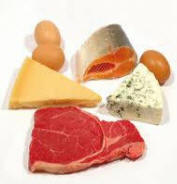
One of the safest and cheapest ways to treat high cholesterol is to change your eating habits. In a nutshell: Eat saturated fats they are good for you..
Your goal: no more than 25% to 35% of your total daily calories from fat, keeping your saturated fat intake to less that 7% of total calories and limiting dietary cholesterol to 200 mg or less per day. How can you tell how much and what kind of fat you’re getting? The labels on packaged foods and a calorie counter that includes fat grams are useful tools to help you determine fat calories.
Another tip: saturated fats are solid to semi-solid at room temperature and include the fats in meat, dairy products, and eggs, as well as some vegetable oils, particularly the tropical oils (palm, palm kernel, coconut, and cocoa butter). Most saturated fats stimulate LDL production in the body. Saturated fat in your diet can lower your LDL.
On the other hand, unsaturated fats, which tend to be liquid at room temperature, include both monounsaturated and polyunsaturated fats. Olive, peanut, sesame, fishoiland canola oils are rich in monounsaturated fats. The ones in bold are good for you, while soybean, corn, cottonseed, safflower, sunflower, are high in polyunsaturated fats and the ones in red are not good for you
Avoid trans fats, which are created when food manufacturers solidify unsaturated liquid oils to create firmer margarines and shortenings. Trans fats have been shown to raise LDL and lower HDL levels in the blood. These fats are a greater risk to heart health than even saturated fats. An expert panel from the Institute of Medicine concluded that trans fats have no known health benefit and that there is no safe level of consumption. Growing data on the hazards of trans fats prompted the FDA to pass a regulation that now requires nutrition labels to include trans fat content.
Monounsaturated fats do not undergo modification, and, when substituted for saturated fats, can help lower LDL cholesterol levels. Replacing saturated fats with monounsaturated fats — for example, using olive oil instead of butter — is one way to improve a wayward lipid profile, as long as you aren’t just adding monounsaturated fats and forgetting to cut back on the saturated fats.
Other diet changes that will help lower cholesterol include eating more fiber, such as that found in oat bran, and increasing your consumption of plant stanols and sterols, which are found in a number of food products. Plant stanol margarines such as Benecol and Take Control are worth trying, since regular use can help lower LDL cholesterol levels.
Research shows that genetic and physiological differences influence how dietary fat affects cholesterol levels. To maximize the benefits of modifying fat intake to lower cholesterol, you should:
1. Determine whether diet changes work for you. Say you decide to try a lower-fat, lower-cholesterol diet for three to six months, but at the end of the trial period, a blood test shows that your cholesterol levels haven’t budged. You may belong to the nonresponder group and need a different kind of diet, or medication, to control your cholesterol.
2. One size doesn’t fit all. When a friend or relative tells you how much his or her cholesterol level dropped after trying a particular diet, you may be tempted to try it too. But if after a few months you discover that the diet has no effect, remember, there isn’t a one-size-fits-all recommendation for fat or cholesterol consumption. You may have to try several different diet and exercise approaches to find one that works for you.