Inflammed blood vessels
CIDPUSA for AUTOIMMUNE DISEASES , God our Guide
Sun, 13 MFeb 2022 17:13:07
What Is Vasculitis?
Inflammation in the walls of the blood vessels
Vasculitis is an inflammation of the blood vessels in the body. In vasculitis, the body's immune system mistakenly attacks the body's own blood vessels, causing them to become inflamed. Inflammation can damage the blood vessels and lead to a number of serious complications.
Vasculitis can affect any of the body's blood vessels. These include arteries, veins, and capillaries. Arteries are vessels that carry blood from the heart to the body's organs, veins are the vessels that carry blood back to the heart, and capillaries are the tiny blood vessels that connect the small arteries and veins.
When a blood vessel becomes inflamed, it can:
- Narrow, making it more difficult for blood to get through
- Close off completely so that blood can't get through at all (occlusion)
- In rare cases, stretch and weaken so much that it bulges (aneurysm) and may possibly burst (aneurysm rupture)
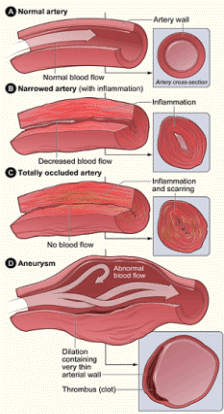
Figure A shows a normal artery with normal blood flow (the inset image shows a cross-section of the normal artery). Figure B shows an artery narrowed due to inflammation in the arterial wall, causing decreased blood flow (the inset image shows a cross-section of the inflamed artery). Figure C shows a totally occluded (blocked) artery due to inflammation and scarring in the arterial wall (the inset image shows a cross-section of the block artery). Figure D shows an artery containing an aneurysm.
The disruption in blood flow from inflammation can damage the body's organs. Specific signs and symptoms depend on which organ has been damaged and the extent of the damage. Typical signs and symptoms of inflammation (fever, swelling, and a general sense of feeling ill) are common among people with vasculitis.
Outlook
The outlook for people who have vasculitis varies depending on both the type and severity of the vasculitis. The course of a case of vasculitis can be hard to predict. Treatment is often very effective if vasculitis is diagnosed and treated early. Vasculitis may disappear or go into a period of remission. In some cases, it may be a chronic problem, requiring ongoing treatment, or it may come back ("flare") after a period of remission. In more severe cases, treatment may not help, and vasculitis can lead to disability or even death.
Much is still unknown about vasculitis. There are many different types of vasculitis, but overall it is a fairly rare condition in the general population. Additional research is needed to learn more about the various types of
vasculitis and their causes, treatments, and remission patterns
professor of mathematics and molecular and computational biology at USC College, designed and supervised the statistical analyses.
Autoimmune Diseases Treatment
Electrical Stimulation Therapy
magnets and ageing
Sand Bath for health
Glutathione
Sulphur Bath for Detox
MassageCancer Cure
Water chestnut amazing nutrition
Infants women omega-3 for healthy baby
Selenium the specialfood
Capsaicin
North American Herbs
Small fiber neuropathy
Gout Garlic
Magnetic deficiency
Pathology
Variants
CIDP
Fibromyalgia
IVIG
Diet
Burning Feet Home
Chronic Fatigue
Autoimmune diseases
Bible healing
Celiac disease
Temporal Vasculitis
Polymyalgia
Muscle disease
Homocysteine
ColostrumInformation Vaculitis