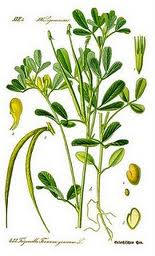
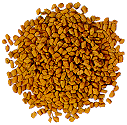
Fenugreek (Methi)
'Get Cure From Methi
Dr. M. Laiq Ahmed Khan
Fenugreek (Methi) is cultivated throughout the country and used as vegetable in various eatables. It is used in Europe, America and Australia as well. Fresh Methi vegetable does not contain any smell but after drying, it becomes fragrant and possesses a specific type low grade smell. Methi from Qasoor in Punjab is very famous in its fragrance throughout the country and known as Qasoori Methi.
Qasim Bin Abdul Rahman narrates that Rasool Allah (saw) stated ,"Get cure from Methi (Hulba)" Ibn-al-Qayyim
After the victory of Makkah, when Hazrat Sad Bin Abi Waqqas fell ill then Haris Bin Kaldah, a renowned and well qualified physician of that time directed to prepare "Fariqa" for him by boiling the dates and barley gruel in the Methi water and directed that if be given to the patient luke-warmed with honey morning and evening. This recipe was presented before Nabi-e-Akram (saw). He liked that and the patient got cured. The scholars of Hadith have an opinion that figs might be used in place of dates. But both can't be taken together. Another narration reveals that the recipe contained the Mulethi (Liquorrice) also.
According to the scholars of Al-Hadith the-decoction of Methi seeds is highly beneficial for sore throat, throat pain and Tonsillitis, relieves Dyspnoea (Breathlessness) and the severity of cough. It also relieves the hyper acidity and stomach burning. This action of Methi is highly significant because all the drugs used for cough produce irritation in the stomach, whereas this relieves the cough without producing irritation in the stomach and might be used safely on patients suffering from cough along with dyspepsia. It relieves the complaints associated with haemorrhoides. The decoction or the fine powder of methi seeds is an established remedy for dandruff. It tones up the hair and the hair becomes silky and shiny. Fine powder of methi seeds mixed with honey-bee wax relieves chest pain if applied locally.
The chemical composition of methi seeds depicts that it contains proteins and Amino acids in such a ratio comparable to milk. Besides phosphates, it contains an organic form of iron which is easily absorbable through gastro-intestinal tract. It contains several Alkaloids but Trigonelline is an important one. The salts relieve the inflammation of urinary tract infections. On the basis of its chemical composition, it can be used as an expectorant. In the cases of Nephritis, when dieuresis becomes least, it is a good remedy to increase dieuresis. 5gm of methi seeds powder if taken with water is highly beneficial in dysenteryand diarrhoea. The lukewarm decoction of Methi seeds if taken with honey is beneficial in cough and increases urination. It is also a good appetiser and might be used in dyspepsia and anorexia. It also increases milk secretion when it is deficient.
It is a source of iron and B-complex, hence can be used in general weakness. It is also reported that continuous use of methi seeds is also significant in the treatment of haemorrhoids. The recent studies show that it is a good remedy for diabetes mellitus.
Several patients who were having raised blood glucose level and were treated with the formulation comprising methi seeds, kalonji and tukhm-e-kasni improved significantly and the blood glucose level became normal. Some patients of NIDDM were also treated with methi seeds, Berg-e-Neem and Kalonji and showed very good response. Methi seed is also useful in chronic dysentery and peptic ulcer. Continue to Fenugreekseed
- Coconut oil Benefits
- B-12 deficiency
- Vitamin -D
- Vitamin-C
- Vitamin-E
- Thiamine deficiency memory
- Vitamin-B6 deficiency
- Vitamin-Folat deficiency
- What is autoimmune
- Spiritual illness
- read the study on Omega-3
- ACV
- Coconut oil Benefits
- Vitamin E Guide
- Cancer therapy
- Healthy Oils
- Cancer cure
- Services Page
- Feet Home
- Beauty Tips for Women
- Celiac disease
- Right Fat Diet
- French fries
- Apple juice
- Vinegar Benefits
- Supplements
- Iodine Deficiency
- Electrical medical treatments
- Magnets & ageing
- Cupping
- Alzheimers
- Hydrogen Peroxide helps human cycles