Home
      Diagnosis
      Treatment
      Pathology
      Variants
      CIDP info
      GBS
        IVIG
        Diet
        About Us
        Services
        Email Web Weaver
        Autoimmune diseases
        News
        Links
         E-Book

Fibromyalgia Info

makeup

Clinics of Excellence
 Skin repair Clinic
 Neck Pain
 Rabinder N Tagore
 Breast Lymph Drainage
 Osteoporosis
 Electronic Treatment
 Breast Size & Disease
 Female Sex Disease
 PARKINSON
 Memory problems
 Breast Lymph Drainage
 Kidney stone Buster
 Bras & breast cancer
 Lahore Clinic
 Lahore skin Clinic
 Pandas


    Clinics of Excellence

Oral Kidneystone removal  

Immune dysfunction


Eliminate risk of heart disease & stroke 

Memory clinic

Depression & anxiety

Private treatment of addiction  & Drug Rehab

Sexual  disorders Clinic

Parkinson Clinic

Epilepsy Clinic

Pain Clinic

Bone disorders clinic

Joint disorder clinic

Skin repair clinic

Gene Manipulation

Neurology Clinic

TMJ CLINIC

Sex in autoimmune disease

Reduce weight

Drug reaction prevention

Prevent Osteoporosis

Some rheumatic disorders
Clinics of Excellence

  Kidney stone removal   without surgery

Eliminate risk of heart disease & stroke 

Memory clinic

Depression & anxiety

Private treatment of addiction  & Drug Rehab

Sexual  disorders Clinic

Parkinson Clinic

Epilepsy Clinic

Pain Clinic

Bone disorders clinic

Joint disorder clinic

Skin repair clinic

Gene Manipulation

Neurology Clinic

TMJ CLINIC

We offer a lecture on personality development and self improvement.

Sex in autoimmune disease

Reduce weight

Drug reaction prevention

Prevent Osteoporosis

Some rheumatic disorders

Reduce weight

Drug reaction prevention

Prevent Osteoporosis

Some rheumatic disorders

Backpain

Fibromyalgia

Personality

Electrical Stimulation Therapy

Addison

Estrogen

Joint clinic

Avoid headaches with IVIg

Cholesterol drugs & Bleeding

Learn about Self

Myofacial Pain

Chronic Pain Management

Subcutaneous IVIg Page

Apple juice fights for you

Best Fat Lowering diet.

Lymes Disease & CIDP

Sensory CIDP

Immunoglobulins

Immunodeficiency

Vaccination

911 CIDP story

Tetanus Vaccine Story

Stem Cell Story

Surgery CIDP

Cranial nerve CIDP

Farmer CIDP

Story 7

Story 8

Story 9

Recurrent attack CIDP

Charcot

Story 12

Story 13

Story 14

Car accident & CIDP

Story 16

Story 17

Welcome to the CIDP  International organization
  Don't run after diamonds and Gold turn yourself into a Diamond read our e-book   
                                      For details please go to our home page.

Please read our autoimmune E-Book for a guide to simple treatment & prevention of nearly all diseases.

  Insulinoma
An insulinoma is a neuroendocrine tumor deriving mainly from pancreatic islet cells that produce excessive amounts of insulin. About 90% of insulinomas are benign. In healthy individuals, insulin and C-peptide are secreted in equimolar quantities because they derive from the same inactive precursor, proinsulin. Normally, less than 20% of proinsulin is released directly into the circulation.
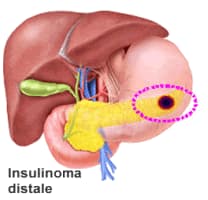
Some insulinomas secrete additional hormones, such as gastrin, 5-hydroxyindolic acid, adrenocorticotropic hormone (ACTH), glucagon, human chorionic gonadotropin, and somatostatin. The tumor may secrete insulin in short bursts, causing wide fluctuations in blood levels

Frequency

United States

Insulinomas are the most common pancreatic endocrine tumor. The incidence is 4 cases per million people per year. These make up 55% of neuroendocrine tumors, as stated above in Background

Sex

The male-to-female ratio is 2:3.

Age

  • The median age at diagnosis is about 47 years, except in insulinoma patients with MEN 1, in whom the median age is the mid 20s.
  • In one series, patients with benign disease were younger (mean age of 38 y) than those with metastases (mean age of 52 y).


History


  • Symptoms caused by effects of local tumor mass are very rare.
  • About 85% of patients present with symptoms of hypoglycemia with diplopia, blurred vision, palpitations, or weakness.
  • Other symptoms include confusion, abnormal behavior, unconsciousness, or amnesia.
  • About 12% of patients have grand mal seizures.
  • Adrenergic symptoms (hypoglycemia causes adrenalin release) include weakness, sweating, tachycardia, palpitations, and hunger.
  • Symptoms may be present from 1 week to as long as several decades prior to the diagnosis (1 mo to 30 y, median 24 mo, as found in a large series of 59 patients).
  • Hypoglycemia usually occurs several hours after a meal.
  • In severe cases, symptoms may develop in the postprandial period. Symptoms can be aggravated by exercise, alcohol, hypocaloric diet, and treatment with sulfonylureas.
  • Weight gain occurs in 20-40% of patients.

Physical

Insulinomas are characterized clinically by the Whipple triad (which occurred in 75% of 67 insulinoma patients as reported recently).


  • Episodic hypoglycemia
  • Central nervous system (CNS) dysfunction temporally related to hypoglycemia (confusion, anxiety, stupor, convulsions, coma)
  • Dramatic reversal of CNS abnormalities by glucose administration

Other Problems to be Considered


Factitious hypoglycemia can occur in patients who have psychiatric disturbances or a need for attention and access to insulin or sulfonylurea drugs (eg, medical staff). The triad of hypoglycemia, high immunoreactive insulin levels, and suppressed plasma C-peptide immunoreactivity is pathognomonic of exogenous origin. Insulin-induced hypoglycemia can be detected by a ratio of insulin to C-peptide that is greater than 1.0.

Hypoglycemia can occur after inadvertent ingestion of sulfonylurea due to patient or pharmacist error.

Autoimmune hypoglycemia is a rare disorder caused by the interaction of endogenous antibodies with insulin or the insulin receptor. The condition is more common in Japan than in the United States or Europe. The syndrome may produce severe neuroglycopenic symptoms, making immunosuppressive therapy occasionally necessary.

Nesidioblastosis is defined as hyperplasia of the islet cells causing hyperinsulinemic hypoglycemia. It is a predominantly neonatal disorder, although cases in adults have been reported recently.

Noninsulinoma pancreatogenic hypoglycemia syndrome (NIPHS) is a condition in which pancreatic islet hyperplasia is present. This is manifested with postprandial neuroglycopenia, a negative normal fasting test, negative pancreatic imaging results, and positive intra-arterial calcium stimulation of serum insulin.

Familial persistent hyperinsulinemia is manifested with inappropriately high insulin secretions seen in families with mutations in the glucokinase enzymes, glutamate dehydrogenase and short-chain3-hydroxyacyl1-CoA dehydrogenase.

Other causes for hypoglycemia include liver disease, endocrine deficiencies, extrapancreatic insulin-producing tumors (an insulin-secreting small-cell carcinoma of the cervix recently has been described), and pentamidine-induced hypoglycemia.

Lab Studies


  • The presence of hypoglycemia in the face of inappropriately elevated levels of insulin is the key to diagnosis. Considering the reference range, the fasting plasma levels of insulin, C-peptide, and, to a lesser degree, proinsulin need not be elevated in insulinoma patients in absolute terms.
  • The biochemical diagnosis is established in 95% of patients during prolonged fasting (up to 72 h) when the following parameters are found:
    • Serum insulin levels of 10 ľU/mL or more (normal <6 ľU/mL)
    • Glucose levels of less than 40 mg/dL
    • C-peptide levels exceeding 2.5 ng/mL (normal <2 ng/mL)
    • Proinsulin levels greater than 25% (or up to 90%) that of immunoreactive insulin
    • Screening for sulfonylurea negative
  • Stimulation tests no longer are recommended. The intravenous application of tolbutamide, glucagon, or calcium can be hazardous by inducing prolonged and refractory hypoglycemia.
  • Failure of endogenous insulin secretion to be suppressed in the presence of hypoglycemia is the hallmark of an insulinoma.
  • Prolonged (ie, 72 h) supervised fast in hospitalized patients provides the most reliable results.
    • The calculation of ratios of insulin (ľU/mL) to plasma glucose (mg/dL) is diagnostic.
    • Healthy patients maintain a rate of less than 0.25. Obese patients may have a slightly higher rate.
    • In patients with insulinoma, the ratio rises during fasting.
  • The presence of MEN 1 must be evaluated by excluding the following:
    • Hyperprolactinemia due to a pituitary adenoma
    • Hyperparathyroidism due to parathyroid hyperplasia
    • Hypergastrinemia due to a gastrinoma


Imaging Studies


  • Start imaging studies only after the diagnosis has been confirmed biochemically, because 80% of insulinomas are less than 2 cm in size and may not be visible by CT scan or transabdominal ultrasonography.
  • Successful preoperative tumor localization is achieved in about 60% of patients.
    • Some experienced surgeons perform only transabdominal ultrasound preoperatively.
    • Other surgeons argue that the preoperative localization of insulinomas is not necessary at all because surgical exploration and intraoperative ultrasonography identify more than 90% of tumors.
    • Thus, the extent to which one attempts to define the anatomy of the beta cell lesion before surgery is a matter of judgment.
  • CT scan has 44% sensitivity.
  • When performed with gadolinium, MRI has 57% sensitivity.
  • The accuracy of selective arteriography is 82%, although affected by a false-positive rate of 5%. Many experts see it as the best overall preoperative localization procedure.
  • Arteriography with catheterization of small arterial branches of the celiac system combined with calcium injections (which stimulate insulin release from neoplastic tissue but not from normal islets), and simultaneous measurements of hepatic vein insulin during each selective calcium injection localizes tumors in 47% of patients.
  • The sensitivity of somatostatin receptor scintigraphy is 60%, although many insulinomas lack somatostatin receptor subtype 2 for successful identification. Endoscopic ultrasonography detects 77% of insulinomas in the pancreas.
  • Real-time transabdominal high-resolution ultrasonography has 50% sensitivity.
  • Intraoperative transabdominal high-resolution ultrasonography with the transducer wrapped in a sterile rubber glove and passed over the exposed pancreatic surface detects more than 90% of insulinomas.
  • Performing a preoperative study to localize the tumor followed by intraoperative ultrasonography and a physical examination is not unreasonable.

We offer a lecture on personality development and self improvement.

Is your teenage child out of your control we do behavior modification treatment with positive results and a 90% turnaround.

Our Nanoparticle treatment units are for sale. Get your treatment at home.


Arthritis & CIDP

Flu Shot Story

MS & CIDP story

Story21new

Renal transplant PRA

Neck Pain Tips

Vitamin D & Breast Cancer

Alzheimer Prevention

Prostate CA prevention

Menstrual blood

STORY

Pulse therapy

Parkinson

Battery charger

Fosamax

Health news

PulsedMagnetic

Antiinfammatory

osteoporosis Drug

Reduce weight

Drug reaction prevention

Prevent Osteoporosis

Some rheumatic disorders

Dangerous cosmetics mercury in your

mascara

ANTI ageing

renal failure

MSG

Schizophrenia

Sjogrens

alternative treatments

Sunlight

Iodine deficiency china

B-vitamin deficiency

Low B vitamin

Genome changes

Nanotech autoimmune page

Breast self exam

Cancer Help

Bob beck protocol

Gastric protocols 1-2-3-4-5

Appetite

Hydropower

Saffron the top spice

Aids

Aids Cause

Vinegar

CDC understated HIV cases

ALS & BLOOD

Stem cell stroke recovery

Autoimmune diseases plan

Thyroid and ageing

Acupuncture & MS

Eclampsia & autoimmune

Multiple Medications

Beauty in Kitchen products

Detailed information on autoimmune disorders, autoimmune diseases, diagnosis , treatment and prevention

Autoimmune diseases home, treatment and prevention guidelines

Lahore Sex clinic

Prevention and treatment of Alopecia

Immunoglobulin's for immune deficiency

Everything about IVIg, treatment, side effects

Fibromyalgia, diagnosis , symptoms , treatment