|
IVIG
Read The Flame within a guide to prevent &
treat autoimmune diseases by Dr Imran Khan
Plasma
Exchange
This information is written especially for patients like yourself
who may be exposed to plasmaExchange as a treatment option. Use this information to help set a
framework of assisting you with your discussions with your the
medical providers to help you understand this safe, simple, and
routine procedure and what it will involve. Please discuss the
information below with your health care providers.
The
following four questions will be answered:
1. What is plasma?
2. What is plasma exchange?
3. Why is plasma exchange necessary?
4. What actually happens during a plasma exchange procedure?
What
is Plasma?
Plasma is the fluid portion of the blood that allows the circulation
of red blood cells, white blood cells, and
platelets. It consists mainly of water in which numerous compounds
are dissolved.
Plasma also makes possible chemical communication among different
parts of the body by carrying minerals, hormones, vitamins, and
antibodies. Normal plasma has a yellow color when it is observed
through a test tube or bag where blood has settled.
What
is Plasma Exchange?
Plasma Exchange is a patient procedure involving the separation
and removal of the plasma from the blood in order to remove a
disease substance circulating in the plasma. The red blood cells,
white blood cells, and platelets are returned to the patient, along
with a prescribed replacement fluid. Simply stated, the “old plasma”
is removed and replaced by the “new plasma.” In other words, a
PLASMA EXCHANGE took place.
Why is
Plasma Exchange Necessary?
Some diseases create substances which circulate throughout the
body in the plasma portion of the blood and which may attack healthy
cells or tissue. These substances are created by a mix-up in the
body’s immune system. Other diseases cause an overproduction of the
substances which results in slowing down the blood flow (in the same
way that thick liquids move more slowly than thin ones). A physician
will decide if it is desirable to remove a large quantity of the
substances with a plasma exchange so that the accompanying
medication is more effective in controlling the disease. The plasma
is replaced with donated fresh frozen plasma or, more commonly,
physiologically acceptable replacement fluids, such as a mixture of
albumin and normal saline.
What
actually happens during a Plasma Exchange Procedure?
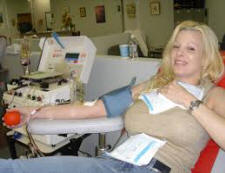
Plasma exchange is accomplished with a medical device called a
blood cell separator; the COBE® Spectra™ Apheresis System is such a
device. It uses a centrifuge to separate plasma from cellular blood
components. Qualified medical personnel operate the blood cell
separator and monitor the condition of the patient at all times.
Blood is drawn from a patient’s arm vein by a needle which is
attached to a blood tubing set. Anticoagulant is added to the blood
to keep it from clotting. The blood and anticoagulant enter the
compartment of the blood cell separator where the plasma is
separated from the cellular components and pumped into a collection
bag. The cellular components are drawn from the compartment and a
replacement fluid prescribed by the physician is added to replace
the volume of plasma which is removed. The mix of cellular
components and replacement fluid is returned to the patient, through
a needle in the other arm. The blood cell separators accomplish all
the above steps in an automated, continuous, and safe manner.
Other
Frequently Asked Questions (please contact your physician for more
detailed medical information)
Q. Are
there any side-effects of this procedure?
A. The initial insertion of the needles may cause some discomfort.
The needles have to remain in place during the procedure (about two
to four hours). Keeping the arms in one position and staying
relatively still may be uncomfortable.
Sometimes it is not possible to achieve adequate blood flow from arm
veins. Therefore, a catheter needs to be placed which involves minor
surgery. Although the blood cell separators remove only a small
portion of blood from the patient at any one time, the changes in
blood volume or the type of replacement fluid utilized may make some
patients feel dizzy or light-headed. Patients should immediately
tell the medical staff if they begin to feel uncomfortable.
The anticoagulant used to keep the blood from clotting and certain
types of replacement fluids might cause a patient to notice a sour
taste in the mouth, tingling around the lips, or sharp pains, like
pins being stuck in the fingers or toes. Patients should immediately
tell the medical staff if they have any of these symptoms.
Q. Is
Plasma Exchange a safe medical procedure?
A. Approximately 300,000 plasma exchange procedures are performed
worldwide each year with
few problems. Another one million procedures, which are similar to
plasma exchange, are performed
each year on volunteer donors to collect plasma and platelets, again
with few problems.
Q. Are
there any reactions or lasting side effects?
A. Some patients feel tired after a plasma exchange procedure and
require rest. Side effects during the procedure might include
feeling dizzy, light-headed, nauseated, and cold. Some patients may
feel tingling in the fingers and around the mouth. It is extremely
important for patients to notify the medical
staff immediately if they feel these symptoms or feel uncomfortable.
The medical staff can slow down or stop
the procedure for a short time before deciding whether to continue.
Q. How
long does a Plasma Exchange take?
A. This varies from patient to patient and with the type of blood
cell separator utilized. The blood cell separators usually perform a
plasma exchange in approximately two hours.
Q. Are
patients left on their own?
A. No. The medical staff will be there all the time. A physician
generally examines a patient before the procedure begins and is
available nearby throughout the procedure.
Q. How
often do Plasma Exchanges need to be performed?
A. The number of plasma exchanges varies, according to the disease
treated and patient response. The physician monitors the clinical
response and determines the necessary number and frequency of plasma
exchanges to
be performed.
Q. Can
patients catch a disease from the supplies being used?
A. No. The blood tubing set and needles are sterile, used only one
time, and then discarded. Anticoagulant,
normal saline, and albumin replacement fluid are also sterile
solutions. There is some risk of disease transmission when fresh
frozen plasma is used as a replacement fluid.
Q. Can
a patient have something to eat or drink during a procedure?
A. There’s generally no reason why most patients can’t eat or drink
during the procedure. A patient should
drink some fluids and use the bathroom before the procedure begins.
Q. Can
a patient have visitors?
A. Once the procedure is under way, you are usually allowed
visitors. If there are any other questions you would like to have
answered, ask the medical staff or physician.
If
you have additional questions, please contact your health care
providers.
|