Autoimmune EAR Diseases
Immune Diseases CIDPUSA.ORG 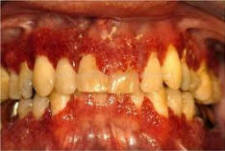
Kidneys
Kidney involvement, which occurs in more than three-fourths of people with this disorder, usually does not cause symptoms. If detected by blood and urine tests, a doctor can start proper treatment, preventing long-term damage to the kidneys.
Musculoskeletal system
Pain in the muscles and joints or, occasionally, joint swelling affects two-thirds of people with Wegener's granulomatosis. Although joint pain can be very uncomfortable, it does not lead to permanent joint damage or deformities.
Eyes
Wegener's granulomatosis can affect the eyes in several ways. People may develop
Conjunctivitis (inflammation of the conjunctiva, the inner lining of the eyelid)
Scleritis (inflammation of the scleral layer, the white part of the eyeball)
Episcleritis (inflammation of the episcleral layer, the outer surface of the sclera)
Mass lesion behind the eye globe
Gums in Wagners Strawberry gums: a clinicopathological manifestation diagnostic of Wegener's granulomatosis, in a patient we treated a young girl
on whom all the dentist had given up and she came to us in two weeks just with medicine her condition completely reversed.Symptoms in the eye include redness, burning, or pain. Double vision or a decrease in vision are serious symptoms requiring immediate medical attention.
Skin lesions
Nearly half of people with Wegener's granulomatosis develop skin lesions. These often have the appearance of small red or purple raised areas or blister-like lesions, ulcers, or nodules that may or may not be painful.
Other symptoms
Some people experience narrowing of the trachea. The symptoms can include voice change, hoarseness, shortness of breath, or cough.
The nervous system and heart occasionally may be affected. Fever and night sweats may occur. Fever also may signal an infection, often of the upper respiratory tract.
Diagnosis
To treat people with Wegener's granulomatosis most effectively, doctors must diagnose the disease early. There are no blood tests that a doctor can use to diagnose Wegener's granulomatosis, but blood tests are important to rule out other causes of illness and to determine which organ may be affected.
Most blood tests can only suggest that a person has inflammation somewhere in the body. Anemia (low red blood cell count), elevated white blood cell count and platelet count, and an elevated sedimentation rate are commonly found in people with Wegener's granulomatosis. If the kidneys are involved, a health care provider can see red blood cells and structures called red blood cell casts in the urine when viewed under a microscope, and the blood tests measuring kidney function may show abnormalities.
X-ray results can be very helpful in diagnosing Wegener's granulomatosis. People with lung problems will have abnormal chest x-rays. CT (computed tomography) scans in people with sinus problems may show thickening of the sinus lining.
Many people with active Wegener's granulomatosis have a blood test that shows the presence of a specific type of antibody called antineutrophil cytoplasmic antibodies (ANCA) (an antibody is a disease-fighting protein). Although a positive ANCA test is useful to support a suspected diagnosis of Wegener's granulomatosis, in most instances health care providers do not use it by itself to diagnose this disorder. The ANCA test may be negative in some people with active Wegener's granulomatosis. Currently, the only clear-cut way to diagnose Wegener's granulomatosis is by performing a biopsy (removing a tiny piece of tissue) of an involved organ (usually the sinuses, lung, or kidney). A health care provider will examine tissue from the organ under the microscope to confirm the presence of vasculitis and granulomas (a specific type of inflammation), which together are features of Wegener's granulomatosis. A biopsy is very important both to confirm the presence of the disease and also to make sure other disorders that may have similar signs and symptoms are not present.
CIDPUSA.ORG Autoimmune Diseases
Autoimmune innear Ear Disease
Search Cidpusa webWegner's Guide to symptoms, diagnosis & treatment
Wagner & Wegner are two distinct conditions
Kidneys
Kidney involvement, which occurs in more than three-fourths of people with this disorder, usually does not cause symptoms. If detected by blood and urine tests, a doctor can start proper treatment, preventing long-term damage to the kidneys.
Musculoskeletal system
Pain in the muscles and joints or, occasionally, joint swelling affects two-thirds of people with Wegener's granulomatosis. Although joint pain can be very uncomfortable, it does not lead to permanent joint damage or deformities.
Eyes
Wegener's granulomatosis can affect the eyes in several ways. People may develop
Conjunctivitis (inflammation of the conjunctiva, the inner lining of the eyelid)
Scleritis (inflammation of the scleral layer, the white part of the eyeball)
Episcleritis (inflammation of the episcleral layer, the outer surface of the sclera)
Mass lesion behind the eye globe
Gums in Wagners Strawberry gums: a clinicopathological manifestation diagnostic of Wegener's granulomatosis, in a patient we treated a young girl
on whom all the dentist had given up and she came to us in two weeks just with medicine her condition completely reversed.Symptoms in the eye include redness, burning, or pain. Double vision or a decrease in vision are serious symptoms requiring immediate medical attention.
Skin lesions
Nearly half of people with Wegener's granulomatosis develop skin lesions. These often have the appearance of small red or purple raised areas or blister-like lesions, ulcers, or nodules that may or may not be painful.
Other symptoms
Some people experience narrowing of the trachea. The symptoms can include voice change, hoarseness, shortness of breath, or cough.
The nervous system and heart occasionally may be affected. Fever and night sweats may occur. Fever also may signal an infection, often of the upper respiratory tract.
Diagnosis
To treat people with Wegener's granulomatosis most effectively, doctors must diagnose the disease early. There are no blood tests that a doctor can use to diagnose Wegener's granulomatosis, but blood tests are important to rule out other causes of illness and to determine which organ may be affected.
Most blood tests can only suggest that a person has inflammation somewhere in the body. Anemia (low red blood cell count), elevated white blood cell count and platelet count, and an elevated sedimentation rate are commonly found in people with Wegener's granulomatosis. If the kidneys are involved, a health care provider can see red blood cells and structures called red blood cell casts in the urine when viewed under a microscope, and the blood tests measuring kidney function may show abnormalities.
X-ray results can be very helpful in diagnosing Wegener's granulomatosis. People with lung problems will have abnormal chest x-rays. CT (computed tomography) scans in people with sinus problems may show thickening of the sinus lining.
Many people with active Wegener's granulomatosis have a blood test that shows the presence of a specific type of antibody called antineutrophil cytoplasmic antibodies (ANCA) (an antibody is a disease-fighting protein). Although a positive ANCA test is useful to support a suspected diagnosis of Wegener's granulomatosis, in most instances health care providers do not use it by itself to diagnose this disorder. The ANCA test may be negative in some people with active Wegener's granulomatosis. Currently, the only clear-cut way to diagnose Wegener's granulomatosis is by performing a biopsy (removing a tiny piece of tissue) of an involved organ (usually the sinuses, lung, or kidney). A health care provider will examine tissue from the organ under the microscope to confirm the presence of vasculitis and granulomas (a specific type of inflammation), which together are features of Wegener's granulomatosis. A biopsy is very important both to confirm the presence of the disease and also to make sure other disorders that may have similar signs and symptoms are not present.
Left Column: LINKS
- Behcets diseases
oral & genital ulceration
Addison
Wegner's syndrome
Wagners Eye Syndrome
Home to IVIg
Sjogrens
Fatty acids
AUTOIMMUNE EPIDEMIC
Small fiber neuropathy
Immune deficiency
Electrical Stimulation
UltraViolet
Heart solution
Immunoglobulins
Animals
Anemia
Statin neuropathy
Kegel
Claybath
LiverFlush
Heavy Metal
Food additives
Vaccine Alert
LINKS
Libedo diet
Shifa
Right Column: LINKS
IVIG
Diet
Burning Feet Home
Services Page
Chronic Fatigue
Autoimmune diseases
Prognosis
Bible healing
Celiac disease