|
Ear Nose Throat J. 2003 Jul;82(7):520-1. Related Articles,
Links Remission of chronic inflammatory demyelinating polyneuropathy following adenotonsillectomy. Harsha WJ, Goco PE, Crawford JV.
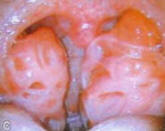
An 11-year-old girl with CIDP was brought to us for evaluation. At the age of 4 years, she developed a generalized paralysis that necessitated hospital admission and prolonged ventilatory support. At that time, she was initially diagnosed with Guillain-Barre syndrome. However, following a prolonged recovery from this initial acute event and after frequent and intermittent relapses of weakness and paresis, the diagnosis of CIDP was established. The patient later experienced two relapses, and she was treated with IV Ig. Treatment had increased the speed with which her weakness resolved, but she continued to experience relapses. Her episodes of weakness and paresis were generally preceded by fever or illness. Her most common systemic illness was recurrent acute adenotonsillitis, which had occurred approximately four times a year. Each episode of adenotonsillitis was followed in 2 to 6 weeks by increased weakness, primarily in her lower extremities, that necessitated the use of a wheelchair. On physical examination, the patient had slightly enlarged tonsils for her age and adenoids that were 30% obstructive of the choanae. A standard adenotonsillectomy was performed. At the 1-year postoperative follow-up, both the patient and her family reported no episodes of sore throat or upper respiratory illness, no further relapses of acute paralysis, and an improvement in her baseline strength and agility with physiotherapy. Discussion Dyck et al coined the phrase chronic inflammatory demyelinating polyneuropathy (5) several years after they reported the first case series of 53 patients with this disease complex. (6) In 1989, Barohn et al (7) published diagnostic criteria, which were later revised by an ad hoc subcommittee of the American Academy of Neurology. (8) CIDP is characterized by the presence of distal- and proximal-extremity weakness, more often in the lower extremities. Some patients are also afflicted with a sensory impairment, and patients frequently experience hyporeflexia or areflexia. (1) Although most patients have a slowly progressive form of the disease, a relapsing-remitting course has also been described. (1) In a recently published retrospective study, Bouchard et al found that three of 100 patients with CIDP initially had acute-onset Guillain-Barre syndrome; this was followed by a slow progression of CiDP in two of these patients and a relapsing-remitting course in the third. (4) Most patients who initially have Guillain-Barre syndrome are children, and children are more likely than adults to have a relapsing and quickly fluctuating form of the disease. (9)
Studies have also found that infectious events occur in 16 to 21% of patients during the weeks prior to the onset of neurologic manifestations. (3,4) There is a well-documented association between CIDP and a number of concurrent infections (e.g., human immunodeficiency virus infection and viral hepatitis) as well as systemic medical illnesses that alter the immune system (e.g., Charcot-Marie-Tooth disease, inflammatory bowel disease, lymphoma, and diabetes mellitus). (1-4) As is the case with Guillain-Barre syndrome, the pathophysiology of CIDP is believed to be of autoimmune origin. Histopathologic analysis of nerve biopsies often reveals demyelination, remyelination, and inflammation. (2)
The treatment options for CLDP are all centered on immunomodulation, and randomized, controlled trials have demonstrated the efficacy of plasmapheresis, IV Ig, corticosteroids, and other immunomodulators. (1,2) Currently, IV Ig and corticosteroid therapy are considered first-line treatments. (1,4,9) Hahn recently proposed that IV Ig is the treatment of choice in children because of its relative ease of administration and its relative lack of side effects. (9) Plasmapheresis and more aggressive immunomodulating medications (e.g., azathioprine, cyclosporine, and cyclophosphamide) are generally reserved for cases that are refractory to initial treatment or that relapse following treatment with a first-line modality. (1,4) Initial therapy with one of these modalities has been reported to be successful in alleviating symptoms in 39 to 95% of patients. (1-3) However, about 50% of those who initially respond to therapy will relapse. (2,3) In addition, only approximately one-third of all patients with CIDP will remai n symptom-free when all medications and treatments are discontinued. (1,2) Our patient had been treated with IV Ig twice prior to her visit to our clinic. These treatments were effective in quickly resolving her acute weakness, but they were unable to bring about a complete remission of her CLDP. Recurrent adenotonsillitis was the associated event that preceded her disease exacerbations. The removal of her tonsils and adenoids brought about a prolonged remission of her CIDP and allowed for improvement in her strength and agility through physiotherapy. This case is a good example of the principle that treatment of the underlying concurrent illness will often bring about remission of or improvement in CIDP.
|
|
|

