Home
      Diagnosis
      Treatment
      Pathology
      Variants
      CIDP info
      GBS
        IVIG
        Diet
        About Us
        Contact Us
      Email Web Weaver
     Autoimmune diseases
        News
        Links
        F.A.Q.


  Chronic pain

Fibromyalgia

   Autoimmune diseases

   Autoimmmune diseases 1

  Autoimmune diseases -3

  Autoimmune aneurysm

  Auto

   Autoimmune info

  Autoimmune-4

  Autoimmune-5

  Backpain

   Fibromyalgia

   Personality

 Electrical Stimulation Therapy

  Addison

  Estrogen

  DNA

  Magnets and ageing

   Aortic aneurysms

   Kidney therapy

   Sex in autoimmune disease

   Reduce weight

  Drug reaction prevention

   Prevent Osteoporosis

  Some rheumatic disorders

   Personality

  Alopecia treatment

   Bald Facts

  Alopecia

   Areata Alopecia

  Hair chemicals

  Hair Growth

  Hair of dog technique

   Hair rejuvination

   Alopecia general

  Nail Fungus

  SESAME SEED OIL

  Facial  cleaner

   oil pulling

  Autoimmunity-2

  Autonomic

     Quranic Shifa

   Mercury in makeup

     Toxic Lipstick

    Toxic Baby products

  Autoimmune Thyroid

  Autoimmune muscle

  Autoimmune diseases

  Autoimmunity

Clinics of Excellence

               Female sexual problems

               Breast size and disease

              Breast Lymph drainage

             Bras causing breast cancer

             Breast Size and disease

 Eliminate risk of heart disease & stroke 

               Memory clinic

          Depression & anxiety

Private treatment of addiction  & Drug Rehab

            Sexual  disorders Clinic

            Parkinson Clinic

             Epilepsy Clinic

             Pain Clinic

            Bone disorders clinic

           Joint disorder clinic

            Skin repair clinic

           Gene Manipulation

           Neurology Clinic

             TMJ CLINIC

We offer a lecture on personality development and self improvement.

    Sex in autoimmune disease

      Reduce weight

    Drug reaction prevention

      Prevent Osteoporosis

      Some rheumatic disorders

       Autoimmune anemia

       Autoimmune inflammation

       Autoimmune Ear

         Pollution

        Anti ageing

        Blood clots

       Autoimmune Trigger

   Boost immune system

Skin Glow

Skin repair Lahore

Breast Size and disease

Fibromyalgia

cidpstory

Lahore Sex Clinic


                                            Welcome to the CIDP international.        

Foundation dedicated to patients suffering from autoimmune & neuromuscular disease .  Please read our e.book for treatment protocol of SPS.


Conquering a life of immobility
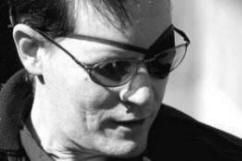
Roger Hollenbaugh of Bandera suffers from Stiff-Person's Syndrome, a puzzling disease with no known cure and an uncertain long-term prognosis despite undeniably real symptoms. Photo by Jessica Hawley

Bandera resident learns to live with rare, debilitating disease

By Jessica Hawley - Staff Writer

Only a few years ago, Roger Hollenbaugh drove an 18-wheeler all over the United States and beyond the country's border into Canada. He enjoyed taking photographs of the vast and varied landscapes to capture the visions he rolled by at 70 mph.

"People thought I was nuts that I would take pictures through the windshield," he said.

Today, the 37-year-old carefully thumbs through those pictures with rigid fingers, his trucking days a memory. In September 2001, after suffering for more than two years from symptoms that doctors labeled psychosomatic, Hollenbaugh was diagnosed by Dr. Michael Winkelmann, in Jackson, Miss., with stiff-person's syndrome, an extremely rare and, as of yet, scarcely studied neurological disease.

Although the cause of stiff-person's syndrome is unknown in most cases, Hollenbaugh believes his case developed while he was receiving treatment for a migraine headache in a Kerrville hospital on July 10, 1998.

He stated that the hospital staff did not lock the rails on the cardiac bed they placed him on and it collapsed. He said that he hit his spine on the base and split open the back of his head on a cabinet he flipped onto.

According to Hollenbaugh's account, doctors shaved the back of his head, stapled the laceration closed and sent him home the same day.

"They didn't give him any antibiotics or even clean the wound," said Hollenbaugh's aunt, with whom he lives in Bandera.

For several months after the accident, he experienced post-concussion pain and possibly a bacterial infection that moved into his spinal column. Hollenbaugh soon noticed that the left side of his body began to immobilize. He couldn't pick his leg up to bend his knee and the nose of his shoes wore off before the sole showed signs of wear.

Hollenbaugh also experienced an increased sensitivity to loud noises. The sound of an ambulance or police siren sent shocks throughout his system and the left side of his body completely locked up.

Despite repeated and consistent complaints to doctors, he was told that his symptoms were imaginary. He was treated for pain management and nothing more.

Dr. Art Leis, a neurologist and senior scientist at Methodist's Center for Neuroscience and Neurological Recovery, said that Hollenbaugh's condition went undiagnosed because he had a disease that many doctors have never encountered.

According to information from the National Organization for Rare Disorders, doctors from Yale University have theorized that stiff-person syndrome may be an autoimmune disorder in which the body's natural defenses against invading organisms attack connections in the brain and spinal cord where gammaaminobutyric acid (GABA) flows between nerve ends, helping to modulate the central nervous system.

Leis explained that when the body has too little GABA, there is nothing shutting down the nervous system.

"When startled, your body freezes and becomes firm like a rock and you fall like a piece of lumber," Leis said.

Hollenbaugh has undergone a battery of treatments, including plasmapheresis, a procedure that separates blood cells from plasma to remove unwanted toxins and metabolic substances from the blood. The plasma is exchanged with other human blood and then retransfused back into the body. He also had between three and four inches of his spinal cord shaved off and replaced with a titanium capsule that feeds liquid medication to his body from a pump surgically implanted in his lower abdomen.

All of these measures are meant to treat and maintain his symptoms. There is no known cure.

Late last year, Hollenbaugh lost complete use of his legs. He needs a customized motorized wheelchair to fit his six-foot-four-inch frame because he does not have enough upper body strength or coordination to move a manual wheelchair.

He wears an eyepatch to eliminate the double vision that onset last Christmas and his speech has become slow and slurred.

"Some days it's really hard to understand me and other days it's okay," he said. "It frustrates me. People treat me like I'm stupid because I sound like this, but I'm not."

Because neither Medicare nor Medicaid will cover the costs of a disability van, he and his aunt have improvised with an elaborate homemade pulley system to get him in and out of her pick-up truck. But after the 10 minutes it takes just to get him seated, Hollenbaugh is left exhausted and out of breath.

Last week, Guaranty Bank set up a donation fund account for a van.

"A new van costs $40,000. All I need is something used," Hollenbaugh said.

No matter how bleak life may seem at times for Hollenbaugh, his spirit lifts when he talks about his two-year-old black chow Shadow.

"He's my baby," Hollenbaugh said. "When I'm sleeping, if my hand falls off the bed, Shadow licks it until I pick it back up. He's very protective."

Hollenbaugh JAH


What is Stiff-Person Syndrome?
Stiff-person syndrome is a rare progressive neurological disorder characterized by constant painful contractions and spasms of voluntary muscles, particularly the muscles of the back and upper legs. Symptoms may occur gradually, spreading from the back and legs to involve the arms and neck. Symptoms may worsen when the affected individual is anxious or exposed to sudden motion or noise. Affected muscles may become twisted and contracted, resulting in bone fractures in the most severe cases. Individuals with stiff-person syndrome may have difficulty making sudden movements and may have a stiff-legged, unsteady gait. Sleep usually suppresses frequency of contractions. Stiffness may increase and patients may develop a hunched posture (kyphosis) or a swayback (lordosis). Researchers theorize that stiff-person syndrome may be an autoimmune disorder. Other autoimmune disorders such as diabetes, pernicious anemia (a chronic, progressive blood disorder), and thyroiditis (inflammation of the thyroid gland) may occur more frequently in patients with stiff-person syndrome.

Is there any treatment?
 

The drug diazepam, which relaxes the muscles, provides improvement in most cases. Baclofen, phenytoin, clonidine, or tizanidine may provide additional benefit. In some patients, immunomodulatory treatments such as intravenous immunoglobulin may be beneficial. Physical and rehabilitation therapy may also be needed.
 
Pharmacol Ther. 2004 Jun;102(3):177-93. Related Articles, Links
Click here to read 
The use of intravenous immunoglobulin in the treatment of autoimmune neuromuscular diseases: evidence-based indications and safety profile.

Dalakas MC.

Neuromuscular Diseases Section, National Institute of Neurological Diseases and Stroke, National Institutes of Health, MSC 1382, Room 4N248, Building 10, 10 Center Drive, Bethesda, MD 20892-1382, USA. dalakasm@ninds.nih.gov

Intravenous immunoglobulin (i.v.Ig) has multiple actions on the immunoregulatory network that operate in concert with each other. For each autoimmune neuromuscular disease, however, there is a predominant mechanism of action that relates to the underlying immunopathogenetic cause of the respective disorder. The best understood actions of i.v.Ig include the following: (a) modulation of pathogenic autoantibodies, an effect relevant in myasthenia gravis (MG), Lambert-Eaton myasthenic syndrome (LEMS), Guillain-Barre syndrome (GBS), chronic inflammatory demyelinating polyneuropathy (CIDP), and stiff-person syndrome (SPS); (b) inhibition of complement activation and interception of membranolytic attack complex (MAC) formation, an action relevant to the complement-mediated mechanisms involved in GBS, CIDP, MG, and dermatomyositis (DM); (c) modulation of the inhibitory or activation Fc receptors on macrophages invading targeted tissues in nerve and muscle, as seen in CIDP, GBS, and inflammatory myopathies; (d) down-regulation of pathogenic cytokines and adhesion molecules; (e) suppression of T-cell functions; and (f) interference with antigen recognition. Controlled clinical trials have shown that i.v.Ig is effective as first-line therapy in patients with GBS, CIDP, and multifocal motor neuropathy (MMN), and as second-line therapy in DM, MG, LEMS, and SPS. In paraproteinemic IgM anti-MAG (myelin-associated glycoprotein) demyelinating polyneuropathies and inclusion body myositis (IBM), the benefit is variable, marginal, and not statistically significant. i.v.Ig has a remarkably good safety record for long-term administration, however, the following side effects have been observed: mild, infusion-rate-related reactions, such as headaches, myalgia, or fever; moderate but inconsequential events, such as aseptic meningitis and skin rash; and severe, but rare, complications, such as thromboembolic events and renal tubular necrosis. Future studies are needed to (a) find the appropriate dose and frequency of infusions that maintain a response; (b) address pharmacoeconomics, comparing the high cost of i.v.Ig to the cost of the other therapies, which, although less expensive, cause significantly more long-term side effects; (c) determine why some patients respond better than others; and (d) examine the merits of combining i.v.Ig with other immunosuppressive drugs.

Publication Types:
  • Review
  • Review, Tutorial

PMID: 15246245 [PubMed - indexed for MEDLINE]


What is the prognosis?
 

There is no cure for stiff-person syndrome. The long-term prognosis for individuals with stiff-person syndrome is uncertain. Management of the disorder with drug therapy may provide significant improvements and relief of symptoms.


What research is being done?
 

Research on stiff-person syndrome is aimed at enhancing scientific understanding of the disorder and evaluating new therapeutic interventions