CIDPUSA.ORG
Breast Cancer Guide
continue to next page of breast cancer
Sat, 31 May 2008 17:55:07
By CIDPUSA, MD.,
Anti Ageing
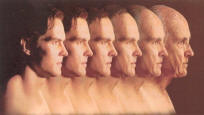 Anti Ageing Exercise
Researchers took 235 sedentary men
and women into two groups. One
group did traditional exercise 20-60
minutes continuously.
The other group incorporated into their
day brisk walks, stair
climbing and other moderate-intensity
lifestyle activities.
After 6 months, both groups had similar
improvements in blood cholesterol,
blood pressure and percentage of body
fat. The structured exercisers
gained more cardiovascular fitness. But
the point is, the moderate-
intensity folks did benefit.
A group of sedentary, obese women lost
17 to 23 pounds over a period
of 20 weeks by walking for ten minutes 5
days a week. At first, they
walked twice a day, then worked up to
four times a day. If you are
not overweight, lifestyle activities
probably won't help you shed
pounds. But they may help you convert
fat to lean muscle.
Structured exercise in longer sessions
is better for you. But
something is better than nothing. For
sedentary folks — those who are
physically inactive — lifestyle activity
can still give you some of
the same cardiovascular benefits of
exercise. Served up in dollops,
it's easier to fit into your day.
How to do it
By increasing lifestyle activities each
day, try doing four 10-minute
increases at least five days a week. The
idea is to just do more of
what you are already doing. Here are
some great ideas on getting
motivated:
*Walk, don't drive.
*Take the stairs at the office — not the
elevator.
*Play with your kids instead of watching
them play.
*Bike to the store.
*Stretch while you watch TV.
*Get up from the sofa to change the
channel. Channel surfers get
quite a workout.
*Park at the opposite end of the mall
from where you're headed.
*If you've got an exercise bike at home,
peddle away for 5 minutes
while you're talking on the phone or
waiting for the washing machine
to finish.
*Walk the treadmill while watching a
favorite TV program.
*Listen to music and dance your way
through housecleaning.
*Start slow — a few minutes at first.
Then, pick up the pace and go
longer.
*Workout clothes are not necessary, but
wear good walking shoes.
*Don't let missing a few days become
your excuse to quit.
*Even if you miss a few days, you won't
lose all the benefits you've
gained.
*Be flexible. Do what you can when you
can.
*Take advantage of opportunities. If
you're watching your child's
soccer game, walk around the field.
*Playing golf? Skip the cart.
*Find a partner. Climbing stairs at the
office will be far more
interesting if you chat away the minutes
with a co-worker.
*Instead of building your life around
exercise, build exercise around
your life. [2]
1. Aerobics: The word aerobic literally
means "with oxygen" or "in
the presence of oxygen." Aerobic
exercise is any activity that uses
large muscle groups, can be maintained
continuously for a long period
of time and is rhythmic in nature.
Aerobic activity trains the heart,
lungs and cardiovascular system to
process and deliver oxygen more
quickly and efficiently to every part of
the body. As the heart
muscle becomes stronger and more
efficient, a larger amount of blood
can be pumped with each stroke. Fewer
strokes are then required to
rapidly transport oxygen to all parts of
the body. An aerobically fit
individual can work longer, more
vigorously and achieve a quicker
recovery at the end of the aerobic
session.
2. Mind Quieting: A disciplined mind is
a free mind. Gain control
over your thoughts and you maintain
control over your life. Retrain
your mind and you regain your freedom.
Calming the mind is a
behavioral technique used to interrupt,
minimize and
eliminate "psychological noise".
Obsessive, repetitive thoughts,
anxiety and fears are all apart of
negative, self-destructive
patterns that can benefit from the power
of music and mind quieting.
3. Breathing: Breath is life! Exchange
of electrons. Flow of energy.
Air is the primary nutrient. Survival
without it is measured in
minutes. It is so important that you do
it without thinking. Your
breathing is the voice of your spirit.
It's depth, smoothness, sound,
and rate reflect your mood. If you
become aware of your breath and
breathe the way you do when you are calm
you will become calm.
Practicing regular, mindful breathing
can be calming and energizing.
With the addition of music and it's
rhythm, the "musical breath" can
even help stress-related health problems
ranging from panic attacks
to digestive disorders. Fall into the
rhythm of the music and
breathe. Focus on your breathing and the
music. No more diseases, the diseases
are gone.
continue to page-2 to learn how to become a superhuman
God is our Guide