Home
      Diagnosis
      Treatment
      Pathology
      Variants
      CIDP info
      GBS
      IVIG
      Diet
      About Us
      Contact
      Email Web Weaver
      Autoimmune diseases
      News
      Links
 

       makeup

Clinics of Excellence
 Skin repair Clinic
 Neck Pain
 Rabinder N Tagore
 Breast Lymph Drainage
 Osteoporosis
 Electronic Treatment
 Breast Size & Disease
 Female Sex Disease
 PARKINSON
 Memory problems
 Breast Lymph Drainage
 Kidney stone Buster
 Bras & breast cancer
 Lahore Clinic
 Lahore skin Clinic
 Pandas


Oral Kidneystone removal  

  Female sexual problems

 Skin hair nail spa Lahore

Eliminate risk of heart disease & stroke 

Memory clinic

Depression & anxiety

Private treatment of addiction  & Drug Rehab

Sexual  disorders Clinic

Parkinson Clinic

Epilepsy Clinic

Pain Clinic

Bone disorders clinic

Joint disorder clinic

Skin repair clinic

Gene Manipulation

Neurology Clinic

TMJ CLINIC

Reduce weight

Drug reaction prevention  Auto

   Autoimmune info

  Autoimmune-5

  Autoimmune anemia

  Autoimmune inflammation

  Autoimmune Ear

Home to autoimmune diseases,     Everything about IVIg,      Autoimmune diseases cure             Top clinic that cures cancer and autoimmune diseases,               Cure of Fibromyalgia,     Cure of Chronic Fatigue syndrome & Fibromyalgia,           Myofacial Pain the most common pain disorder in the world


                                 Stents offer little benefit for heart disease: study              Number 1  site on autoimmune diseases

      We know no boundaries, In God we trust.

For a complete guide on autoimmune treatments by antibiotics please read our e-book.

WANT MORE ANSWERS THEN CALL THE WORLD LEADERS AT CIDPUSA by email
Stroke sugery

Stents offer little benefit for heart disease: study
Updated Wed. Aug. 13 2008 5:03 PM ET

CTV.ca News Staff

Stents that prop open a heart disease patient's blocked arteries don't offer significantly greater benefits compared to drug therapy alone, new research suggests, which could reduce the frequency with which doctors use this invasive, yet common, treatment.

American researchers have found that heart disease patients who had stents implanted and took medication experienced less chest pain in the first two years after they began treatment.

However, that benefit dissipated by the third year after starting treatment.

"What we found, somewhat to our surprise, is that both groups of people, whether they were treated with stenting or medical therapy, that over one to two months they all had substantial improvement in quality of life," lead study author, Dr. William Weintraub, told CTV News.

"We also found there was some advantage in being treated with stenting but not over time."

"The conclusion is that people are going to get better, and there is some advantage to stenting but it is not that large. The majority of people can be treated with medical therapy alone."

The Courage study, as it is known, is published in the New England Journal of Medicine.

Earlier results from this study of 2,200 patients found that those with stents did not have reduced heart attack or death rates compared to patients who were on medication alone.

Hundreds of thousands of patients get stents every year, said Weintraub, cardiology chair at the Christiana Care Health System in Delaware.

However, there has been little research on how effective stents really are.

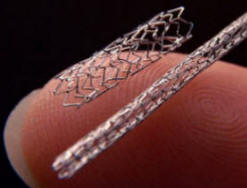
A stent is a wire mesh tube that acts like scaffolding, holding an artery open to improve blood flow to the heart muscle and relieve chest pain. A stent stays in the body permanently.

However, the findings suggest they should primarily be used on high-risk patients, while low-risk patients should be given drug therapy alone, said Dr. Robert Chisholm of Toronto's St. Michael's Hospital.

"So the Courage trial tells us that in this low-risk population we should try medical therapy first and if it fails we should move on to coronary stenting," Chisholm told CTV News.

Chishold added that Canadian doctors are already treating fewer patients with stents and reserve them for higher-risk patients. This trial backs up that practice, he said.

With a report from CTV medical specialist Avis Favaro and senior producer Elizabeth St. Philip


Abstract:

Effect of PCI on Quality of Life in Patients with Stable Coronary Disease

William S. Weintraub, M.D., John A. Spertus, M.D., M.P.H., Paul Kolm, Ph.D., David J. Maron, M.D., Zefeng Zhang, M.D., Ph.D., Claudine Jurkovitz, M.D., M.P.H., Wei Zhang, M.S., Pamela M. Hartigan, Ph.D., Cheryl Lewis, R.N., Emir Veledar, Ph.D., Jim Bowen, B.S., Sandra B. Dunbar, D.S.N., Christi Deaton, Ph.D., Stanley Kaufman, M.D., Robert A. O'Rourke, M.D., Ron Goeree, M.S., Paul G. Barnett, Ph.D., Koon K. Teo, M.D., and William E. Boden, M.D., for the COURAGE Trial Research Group

Background: It has not been clearly established whether percutaneous coronary intervention (PCI) can provide an incremental benefit in quality of life over that provided by optimal medical therapy among patients with chronic coronary artery disease.

Methods: We randomly assigned 2287 patients with stable coronary disease to PCI plus optimal medical therapy or to optimal medical therapy alone. We assessed angina-specific health status (with the use of the Seattle Angina Questionnaire) and overall physical and mental function (with the use of the RAND 36-item health survey [RAND-36]).

Results: At baseline, 22% of the patients were free of angina. At 3 months, 53% of the patients in the PCI group and 42% in the medical-therapy group were angina-free (P<0.001). Baseline mean (±SD) Seattle Angina Questionnaire scores (which range from 0 to 100, with higher scores indicating better health status) were 66±25 for physical limitations, 54±32 for angina stability, 69±26 for angina frequency, 87±16 for treatment satisfaction, and 51±25 for quality of life. By 3 months, these scores had increased in the PCI group, as compared with the medical-therapy group, to 76±24 versus 72±23 for physical limitation (P=0.004), 77±28 versus 73±27 for angina stability (P=0.002), 85±22 versus 80±23 for angina frequency (P<0.001), 92±12 versus 90±14 for treatment satisfaction (P<0.001), and 73±22 versus 68±23 for quality of life (P<0.001). In general, patients had an incremental benefit from PCI for 6 to 24 months; patients with more severe angina had a greater benefit from PCI. Similar incremental benefits from PCI were seen in some but not all RAND-36 domains. By 36 months, there was no significant difference in health status between the treatment groups.

Conclusions: Among patients with stable angina, both those treated with PCI and those treated with optimal medical therapy alone had marked improvements in health status during follow-up. The PCI group had small, but significant, incremental benefits that disappeared by 36 months.


Please read our e-book for complete treatment guidelines.

The research done at CIDPUSA, shows that CIDP is the number one cause of neuropathy the world over. It causes multiple problems in the human body. These include different areas in the body like the brain, eyes, ears, muscles, nerves, spinal cord, heart, abdomen, chest, pelvis.


 Do not restrict your vision to think that cidp is one disease it is a complicated condition affecting the whole body. Very confusing to understand for people who want to complicate things and call them with different names.

 Autoimmune Thyroid  Autoimmune muscle   Autoimmune diseases   Autoimmunity   Autonomic

                               Quranic Shifa    Mercury in makeup   Subcutaneous IVIg PAGE.

Acromegaly page    Summer Sun Benefits for Health  Ear Infections  Cod Liver Oil  Cosmetics

Toxic Effects of Household Chemicals   Toxins affects many generations   Toxic Canola

Canola Dangers


Alopecia treatment

Alopecia COMPLTE GUIDELINES

Bald Facts

Alopecia

Areata Alopecia

Hair chemicals

Hair Growth

Hair of dog technique

Hair rejuvination

Alopecia general

Clinics of Excellence

Fibromyalgia

   Autoimmune diseases

   Autoimmmune diseases 1

  Autoimmune diseases -3

  Autoimmune aneurysm

  Auto

   Autoimmune info

  Autoimmune-4

neurological effects of CIDP

Body goes against the grain

Celiac disease Info

More on Celiac disease

Anemia and celiac disease

Home for autoimmune disorders, information about autoimmune diseases

Everything about IVIg, Home to IVIg

Home to autoimmune diseases, causes, treatment, cure, e-book

Home to autoimmune disorders , treatment , causes, information

Fatty acids in autoimmune diseases

AUTOIMMUNE EPIDEMIC

Small fiber neuropathy 

Basil

Battery charger

Bay leaves

Brown sugar

Chemicals

Prevent Osteoporosis

Some rheumatic disorders


  We offer a lecture on personality development and self improvement.

Is your teenage child out of your control we do behavior modification treatment with positive results and a 90% turnaround.

Our Nanoparticle treatment units are for sale. Get your treatment at home.