God  our Guide  
cidpUSA Foundation

 cidpusa.org   


TGA

 Hypothyroid

Learning disability

Learn  about Brain

Cure all disease

Cure for MS

Marfan


      Home
      Diagnosis
      Treatment
      Pathology
      Variants
      CIDP info
      Fibromyalgia
      IVIG
      Diet anti-inflammatory
      Burning  Feet Home
      Services Page
      Chronic Fatigue
      Autoimmune diseases
      Prognosis
      Bible healing
      Celiac disease
 
  Natural Makeup
  Neck Pain
  Ocular Female diseases
  Chronic fatigue syndrome
  Osteoporosis
  Women Heart Attacks
  Breast Size & Disease
  Female Sex Disease
  PARKINSON
  Memory problems
  Breast Lymph Drainage
  Kidney stone Buster
 Bras cause breast cancer
  Skin repair Clinic
 Pandas
  Hepatitis

CELIAC  

MS GENES

 Polymyalgia

 Achalasia

 u stay young

Neuron   Avoid headaches with IVIg

Cholesterol drugs & Bleeding  Learn about Self  Myofacial Pain   Chronic Pain Management

Subcutaneous IVIg Page  Apple juice fights for you  Best Fat Lowering diet.

Lymes Disease & CIDP  Sensory CIDP  Immunoglobulins  Immunodeficiency

Vaccination  IgA nephropathy  Small fiber neuropathy

Blood Clots NHS  Pollution  Index copy page

Homocysteine Lowering diet

Bible Diet

Hemodialysis Diet

Iodine deficient diet

 Vitiligo 1

  Vitiligo 2

  Homocysteine  

Colostrum 

Carbohydrate supplements

Chemicals Babies

  Phylates  

Toxic Cosmetics 

Limbic encephalitis  

Detox Baths 

Smoking & disease

Electrical Stimulation Therapy

Addison

Estrogen

DNA

Magnets and ageing

Quranic Shifa

Vitamin D Deficency

Vasculitis vaccine vaccination Aeid TMJ Hepatitis Hepatitis-Hemolytic anemia


   Welcome to Food section CIDPUSA-Autoimmune diseases

      Guide to natural treatment of all diseases Flame within E-book.  
    Cidpusa will do remote consultation at a low cost  see service link

Charcot Marie Tooth Disease

Step by step guidelines to Help.
Last Updated: Sunday, 23 December 2007, 00:02 GMT
   
Sea cucumber a hot and 'new malaria weapon'
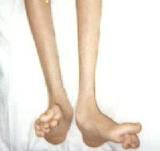
obvious muscle loss and prominent bones
Charcot-Marie-Tooth disease (CMT) is one of the most common inherited neurological disorders, affecting approximately 1 in 2,500 people in the United States. The disease is named for the three physicians who first identified it in 1886 - Jean-Martin Charcot and Pierre Marie in Paris, France, and Howard Henry Tooth in Cambridge, England. CMT, also known as hereditary motor and sensory neuropathy (HMSN) or peroneal muscular atrophy, comprises a group of disorders that affect peripheral nerves. The peripheral nerves lie outside the brain and spinal cord and supply the muscles and sensory organs in the limbs. Disorders that affect the peripheral nerves are called peripheral neuropathies.
top

Ultimately, our aim of our field is to find a way of genetically engineering food so that the gene for CMT can be reversed
 
Professor Bob
Imperial College London

What are the symptoms of Charcot-Marie-Tooth disease?

The neuropathy of CMT affects both motor and sensory nerves. A typical feature includes weakness of the foot and lower leg muscles, which may result in foot drop and a high-stepped gait with frequent tripping or falls. Foot deformities, such as high arches and hammertoes (a condition in which the middle joint of a toe bends upwards) are also characteristic due to weakness of the small muscles in the feet. In addition, the lower legs may take on an "inverted champagne bottle" appearance due to the loss of muscle bulk. Later in the disease, weakness and muscle atrophy may occur in the hands, resulting in difficulty with fine motor skills.
Onset of symptoms is most often in adolescence or early adulthood, however presentation may be delayed until mid-adulthood. The severity of symptoms is quite variable in different patients and even among family members with the disease. Progression of symptoms is gradual. Pain can range from mild to severe, and some patients may need to rely on foot or leg braces or other orthopedic devices to maintain mobility. Although in rare cases patients may have respiratory muscle weakness, CMT is not considered a fatal disease and people with most forms of CMT have a normal life expectancy.
top

What are the types of Charcot-Marie-Tooth disease?

There are many forms of CMT disease, including CMT1, CMT2, CMT3, CMT4, and CMTX. CMT1, caused by abnormalities in the myelin sheath, has three main types. CMT1A is an autosomal dominant disease resulting from a duplication of the gene on chromosome 17 that carries the instructions for producing the peripheral myelin protein-22 (PMP-22). The PMP-22 protein is a critical component of the myelin sheath. An overabundance of this gene causes the structure and function of the myelin sheath to be abnormal. Patients experience weakness and atrophy of the muscles of the lower legs beginning in adolescence; later they experience hand weakness and sensory loss. Interestingly, a different neuropathy distinct from CMT1A called hereditary neuropathy with predisposition to pressure palsy (HNPP) is caused by a deletion of one of the PMP-22 genes. In this case, abnormally low levels of the PMP-22 gene result in episodic, recurrent demyelinating neuropathy. CMT1B is an autosomal dominant disease caused by mutations in the gene that carries the instructions for manufacturing the myelin protein zero (P0), which is another critical component of the myelin sheath. Most of these mutations are point mutations, meaning a mistake occurs in only one letter of the DNA genetic code. To date, scientists have identified more than 30 different point mutations in the P0 gene. As a result of abnormalities in P0, CMT1B produces symptoms similar to those found in CMT1A. The gene defect that causes CMT1C, which also has symptoms similar to those found in CMT1A, has not yet been identified.

CMT2 results from abnormalities in the axon of the peripheral nerve cell rather than the myelin sheath. There are many subtypes of CMT2, designated by the letters from A-L. Each subtype is characterized by the mode of inheritance and associated clinical features. The genetic loci have been identified for some subtypes. Recently, a mutation was identified in the gene that codes for the kinesin family member 1B-beta protein in families with CMT2A. Kinesins are proteins that act as motors to help power the transport of materials along the train tracks (microtubules) of the cell. Another recent finding is a mutation in the neurofilament-light gene, identified in a Russian family with CMT2E. Neurofilaments are structural proteins that help maintain the normal shape of a cell.

CMT3 or Dejerine-Sottas disease is a severe demyelinating neuropathy that begins in infancy. Infants have severe muscle atrophy, weakness, and sensory problems. This rare disorder can be caused by a specific point mutation in the P0 gene or a point mutation in the PMP-22 gene.

CMT4 comprises several different subtypes of autosomal recessive demyelinating motor and sensory neuropathies. Each neuropathy subtype is caused by a different genetic mutation, may affect a particular ethnic population, and produces distinct physiologic or clinical characteristics. Patients with CMT4 generally develop symptoms of leg weakness in childhood and by adolescence they may not be able to walk. The gene abnormalities responsible for CMT4 have yet to be identified.

CMTX is an X-linked dominant disease and is caused by a point mutation in the connexin-32 gene on the X chromosome. The connexin-32 protein is expressed in Schwann cells-cells that wrap around nerve axons, making up a single segment of the myelin sheath. This protein may be involved in Schwann cell communication with the axon. Males who inherit one mutated gene from their mothers show moderate to severe symptoms of the disease beginning in late childhood or adolescence (the Y chromosome that males inherit from their fathers does not have the connexin-32 gene). Females who inherit one mutated gene from one parent and one normal gene from the other parent may develop mild symptoms in adolescence or later or may not develop symptoms of the disease at all.

top

What causes Charcot-Marie-Tooth disease

A nerve cell communicates information to distant targets by sending electrical signals down a long, thin part of the cell called the axon. In order to increase the speed at which these electrical signals travel, the axon is insulated by myelin, which is produced by another type of cell called the Schwann cell. Myelin twists around the axon like a jelly-roll cake and prevents dissipation of the electrical signals. Without an intact axon and myelin sheath, peripheral nerve cells are unable to activate target muscles or relay sensory information from the limbs back to the brain.

CMT is caused by mutations in genes that produce proteins involved in the structure and function of either the peripheral nerve axon or the myelin sheath. Although different proteins are abnormal in different forms of CMT disease, all of the mutations affect the normal function of the peripheral nerves. Consequently, these nerves slowly degenerate and lose the ability to communicate with their distant targets. The degeneration of motor nerves results in muscle weakness and atrophy in the extremities (arms, legs, hands, or feet), and in some cases the degeneration of sensory nerves results in a reduced ability to feel heat, cold, and pain.

The gene mutations in CMT disease are usually inherited. Each of us normally possesses two copies of every gene, one inherited from each parent. Some forms of CMT are inherited in an autosomal dominant fashion, which means that only one copy of the abnormal gene is needed to cause the disease. Other forms of CMT are inherited in an autosomal recessive fashion, which means that both copies of the abnormal gene must be present to cause the disease. Still other forms of CMT are inherited in an X-linked fashion, which means that the abnormal gene is located on the X chromosome. The X and Y chromosomes determine an individual's sex. Individuals with two X chromosomes are female and individuals with one X and one Y chromosome are male. In rare cases the gene mutation causing CMT disease is a new mutation which occurs spontaneously in the patient's genetic material and has not been passed down through the family.

top


How is Charcot-Marie-Tooth disease diagnosed?


Diagnosis of CMT begins with a standard patient history, family history, and neurological examination. Patients will be asked about the nature and duration of their symptoms and whether other family members have the disease. During the neurological examination a physician will look for evidence of muscle weakness in the arms, legs, hands, and feet, decreased muscle bulk, reduced tendon reflexes, and sensory loss. Doctors look for evidence of foot deformities, such as high arches, hammertoes, inverted heel, or flat feet. Other orthopedic problems, such as mild scoliosis or hip dysplasia, may also be present. A specific sign that may be found in patients with CMT1 is nerve enlargement that may be felt or even seen through the skin. These enlarged nerves, called hypertrophic nerves, are caused by abnormally thickened myelin sheaths.

If CMT is suspected, the physician may order electrodiagnostic tests for the patient. This testing consists of two parts: nerve conduction studies and electromyography (EMG). During nerve conduction studies, electrodes are placed on the skin over a peripheral motor or sensory nerve. These electrodes produce a small electric shock that may cause mild discomfort. This electrical impulse stimulates sensory and motor nerves and provides quantifiable information that the doctor can use to arrive at a diagnosis. EMG involves inserting a needle electrode through the skin to measure the bioelectrical activity of muscles. Specific abnormalities in the readings signify axon degeneration. EMG may be useful in further characterizing the distribution and severity of peripheral nerve involvement.

If all other tests seem to suggest that a patient has CMT, a neurologist may perform a nerve biopsy to confirm the diagnosis. A nerve biopsy involves removing a small piece of peripheral nerve through an incision in the skin. This is most often done by removing a piece of the nerve that runs down the calf of the leg. The nerve is then examined under a microscope. Patients with CMT1 typically show signs of abnormal myelination. Specifically, "onion bulb" formations may be seen which represent axons surrounded by layers of demyelinating and remyelinating Schwann cells. Patients with CMT2 usually show signs of axon degeneration.

Genetic testing is available for some types of CMT and may soon be available for other types; such testing can be used to confirm a diagnosis. In addition, genetic counseling is available to parents who fear that they may pass mutant genes to their children.

top

Charcot-Marie-Tooth disease is one of the most common inherited neurological disorders, affecting approximately 1 in 2,500 people in the United States. It is characterized by loss of muscle tissue and touch sensation, predominantly in the feet and legs. In CMT, both the sensory nerves that carry signals from receptors in the extremities to the brain and spinal cord, as well as motor nerves that relay signals from the brain and spinal cord to the limbs and internal organs are affected.

Hereditary sensory neuropathy affects predominantly sensory nerves. Symptoms included sensation loss, decreased or absent reflexes, foot deformities and various anatomic features

Affected neurons in mice and in patients with sensory neuropathies have very long axons. Such neurons that transmit signals over huge distances depend on dynein, the "cargo-transporter" to carry molecules from the tip of the axon to the neuron's cell bodies. If the cargo-transporter is somehow disturbed, Popko said, like in the case of mutations in Dync1h gene, neurons that transmit signals over "long distances" will suffer more.

"It's very common for neuropathies to affect neurons with the longer axons, for example those that innervate the legs and feet," says Popko. It has been previously suggested that hereditary sensory neuropathy might be connected with disabled trafficking along the axons. There have been mutations found in two genes that form a complex essential for survival of sensory neurons, and this complex is thought to be transported along the neurons by dynein.


main diet page Apple juice

Treatment of alcoholic poly neuropathy


     want to learn about the brain and spinal cord

 
     www.cidpusa.org/P/ivig.htm