Honey Bees Death causes
Bayer CropScience is facing scrutiny because of
the effect one of its best-selling pesticides has
had on honey bees.
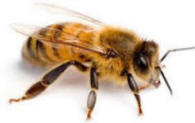
A German prosecutor is investigating Werner Wenning,
Bayer's chairman, and Friedrich Berschauer, the head
of Bayer CropScience, after critics alleged that
they knowingly polluted the environment.
The investigation was triggered by an Aug. 13
complaint filed by German beekeepers and consumer
protection advocates, a Coalition against Bayer
Dangers spokesman, Philipp Mimkes, said Monday.
The complaint is part of efforts by groups on both
sides of the Atlantic to determine how much Bayer
CropScience knows about the part that clothianidin
may have played in the death of millions of
honeybees.
Bayer CropScience, which has its U.S. headquarters
in North Carolina's Research Triangle Park, said
field studies have shown that bees' exposure to the
pesticide is minimal or nonexistent if the chemical
is used properly.
Clothianidin and related pesticides generated about
$1 billion of Bayer CropScience's $8.6 billion in
global sales last year. The coalition is demanding
that the company withdraw all of the pesticides.
"We're suspecting that Bayer submitted flawed
studies to play down the risks of pesticide residues
in treated plants," said Harro Schultze, the
coalition's attorney.
"Bayer's ... management has to be called to account,
since the risks ... have now been known for more
than 10 years."
Under German law, a criminal investigation could
lead to a search of Bayer offices, Mimkes said.
On this side of the Atlantic, the Natural Resources
Defense Council is pressing for research information
on clothianidin.
The U.S. Environmental Protection Agency approved
the pesticide in 2003 under the condition that Bayer
submit additional data. A lawsuit, which the
environmental group filed Aug. 19 in federal court
in Washington, accuses the EPA of hiding the
honeybee data.
The group thinks the data might show what role
chlothianidine played in the loss of millions of
U.S. honeybee colonies.
Researchers have been puzzled by what is causing the
bees to disappear at what is considered an alarming
rate.
The phenomenon, known as colony collapse disorder,
threatens a $15 billion portion of the U.S. food
supply.
Beekeeper Zac Browning shipped his hives from Idaho
to California to pollinate the blossoming almond
groves. He got a shock when he checked on them,
finding hundreds of the hives empty, abandoned by
the worker bees.
The losses were extreme, three times higher than the
previous year.
"It wasn't one load or two loads, but every load we
were pulling out that was dead. It got extremely
depressing to see a third of my livestock gone,"
Browning said, standing next to stacks of dead bee
colonies in a clearing near Merced, at the center of
California's fertile San Joaquin Valley.
Among all the stresses to bee health, it's the
pesticides that are attracting scrutiny now. A study
published Friday in the scientific journal PLOS
(Public Library of Science) One found about three
out of five pollen and wax samples from 23 states
had at least one systemic pesticide - a chemical
designed to spread throughout all parts of a plant.
EPA officials said they are aware of problems
involving pesticides and bees and the agency is
"very seriously concerned."
The pesticides are not a risk to honey sold to
consumers, federal officials say. And the pollen
that people eat is probably safe because it is
usually from remote areas where pesticides are not
used, Pettis said. But the PLOS study found 121
different types of pesticides within 887 wax,
pollen, bee and hive samples.