cidpusa Foundation

cidpusa.org  


      Home
      Diagnosis
      Treatment
      Pathology
      Variants
      CIDP info
      Fibromyalgia
      IVIG
      Diet anti-inflammatory
      Burning  Feet Home
      Services Page
      Chronic Fatigue
      Autoimmune diseases
      Prognosis
      Bible healing
      Celiac disease
 Clinics of Excellence

  Kidney stone removal   without surgery

Eliminate risk of heart disease & stroke 

Quranic Shifa

Memory clinic

Depression & anxiety

Private treatment of addiction  & Drug Rehab

Sexual  disorders Clinic

Parkinson Clinic

Epilepsy Clinic

Pain Clinic

Bone disorders clinic

Joint disorder clinic

Skin repair clinic

Gene Manipulation

Neurology Clinic

TMJ CLINIC

Sex in autoimmune disease

Reduce weight

Drug reaction prevention

Prevent Osteoporosis

Some rheumatic disorders

 
  Natural Makeup
  Neck Pain
  Ocular Female diseases
  Chronic fatigue syndrome
  Osteoporosis
  Women Heart Attacks
  Breast Size & Disease
  Female Sex Disease
  PARKINSON
  Memory problems
  Breast Lymph Drainage
  Kidney stone Buster
 Bras cause breast cancer
  Skin repair Clinic
 Pandas
  Hepatitis

Backpain

Fibromyalgia

Personality

Electrical Stimulation Therapy

Addison

Estrogen

DNA

Magnets and ageing

autoimmune disorders, autoimmune diseases, diagnosis , treatment and prevention

Autoimmune diseases home, treatment and prevention guidelines

Lahore Sex clinic

Prevention and treatment of Alopecia

Immunoglobulin's for immune deficiency

Everything about IVIg, treatment, side effects

Fibromyalgia, diagnosis , symptoms , treatment

gG subclass deficiency 

Immunglobulins

 Immunoglobulins -2

MIRACLE CURE OF ITP

Skin repair clinic

Gene Manipulation

Neurology Clinic

TMJ CLINIC

Safe Hair Color

  Stem cells

  SLE & GENES

 Toxic Baby Car Seats

 Toxic Pesticide

 Under active thyroid

 Reading disorders

 Oral Polio Vaccine

 Reading disorders

 Best New Diet

 DHEA Fountain of Youth

 Magnets to tone face

 Younger

 Melbourne

 Avoid an episiotomy

 Celiac Disease

 Spice Names

 transplant treatment

 DiabeticTreatment

 Bay Leaves

 More Spices

 7 Habits of Covy

MagneticFieldMap

 NanoMedicine

 managed Care

Quranic Shifa

Backpain

Fibromyalgia

Personality

Electrical Stimulation Therapy

Addison

Estrogen

DNA

Magnets and ageing

Heart solution

Immunodeficiency

Immunoglobulins

Vaccination

Sexual  disorders Clinic

Parkinson Clinic

Epilepsy Clinic

Pain Clinic

Bone disorders clinic

Joint disorder clinic

B-12 deficiency

Autoimmune autism

Mercury linked autism

Immunity in autism

PCR Testing for Mycoplasma and Chlamydia in CFS/MCS

Erectile Dysfunction, High Blood Pressure Linked

 MS GENES

 Polymyalgia

 Achalasia

 u stay young  Auto

   Autoimmune info

  Autoimmune-4

  Autoimmune-5

  Autoimmune anemia

  Autoimmune inflammation

  Autoimmune Ear

  Autoimmune Thyroid

  Autoimmune muscle

  Autoimmune diseases

  Autoimmunity

  Autoimmunity-2

  Autonomic

     Quranic Shifa

   Mercury in makeup

     Toxic Lipstick

Gene Manipulation

Neurology Clinic

TMJ CLINIC

Safe Hair Color  Stem cells

  SLE & GENES

 Toxic Baby Car Seats

 Toxic Pesticide

 Under active thyroid

 Reading disorders


Welcome to the CIDP  International organization


Please read the E-Book for reversal of autoimmune disorders a best seller.

The Infrared


+

Infrared light lies between the visible and microwave portions of the electromagnetic spectrum. Infrared light has a range of wavelengths, just like visible light has wavelengths that range from red light to violet. "Near infrared" light is closest in wavelength to visible light and "far infrared" is closer to the microwave region of the electromagnetic spectrum. The longer, far infrared wavelengths are about the size of a pin head and the shorter, near infrared ones are the size of cells, or are microscopic.
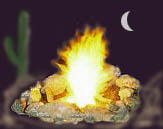
Campfire.  Far infrared waves are thermal. In other words, we experience this type of infrared radiation every day in the form of heat! The heat that we feel from sunlight, a fire, a radiator or a warm sidewalk is infrared. The temperature-sensitive nerve endings in our skin can detect the difference between inside body temperature and outside skin temperature
Infrared light is even used to heat food sometimes - special lamps that emit thermal infrared waves are often used in fast food restaurants!


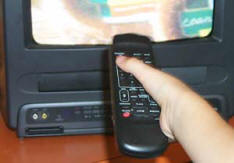
Shorter, near infrared waves are not hot at all - in fact you cannot even feel them. These shorter wavelengths are the ones used by your TV's remote control. Image of a television remote control


How can we "see" using the Infrared?

Since the primary source of infrared radiation is heat or thermal radiation, any object which has a temperature radiates in the infrared. Even objects that we think of as being very cold, such as an ice cube, emit infrared. When an object is not quite hot enough to radiate visible light, it will emit most of its energy in the infrared. For example, hot charcoal may not give off light but it does emit infrared radiation which we feel as heat. The warmer the object, the more infrared radiation it emits.


Humans, at normal body temperature, radiate most strongly in the infrared at a wavelength of about 10 microns. (A micron is the term commonly used in astronomy for a micrometer or one millionth of a meter.) This image ( which is courtesy of the Infrared Processing and Analysis Center at CalTech), shows a man holding up a lighted match! Which parts of this image do you think have the warmest temperature? How does the temperature of this man's glasses compare to the temperature of his hand? Infrared man D


Infrared image of a cat.D To make infrared pictures like the one above, we can use special cameras and film that detect differences in temperature, and then assign different brightnesses or false colors to them. This provides a picture that our eyes can interpret.

The image at the left (courtesy of SE-IR Corporation, Goleta, CA) shows a cat in the infrared. The orange areas are the warmest and the white-blue areas are the coldest. This image gives us a different view of a familiar animal as well as information that we could not get from a visible light picture.

Humans may not be able to see infrared light, but did you know that snakes in the pit viper family, like rattlesnakes, have sensory "pits", which are used to image infrared light? This allows the snake to detect warm blooded animals, even in dark burrows! Snakes with 2 sensory pits are even thought to have some depth perception in the infrared! (Thanks to NASA's Infrared Processing and Analysis Center for help with the text in this section.)

Many things besides people and animals emit infrared light - the Earth, the Sun, and far away things like stars and galaxies do also! For a view from Earth orbit, whether we are looking out into space or down at Earth, we can use instruments on board satellites.


Satellites like GOES 6 and Landsat 7 look at the Earth. Special sensors, like those aboard the Landsat 7 satellite, record data about the amount of infrared light reflected or emitted from the Earth's surface. Artist's conception of Landsat 7 orbiting the Earth.
 
Landsat 7

Other satellites, like the Infrared Astronomy Satellite (IRAS) look up into space and measure the infrared light coming from things like large clouds of dust and gas, stars, and galaxies!


What does the Infrared show us?


This is an infrared image of the Earth taken by the GOES 6 satellite in 1986. A scientist used temperatures to determine which parts of the image were from clouds and which were land and sea. Based on these temperature differences, he colored each separately using 256 colors, giving the image a realistic appearance.

Why use the infrared to image the Earth? While it is easier to distinguish clouds from land in the visible range, there is more detail in the clouds in the infrared. This is great for studying cloud structure. For instance, note that darker clouds are warmer, while lighter clouds are cooler. Southeast of the Galapagos, just west of the coast of South America, there is a place where you can distinctly see multiple layers of clouds, with the warmer clouds at lower altitudes, closer to the ocean that's warming them.

Infrared image of Earth. D
Space Science and Engineering Center,
University of Wisconsin-Madison,
Richard Kohrs, designer

We know, from looking at an infrared image of a cat, that many things emit infrared light. But many things also reflect infrared light, particularly near infrared light. Near infrared radiation is not related to the temperature of the object being photographed - unless the object is very, very hot.

Infrared film 'sees' the object because the Sun (or some other light source) shines infrared light on it and it is reflected or absorbed by the object. You could say that this reflecting or absorbing of infrared helps to determine the object's 'color' - its color being a combination of red, green, blue, and infrared!


This image of a building with a tree and grass shows how Chlorophyll in plants reflect near infrared waves along with visible light waves. Even though we can't see the infrared waves, they are always there. The visible light waves drawn on this picture are green, and the infrared ones are pale red. Building and tree - visible light
This image was taken with special film that can detect invisible infrared waves. This is a false-color image, just like the one of the cat. False-color infrared images of the Earth frequently use a color scheme like the one shown here, where infrared light is mapped to the visible color of red. This means that everything in this image that appears red is giving off or reflecting infrared light. This makes vegetation like grasa and trees appear to be red. The visible light waves drawn on this picture are green, and the infrared ones are darker red. Same building and tree on infrared film.


Landsat 5 image of Phoenix, Arizona D This is an image of Phoenix, Arizona showing the near infrared data collected by the Landsat 5 satellite. The light areas are areas with high reflectance of near infrared waves. The dark areas show little reflectance. What do you think the black grid lines in the lower right of this image represent?
False-color image of Pheonix, Arizona D This image shows the infrared data (appearing as red) composited with visible light data at the blue and green wavelengths. If near infrared is reflected off of healthy vegetation, what do you think the red square shaped areas are in the lower left of the image?

Instruments on board satellites can also take pictures of things in space. The image below of the center region of our galaxy was taken by IRAS. The hazy, horizontal S-shaped feature that crosses the image is faint heat emitted by dust in the plane of the Solar System.


IRAS image of the MilkywayD
Infrared Processing and Analysis Center, Caltech/JPL


--------------------------------------------------------------------------------


  www.cidpusa.org  www.cidpusa.org/P/ivig.htm  http://www.cidpusa.org/disease.html http://www.cidpusa.org/Lahore.html 

 Glomerulonephritis