| Treatment
Treating the original infection:
Streptococci bacteria are usually destroyed with antibiotics
such as penicillin. Other infections may require other types of
antibiotics and/or anti-viral drugs.

Chronic Renal Failure (CRF):
Is the progressive loss of kidney function. The kidneys attempt
to compensate for renal damage by hyper filtration with the
remaining functional nephrons. Chronic loss of function causes
generalized wasting or shrinking and progressive scarring within
all parts of the kidneys. In time, overall scarring obscures
the site of the initial damage. But, it is not until over 70% of
the normal combined function of both kidneys is lost that most
patients begin to experience symptoms of kidney failure.
Treating glomerulonephritis:
If you have glomerulonephritis the doctor treating you will
focus on treating the cause as well as the condition. You may be
advised to drink less fluid (restrict your fluid intake) and to
avoid certain drinks such as alcohol and drinks with a lot of
sodium chloride (salt) and/or potassium in them. Your diet
should be controlled carefully. Your GP or dietician will give
you advice on eating protein and controlling the your intake of
potassium and salt. Your blood chemistry will be regularly
reviewed to ensure that levels of potassium, sodium and chloride
are at the right level and that the amount of fluid in your diet
is correct. Your treatment may include corticosteroids and a
drug called cyclophosphamide. Other drugs used will relate to
the underlying cause of the condition and the body’s response to
glomerulonephritis.
Treating high blood pressure:
High blood pressure damages the kidney further and causes
other health problems. Your blood pressure will be monitored by
the doctor treating you and may need to take drugs such as ACE (Angiotensin
Converting Enzyme) inhibitors which relax the blood vessels and
reduce the workload of the heart.
Treating chronic kidney disease or kidney failure:
In cases of chronic kidney disease or kidney failure, kidney
dialysis (using a machine to do the kidneys’ job of removing
waste products from the body) or a kidney transplant will be
needed.
| Complications
Possible complications vary according to the type of
glomerulonephritis but can include:
High blood pressure: This is a
common complication of glomerulonephritis, because the
kidneys help control the blood pressure in the body.
Many people with glomerulonephritis are prescribed drugs
to lower blood pressure. It is important to take these
to protect the kidneys against further damage and also
to reduce the risks of heart disease and stroke. If
blood pressure is untreated it can lead to heart failure
and fluid in the lungs (pulmonary oedema).
Disease in other internal organs: In
most patients, glomerulonephritis affects only the
kidneys. However, in some cases, the immune system that
damages the kidneys can also affect other parts of the
body, for example giving a blotchy red rash on the skin
or pain in the joints. Discuss any symptoms you may have
with your doctor to see if they could be related to
glomerulonephritis. If you develop a blotchy red skin
rash you should see your GP immediately.
Kidney disease or kidney failure:
This is rare, but glomerulonephritis can cause so much
damage to the kidneys that they fail completely.
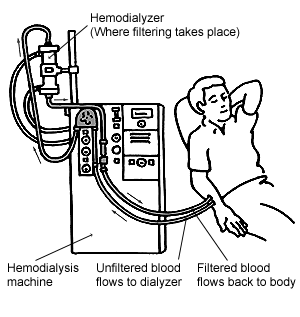
What is dialysis
In complete renal failure ,
dialysis access is used to clean the blood
Dialysis, also called
hemodialysis, is the most common treatment for kidney
failure. A dialysis machine is an artificial kidney
designed to remove impurities from your blood. During
dialysis, physicians use the dialysis access to remove a
portion of your blood to circulate it through the
dialysis machine so it can remove impurities and
regulate fluid and chemical balances. The purified blood
is then returned to you, again through the dialysis
access.
|
|